Bill

BILL • US SENATE

S 4495

Reactors at Risk Act of 2026

119th Congress
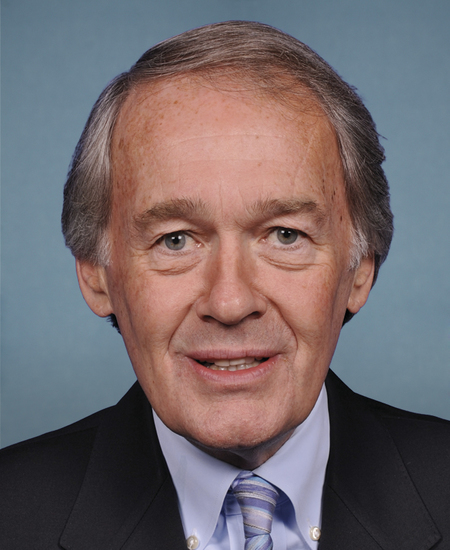
Introduced by Ed Markey, Jeff Merkley,

The act requires a joint report within 120 days assessing dangers and risk-reduction measures for civilian nuclear reactors in regions likely to experience armed conflict.

Introduced in Senate
0
0
Bill Summary · S 4495

Reactors at Risk Act of 2026 (S. 4495)

Purpose and intent

  • Establishes a requirement for a joint government report evaluating the dangers posed by civilian nuclear reactors located in areas that could experience armed conflict.
  • Aims to inform national security, allied interests, and civilian safety by assessing risks and identifying measures to prevent, prepare for, and mitigate those risks.

Key provisions and changes

  • Section 2 – Report on Dangers Posed by Nuclear Reactors in Areas that Might Experience Armed Conflict
    • Timing: Requires the report to be submitted within 120 days after enactment.
    • Responsible agencies: Secretary of Defense and the Under Secretary of Energy for Nuclear Security must jointly prepare and submit the report.
    • Scope of assessment (subsection a):
    • Identify dangers to:
      • U.S. national security and interests of allies/partners.
      • Safety and security of civilian populations.
    • Focus areas include nuclear reactors that exist as of enactment or are scheduled for completion over the next 10 years.
    • Geographic and conflict-related criteria:
      • Regions with armed conflict in the past 25 years, including:
      • Attacks by Russia on Ukraine.
      • Middle East conflicts (e.g., Israel-Iran tensions).
      • Areas that are contested or likely to experience armed conflict during the reactors’ lifespans.
      • Areas involved in potential conflicts such as:
      • Russia–Estonia, Latvia, Belarus, Lithuania, Poland scenario.
      • India–Pakistan conflict.
      • Taiwan-related conflict.
      • North Korea–South Korea conflict.
      • The bill presents a non-exhaustive list of specific scenarios to consider.
    • Scope also includes risk reduction steps that the U.S. or allies/partners can take to prevent, prepare for, and mitigate risks arising from these reactors.
    • Form of the report (subsection b):
    • Unclassified report required.
    • May include a classified annex for sensitive details.
    • Congressional oversight (subsection c):
    • Defines “appropriate committees of Congress” as:
      • Senate: Armed Services, Foreign Relations, and Environment and Public Works.
      • House: Armed Services, Foreign Affairs (Foreign Affairs Committee), and Energy and Commerce.

Who is affected

  • Federal government agencies: Department of Defense and the Department of Energy (Under Secretary for Nuclear Security) will be responsible for preparing the report.
  • Policymakers and Congress: Receives the report, including the specified committees.
  • General public: The unclassified contents of the report will inform public understanding of nuclear reactor security risks tied to potential armed conflict.

Procedural and timeline aspects

  • Introduction and referral:
    • Introduced May 12, 2026, and referred to the Senate Committee on Armed Services.
  • Reporting deadline:
    • Entire joint report due within 120 days of enactment.
  • Form and accessibility:
    • Primarily unclassified; may include a classified annex for sensitive information.
  • Sponsorship:
    • Co-sponsors include Sen. Jeff Merkley and Sen. Edward J. Markey.

Potential impact and considerations

  • The bill would produce a formal risk assessment of reactors in potentially volatile regions, potentially influencing:
    • U.S. defense and energy security planning.
    • Allied coordination and contingency planning.
    • Nuclear safety and emergency preparedness measures in regions with existing or planned reactors.
  • By mandating analysis of specific geopolitical scenarios, the bill may inform future policy decisions, mitigation investments, and diplomatic engagement with partner nations.
  • The emphasis on an unclassified, publicly releasable report (with a possible classified annex) seeks to balance transparency with national security concerns.

Hi! I'm your AI assistant for S 4495. I can help you understand its provisions, impacts, and answer any questions.

Key Provisions Impacts Timeline
Sign in to chat

Start the Conversation

Be the first to share your thoughts on this petition. Your voice matters!

Share your opinion above