Summary of Bill S.3646 (No Political Enemies Act)
Session: 119th Congress | Introduced January 14, 2026
Jurisdiction: United States Senate
Purpose: The No Political Enemies Act aims to prevent Federal officials and agencies from initiating or directing enforcement actions, investigations, or other government actions that are substantially motivated by an individual’s or entity’s protected political speech or participation, and to provide civil remedies, defenses, and oversight mechanisms to deter such political targeting.
Key provisions and changes
Title and findings
- Short title: No Political Enemies Act.
- Findings emphasize that:
- Congress has not delegated authority to designate entities as domestic terrorists.
- The President lacks inherent authority to designate such entities.
- First Amendment protections apply to speech, press, assembly, and petition.
- Federal employees must not violate constitutional rights.
Definitions (Section 3)
- Covered enforcement claim: A federal government claim alleging a federal civil/criminal violation.
- Covered Federal official: Any executive-branch officer/employee (including the President, Vice President, and independent agency officials).
- Covered Government action: Investigative, regulatory, or enforcement action against a specific covered person, including actions without legal authority; excludes actions taken against a Federal officer/employee personally.
- Covered person: A domestic entity or an individual (U.S. citizen/national, lawful permanent resident, or presence in U.S./territories).
- Domestic entity: Any entity organized under U.S. or state law (including out-of-country branches).
- Protected speech or participation: All constitutionally protected speech, expression, or association.
- Substantially motivated by protected speech or participation: Protected speech/participation is a motivating factor (not required to be sole or primary reason).
- Laws regulating political speech listed (as examples) include: Federal election-related statutes and acts (e.g., Help America Vote Act, Voting Rights Act, National Voter Registration Act, Civil Rights Act provisions, FECA), and other related election laws.
General prohibition on political targeting (Section 4)
- No covered Federal official may initiate or direct a covered enforcement claim or a covered Government action that is substantially motivated by protected speech/participation or to punish/burden/press protected speech.
Affirmative defense for political targeting (Section 5)
- Creates an affirmative defense: If protected speech/participation substantially motivated the enforcement action, the defense can be raised.
- Procedures:
- Expedited discovery to investigate motivations.
- Possible in-camera/ex parte review if privileged materials are involved.
- Government bears the burden to prove, by clear and convincing evidence, that legitimate grounds unrelated to protected speech exist and that the action was not substantially motivated by protected speech.
- If the Government fails, the court must dismiss the claim or provide relief.
Civil action to seek injunction against political targeting (Section 6)
- Allows a covered person to sue in federal court for injunctive or equitable relief against a covered Federal official or agency for actions substantially motivated by protected speech.
- Basis for relief includes: violation of First Amendment rights; likelihood of success showing protected-speech motivation constitutes irreparable harm warranting emergency relief.
- Jurisdiction: Federal courts with broad authority, excluding certain narrow statutory limitations.
- Includes authority to issue injunctions related to tax assessments/collections if substantially motivated by protected speech.
Civil action for damages for political targeting (Section 7)
- Allows damages actions against a covered Federal official for knowingly targeting a person based on protected speech, if constitutional rights were violated.
- Limits on immunity: Expands potential liability but preserves immunity where good faith actions and unprotected motivation are shown; otherwise, statutory immunity may apply.
- No automatic U.S. indemnification unless immunity criteria are met or full recovery is necessary and feasible.
Fees and costs for meritorious targeting claims (Section 8)
- Attorneys’ fees and costs may be awarded to a party if:
- In criminal contexts, prosecution is dismissed or defendant acquitted, and the action was substantially motivated by protected speech.
- In civil contexts, the party substantially prevailed and the action was substantially motivated by protected speech.
- Limits on fee caps are removed for these claims (no statutory cap in scope of this section).
Prohibition on use of funds for political targeting (Section 9)
- Amends 31 U.S.C. 1341(a) to prohibit obligating or expending federal funds for any covered Government action or enforcement claim substantially motivated by protected speech/participation.
- Establishes a civil action for those aggrieved by such funding decisions.
Regular reporting to Congress (Section 10)
- Creates quarterly reporting requirements by the Attorney General to Congress on:
- All covered matters initiated/approved/declined/closed.
- Reasons for approvals/declinations/directives.
- Policy changes related to covered matters.
- Aggregated prosecutorial declarations.
- Reports can be unclassified, with possible classified annexes for sensitive information.
- Immediate notice to Congress after court actions affecting prosecutorial declarations.
Severability (Section 11)
- If any provision is held unconstitutional, the remainder remains in effect.
Procedural and timeline notes
- Introduction date: January 14, 2026; referred to the Senate Judiciary Committee.
- The bill establishes new civil enforcement pathways (injunctive relief and damages), new defenses, and explicit oversight/reporting requirements.
- It creates a framework to challenge government actions deemed to target individuals/entities for political speech or participation.
- No immediate enactment date is specified; as with most bills, passage by both chambers and presidential signature would be required for law.
Sponsorship and support
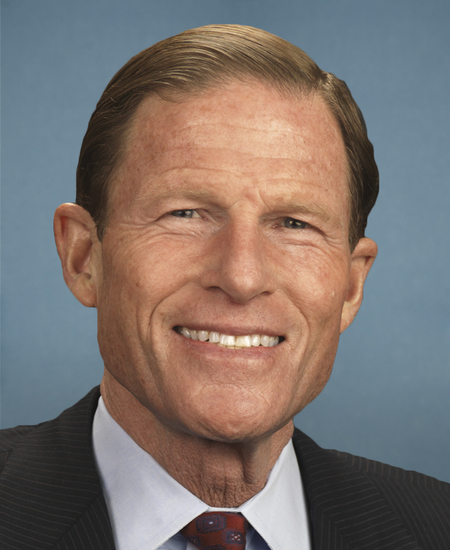
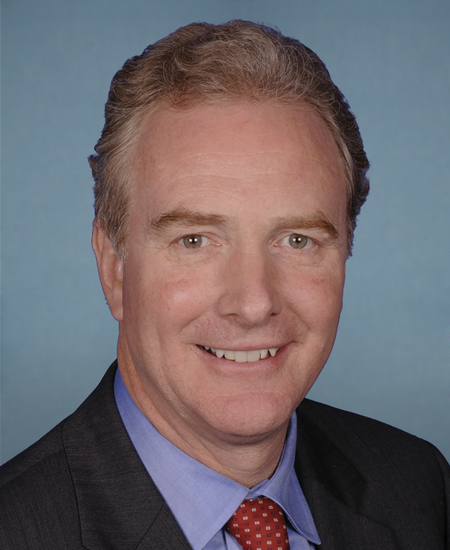
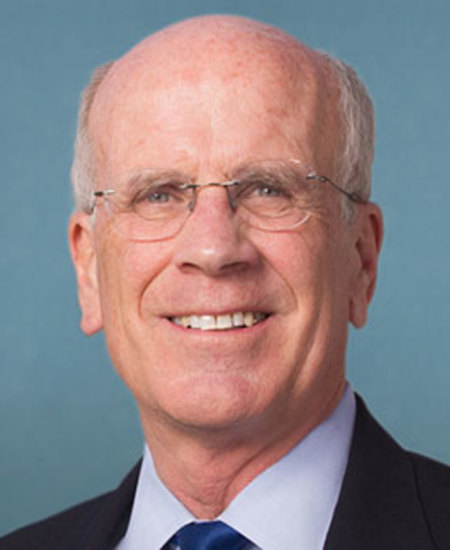
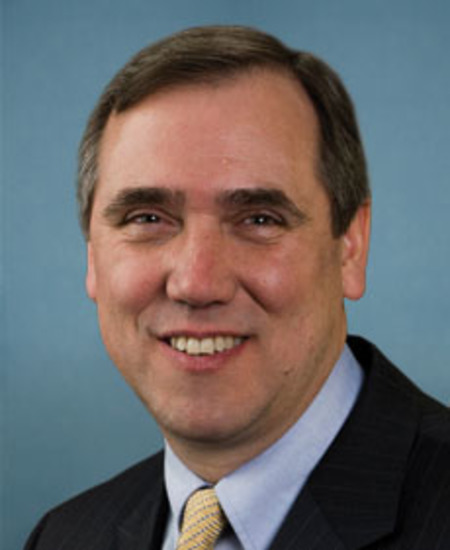
- Primary sponsor: Senator Murphy (with a broad bipartisan group of co-sponsors including Schumer, Blumenthal, Alsobrooks, Merkley, Schiff, Welch, Booker, Smith, Padilla, and Van Hollen).
Potential impact
- The Act would restrict how Federal agencies and officials pursue investigations or enforcement actions in politically sensitive contexts.
- It would empower individuals and entities to seek timely injunctions and damages when protected political speech is alleged to motivate government actions.
- It introduces heightened discovery and evidentiary standards for proving political motivation.
- It imposes additional reporting and transparency requirements on the Department of Justice and related offices.
- It could affect enforcement discretion in cases involving elections-related statutes and other politically sensitive regulatory actions.






Start the Conversation
Be the first to share your thoughts on this petition. Your voice matters!