

WeVote

Bill

Bill

S 4732

Wildfire Smoke Emergency Declaration Act of 2026

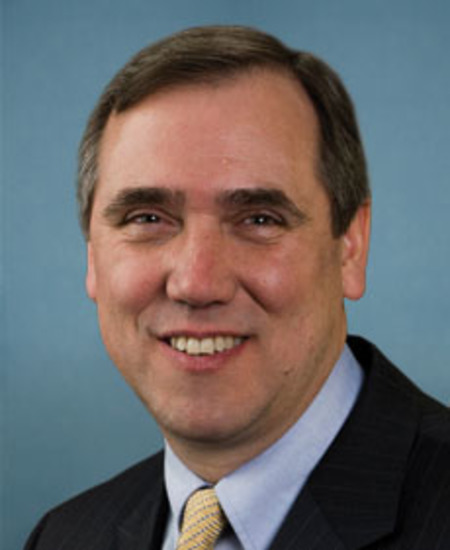
119th Congress Introduced by Jeff Merkley and 3 co-sponsors

Authorizes the President to declare a smoke emergency to mobilize federal aid and SBA grants for communities and small businesses affected by significant wildfire smoke.

Introduced in Senate
0
WeVote Research Nonpartisan
Bill Summary · S 4732

Overview

  • Bill: S. 4732 (Wildfire Smoke Emergency Declaration Act of 2026)
  • Session: 119th Congress
  • Sponsor(s): Sen. Merkley (primarily), with co-sponsors Sen. Wyden, Sen. Schiff, Sen. Padilla
  • Purpose: Authorize the President to declare a smoke emergency in response to significant wildland fire smoke, enabling federal assistance to affected states and localities, and providing SBA grants to impacted small businesses. Establishes budgetary and reporting mechanics to support such emergencies.

Main purpose and intent

  • To empower the President to declare a smoke emergency when there is or is anticipated to be a significant decrease in air quality due to wildland fire smoke in one or more states.
  • To mobilize federal resources (through FEMA and other agencies) to assist affected states and communities.
  • To provide targeted economic relief to small businesses harmed by smoke-related conditions via SBA grants.
  • To create budgetary provisions that specifically account for smoke emergency assistance within discretionary funding.

Key provisions and changes

  • Section 2: Assistance for Smoke Emergency Declaration
    • The President may declare a smoke emergency in states experiencing or anticipating significant air quality degradation due to wildland fire smoke.
    • A State Governor or appropriate state agency may request the declaration.
    • Upon declaration, the President (via FEMA and other federal agencies) may provide:
    • Grants, equipment, supplies, and personnel
    • Resources for establishing smoke shelters
    • Air purifiers
    • Additional air monitoring sites
    • SBA authority to provide grants to eligible small business concerns that lose a significant amount of revenue due to smoke in areas with an active smoke emergency declaration.
  • Section 2 (continued): Authorization of appropriations
    • Authorizes such sums as may be necessary to carry out the act (i.e., no explicit cap set in the bill; funding to be determined as needed).
  • Section 3: Budget adjustment for smoke emergency assistance
    • Amends the Balanced Budget and Emergency Deficit Control Act to create a new category: "Smoke Emergency Assistance."
    • If Congress designates certain discretionary appropriations for smoke emergency assistance, the fiscal year budget adjustment will reflect the total designated amount.
    • The designated "smoke emergency assistance" appropriations would be treated specially (not eligible for other automatic budget adjustments under the act).
    • Defines that assistance provided under the act is to be counted as smoke emergency assistance for budgetary purposes.

Who would be affected

  • States and local communities experiencing or anticipating smoke from wildland fires.
  • State governors and state agencies responsible for requesting a declaration.
  • Federal agencies (notably FEMA) implementing emergency response, air quality monitoring, shelters, air purifiers, and related resources.
  • Small businesses located in affected areas that experience significant revenue losses due to smoke, eligible for SBA grants.
  • Budgetary and appropriations processes, given the new designation and potential earmarking for smoke emergency assistance.

Procedural and timeline aspects

  • Initiation: The Governor or appropriate state agency may request a smoke emergency declaration after recognizing significant air quality degradation from wildfire smoke.
  • Declaration: The President may declare a smoke emergency for any state meeting the criteria.
  • Implementation: Upon declaration, federal agencies may deploy resources (grants, equipment, personnel, shelters, air purification, monitoring).
  • Economic relief: SBA may issue grants to eligible small businesses impacted by smoke conditions.
  • Budget process: Establishes a framework to designate and track discretionary funding for smoke emergencies, potentially affecting annual budget adjustments and scoring under the Balanced Budget Act provisions.
  • Passage timeline: Introduced June 10, 2026; referred to the Senate Committee on Homeland Security and Governmental Affairs. No further action detailed in the text provided.

Potential impact and considerations

  • Could streamline and centralize federal support during severe smoke events, reducing response time for air quality-related emergencies.
  • Provides a formal mechanism to align federal assistance with state declarations, potentially improving coordination among agencies and jurisdictions.
  • Creates targeted economic relief for small businesses harmed by smoke, which may help stabilize local economies during prolonged smoke events.
  • Budget design indicates a desire to track and potentially adjust annual spending to reflect smoke emergency needs, which could influence discretionary appropriations.
  • The act relies on a presidential declaration pathway and state requests, meaning state readiness and intergovernmental coordination are critical to timely activation.

Compiled from official sources — confirm details with the bill’s official record.

Sign in to ask a question.