

WeVote

Bill

Bill

HF 1845

Veterans definition expanded to include units operating from Laos and or naturalized under the federal Hmong Veterans' Naturalization Act.

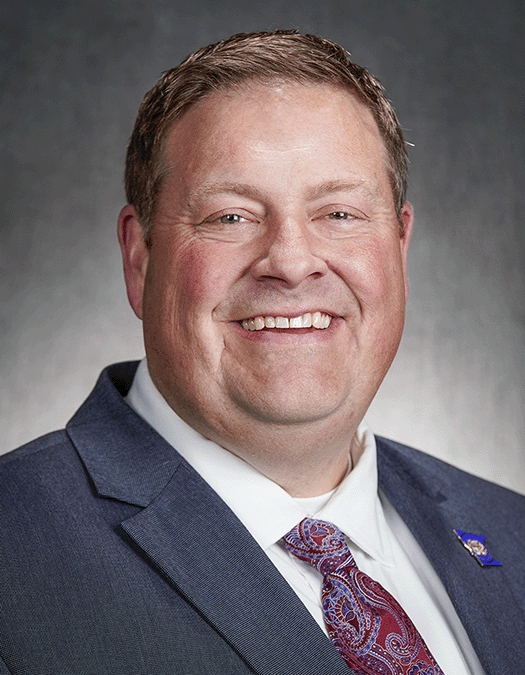
2025-2026 Regular Session Introduced by Keith Allen and 31 co-sponsors

Expands Minnesota veteran status to include units operating from Laos and Hmong Veterans' Naturalization Act recipients, enabling access to state veteran benefits.

Author added Robbins
0
WeVote Research Nonpartisan
Bill Summary · HF 1845

Summary of HF 1845 (Minnesota, 2025-2026)

Purpose

HF 1845 proposes expanding the definition of “veteran” in Minnesota law to include:
- unit-level personnel operating from Laos, and/or
- individuals who became naturalized under the federal Hmong Veterans' Naturalization Act.

The bill aims to ensure that these individuals are recognized for veteran benefits, rights, and related program eligibility at the state level.

Key Provisions and Changes

  • Definition expansion: The bill broadens the scope of who is considered a veteran to specifically include:
    • Units operating from Laos (likely referring to military units historically associated with Laos, potentially Hmong volunteers allied with U.S. military interests during the Vietnam era).
    • Individuals naturalized under the federal Hmong Veterans' Naturalization Act (i.e., Hmong veterans who gained U.S. citizenship through that act).
  • State veteran benefits eligibility: By expanding the definition, affected individuals could gain access to Minnesota veteran services, benefits, and protections that are otherwise restricted to those formally recognized as veterans under existing state law.
  • Administrative alignment: The change would signal intent for Minnesota agencies and programs administering veteran benefits to treat these groups as eligible veterans for purposes of state benefits.

Affected Parties

  • Individuals who:
    • Served in units operating from Laos (as recognized by the bill’s scope), and/or
    • Are naturalized under the Hmong Veterans' Naturalization Act.
  • Minnesota veterans programs and agencies:
    • Departments and divisions responsible for administering veteran benefits, education, employment, housing, healthcare assistance, and related supports.
  • Potentially affected family members and dependents who access benefits associated with the veteran status of the primary veteran.

Procedural and Timeline Aspects

  • Introduction and first reading: March 3, 2025.
  • Referral: Veterans and Military Affairs Division (initial committee stage).
  • Subsequent actions: The record shows an author change on March 13, 2025 (Robbins added as author); the bill has multiple sponsors listed, indicating broad bipartisan or cross-ideological support.
  • Next steps typical for Minnesota HF bills:
    • Committee hearings and amendments in the Veterans and Military Affairs Division.
    • Potential floor debate and passage in one or both chambers.
    • Possible conference committee if there are differences with the Senate version.
    • Final passage and transmittal to the governor for signature.

Notes for Stakeholders

  • The bill does not specify funding changes or appropriations; if enacted, implementing agencies may need adjustments to policies, forms, and eligibility determinations to recognize the expanded veteran status.
  • Precise definitions of “units operating from Laos” and how the Hmong Veterans' Naturalization Act category would be applied in practice may require regulatory guidance to avoid ambiguity in benefit administration.
  • Given the number of co-sponsors listed, the measure may have broad political attention; stakeholders should monitor committee hearings for amendments that clarify scope and rollout.

If you’d like, I can tailor this summary to specific benefits (healthcare, education, housing, burial, or employment) or provide a side-by-side comparison with current Minnesota veteran definitions.

Compiled from official sources — confirm details with the bill’s official record.

Sign in to ask a question.