

WeVote

Bill

Bill

HR 9386

United States Commission on an Open Society with Security Act of 2026

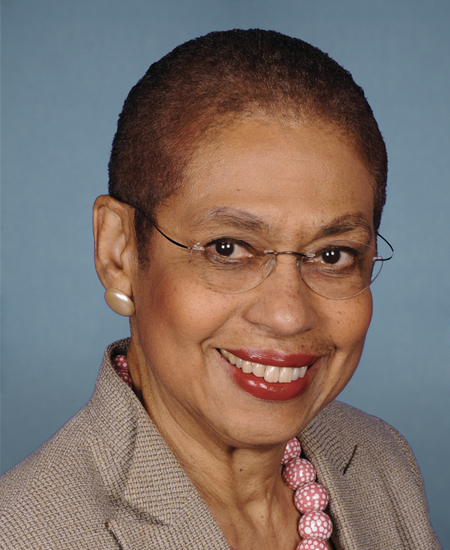
119th Congress Introduced by Eleanor Holmes Norton

Create a federal commission to study balancing security for federal/public spaces with open access and free speech, delivering a final report within 2 years.

Sponsor introductory remarks on measure. (CR E594)
0
WeVote Research Nonpartisan
Bill Summary · HR 9386

Overview

  • Bill: H.R. 9386 – United States Commission on an Open Society with Security Act of 2026
  • Purpose: Establish a federal commission to study and recommend how to balance security for public facilities and spaces with maintaining open access and free speech in an open society.
  • Sponsor: Rep. Eleanor Holmes Norton (co-sponsor listed); introduced June 22, 2026.
  • Timelines: Commission would complete a final report to the President within 2 years of its initial meeting; President would then transmit to Congress within 6 months; Commission terminates 90 days after final report submission.

Main purpose and intent

  • To create a new federal advisory body, the United States Commission on an Open Society with Security, tasked with examining how to provide security for federal buildings and public spaces while preserving open access, free discussion, and democratic participation.
  • The bill frames open, accessible public spaces as integral to American democracy and seeks expert, multidisciplinary input to reconcile security needs with civil liberties.

Key provisions and changes

  • Establishment and structure

    • Creates the 21-member Commission, with the President appointing the Chair.
    • Diverse representation across fields: architecture, technology, civil libertarians, humanists, members of the Armed Forces, government employees, city planners, business leaders, lawyers, artists, security professionals, engineers, philosophers, historians, sociologists, psychologists.
  • Appointments and governance

    • Initial appointments: 9 by the President, 3 by the Speaker of the House, 3 by the minority/majority leaders of the House, 3 by the Senate majority leader, 3 by the Senate minority leader.
    • Quorum: 9 members; Commission can conduct hearings with a fewer number.
    • Initial meeting: May proceed 90 days after enactment if 9+ members have been appointed; Chair authorized to begin operations and hire staff.
  • Scope of work (functions)

    • Study and issue findings on how to balance security and open access to federal buildings and spaces.
    • Examine: security practices, building design, public space management, counterterrorism needs, refurbishment of facilities; impacts on security, free speech, civil liberties, economics of jurisdictions, aesthetics, traffic, and federal employee performance.
    • Assess use of technology to augment or replace traditional security measures.
    • Compare with other entities and nations; evaluate analytical methods for risk assessment vs. open access values.
    • Coordinate to avoid duplicative efforts with other organizations.
  • Powers and operations

    • Hearings, testimony, and collection of information; ability to obtain information from government agencies.
    • Security requirements: members and staff must have appropriate security clearances; access to classified materials requires agency-approved agreements and clearances.
    • Use of information restricted to official purposes; “need to know” basis for sensitive information.
    • Mail, gifts, and administrative support: can receive gifts; General Services Administration to provide admin support on a reimbursable basis.
  • Personnel and staffing

    • Compensation: Members do not receive compensation for service; travel expenses permitted.
    • Staffing authorities: the Chair can appoint a staff director and personnel up to GS-15 pay level; federal detail of personnel possible on a nonreimbursable basis.
    • Experts/consultants: can be procured with approval, at rates up to the equivalent of GS-15 daily pay.
  • Reporting and termination

    • Final report to the President within 2 years of the initial meeting, detailing findings and recommendations.
    • President to transmit report to Congress within 6 months, including any legislative or administrative recommendations.
    • Commission to terminate 90 days after final report submission.
  • Funding

    • Authorization of appropriations: $5 million for fiscal year 2027 and $5 million for fiscal year 2028.

Affected parties and impacts

  • Federal government: Requires coordination across agencies for information sharing and potential policy recommendations.
  • Public facilities and spaces: Focus on security design, access management, and balancing open access with safety.
  • Stakeholders across disciplines: Architects, security professionals, civil liberties advocates, urban planners, technologists, and security-focused staff could influence recommendations and potential implementation.
  • General public: Aims to preserve open, accessible public spaces while enhancing safety.

Procedural and timeline considerations

  • Establishment process contingent on appointments; initial meeting could occur after 90 days with nine or more appointees.
  • Two-year horizon for final report, followed by a Congress-facing timeline for transmission and potential follow-up action.
  • Termination is automatic 90 days after final report submission, signaling a finite commission rather than a permanent agency.

Bottom line

H.R. 9386 creates a multidisciplinary federal commission to study how to maintain the openness and accessibility of public spaces while ensuring security against terrorism. It outlines appointment and governance rules, powers to gather information, security protocols, staffing authorities, and a clear two-year timeframe for delivering a comprehensive final report with recommendations to the President and Congress. The bill authorizes $10 million total for two fiscal years (2027–2028) to support Commission activities.

Compiled from official sources — confirm details with the bill’s official record.

Sign in to ask a question.