

WeVote

Bill

Bill

S 5205

Turkey Human Rights Promotion Act of 2026

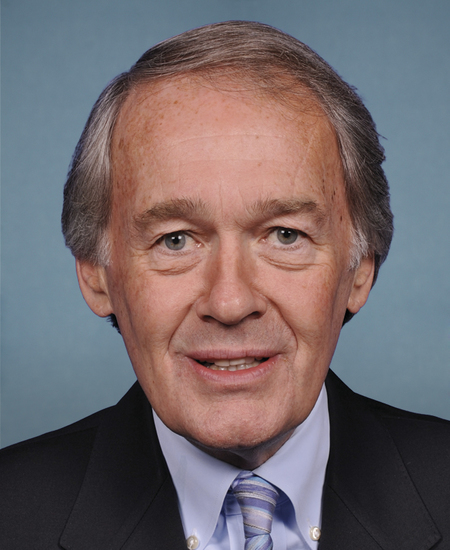
119th Congress Introduced by Ed Markey

The act conditions U.S. security aid to Turkey on reforms for prisoner releases, counterterrorism abuses, and judicial independence, while boosting rights-focused support.

Introduced in Senate
0
WeVote Research Nonpartisan
Bill Summary · S 5205

Overview

S. 5205, the Turkey Human Rights Promotion Act of 2026, is a U.S. Senate bill that aims to promote human rights and democracy in Turkey through a combination of policy statements, sanctions leverage, targeted assistance, and enhanced reporting. The act establishes a framework for addressing prisoner of conscience issues, press and internet freedoms, the protection of lawyers, and accountability for human rights violations, while conditioning certain security aid on Turkey’s reform progress.

Main purpose and intent

  • Affirm U.S. commitment to democracy, human rights, and NATO obligations in relation to Turkey.
  • Oppose abuses of counterterrorism laws and transnational repression.
  • Use diplomacy, sanctions, and security assistance conditioning to push for reforms and the release of prisoners of conscience.
  • Support civil society, independent media, and legal professionals within Turkey and in exile.

Key provisions and changes

  • Definitions and policy guidance (Sections 3–4):

    • Defines terms such as “political prisoner” and “prisoner of conscience.”
    • Declares policy to promote human rights, rebalance counterterrorism laws, and release prisoners of conscience.
  • Sense of Congress (Sections 5–8):

    • Press freedom: calls for improvements for journalists; urges warnings and protections for journalists.
    • Internet freedom: opposes online censorship and government pressure on social media and licensing regimes.
    • Lawyers and fair trials: condemns prosecuting lawyers for representing clients; calls for judicial independence and fair trial guarantees.
    • Accountability: supports targeted sanctions, alignment of U.S. security assistance with human rights, and visa restrictions for individuals involved in anti-dissent activities.
  • Limitations on security assistance (Section 9):

    • Prohibits certain U.S. security programs for Turkey unless the Secretary of State certifies progress on prisoner releases, restraint of counterterrorism abuses, compliance with European Court of Human Rights judgments, and cessation of transnational repression (with a potential case-by-case waiver for national security interests).
  • Political prisoners assistance (Section 10) and annual reporting (Section 11):

    • Funds civil society and prisoner advocacy, including documenting abuses and observing trials.
    • Requires annual reports on prisoners of conscience, freedom of expression restrictions, transnational repression, use of U.S.-origin surveillance tools, political opposition repression, constitutional reforms, and sanctions/visa actions.
  • Annual reporting and oversight (Section 11) and civil society/media support (Section 12):

    • Regular reporting by the State Department and USAID on implementation and impact.
    • Expanded support for independent media, civil society, digital rights, and human rights education in Turkey or among Turkish communities abroad.

Who/what would be affected

  • Turkish government officials implicated in human rights abuses could face sanctions and visa restrictions.
  • Turkish journalists, lawyers, academics, opposition figures, and civil society organizations could benefit from greater support, protection, and international attention.
  • U.S. security assistance to Turkey could be conditioned or restricted pending reform progress.
  • Independent media, NGOs, and digital rights groups in Turkey and Turkish-related communities (including exiled media) would be targeted for expanded U.S. support.

Procedural/timeline notes

  • Introduced and referred to the Senate Foreign Relations Committee (as of July 30, 2026).
  • Requires annual reporting for five years post-enactment.
  • Uses a certification-based approach to restrict or condition security assistance, with potential waivers for vital national security reasons.

Sponsors: including a Senate co-sponsor (Ed Markey).

Compiled from official sources — confirm details with the bill’s official record.

Sign in to ask a question.