

WeVote

Bill

Bill

HR 9897

Trump-Reagan Election Enforcement Act

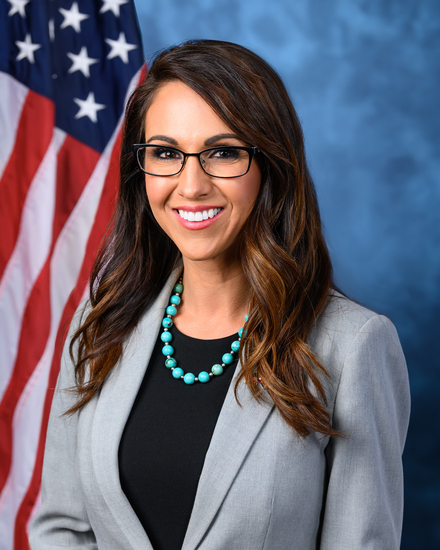
119th Congress Introduced by Lauren Boebert

The bill withholds a portion of state surface transportation funding unless states require documentary proof of U.S. citizenship for federal voter registration and enforce complian

Introduced in House
0
WeVote Research Nonpartisan
Bill Summary · HR 9897

Overview

  • Bill: HR 9897, 119th Congress, 2nd Session
  • Title: Trump-Reagan Election Enforcement Act
  • Primary purpose: Amend title 23 U.S. Code to withhold a portion of apportioned surface transportation funding from states that do not enact certain proof-of-citizenship requirements for individuals registering to vote in federal elections.
  • Sponsor: Ms. Boebert (co-sponsor: Lauren Boebert)
  • Introduced: July 23, 2026
  • Committee: Transportation and Infrastructure

Main purpose and intent

The bill creates a federal funding condition tied to a state's compliance with enhanced proof-of-c citizenship requirements for individuals registering to vote in federal elections. Specifically, it withholds a percentage of surface transportation funding to states that do not have in effect the specified citizenship-verification laws and procedures.

Key provisions and changes

  • Withholding mechanism
    • Adds new Section 180 to Chapter 1 of title 23, United States Code.
    • The Secretary of Transportation must withhold 10% of the amount apportioned to a state under section 104(b) on the first day of each fiscal year after fiscal year 2026, and increase by 5 percentage points in each subsequent fiscal year, if the state lacks the required laws described in subsection (b).
  • Required laws and standards (subsection (b))
    • States must enact laws to require documentary proof of U.S. citizenship for individuals applying to register to vote in federal elections. Accepted forms include:
    • REAL ID-compliant ID indicating U.S. citizenship
    • U.S. passport
    • U.S. military ID with military service record showing U.S. birth
    • Government-issued photo ID from federal/state/tribal government showing U.S. birth
    • Other qualifying IDs with additional supporting documentation, such as:
      • Certified birth certificate or extract from birth records
      • Hospital birth record excerpt
      • Final adoption decree showing U.S. birth
      • Consular Report of Birth Abroad or Birth Certificate certification
      • Naturalization Certificate or Certificate of Citizenship
      • American Indian Card (KIC) issued by DHS
  • Verification and alternatives
    • If a voter applicant cannot meet the primary proof, the state must establish an alternative process to demonstrate U.S. citizenship.
    • States must implement ongoing affirmative steps to identify non-U.S. citizens and ensure only U.S. citizens are registered.
  • Voter registration process
    • States require in-person presentation of proof of U.S. citizenship for mail voter registration applications by the deadline for receipt of a completed registration under state law.
    • If an otherwise completed mail registration form is received, election officials must notify the applicant of the citizenship-proof requirement and provide instructions to comply.
  • Post-registration actions
    • States must remove noncitizens from official lists of eligible voters.
    • States must allow private right of action against election officials for improperly registering a noncitizen to vote in a federal election.
    • States must establish criminal penalties for registering a noncitizen to vote in a federal election.
  • Administrative provisions
    • The bill adds a new entry “Election requirements” to the Joint Explanatory or Legislative History (clearly, the bill amends the clerical structure to reflect the new topic in the U.S. Code).

Who would be affected

  • States: Subject to funding reductions if they do not enact and enforce the specified citizenship-verification laws and procedures.
  • Voters and potential registrants: Changes to acceptable forms of citizenship proof and the registration process, including in-person verification at the time of registration.
  • Election officials and state election offices: Required to implement verification procedures, provide notices to applicants, maintain updated voter rolls, and respond to private rights of action and potential criminal penalties.
  • Federal and state governments: Interaction with federal funding for surface transportation (funding tied to compliance).

Procedural and timeline aspects

  • Effective funding withholding starts: Fiscal year 2027 (first fiscal year after FY 2026) for noncompliant states.
  • Funding reduction scale: 10% withholding in the first year post-FY 2026, increasing by 5 percentage points in each subsequent fiscal year until compliance is achieved.
  • Status of compliance: States must have enacted laws with the specified proof-of-citizenship requirements in effect to avoid withholding.
  • Next steps if enacted: The bill would require rulemaking and implementation by the Department of Transportation to administer the withholdings and monitor state compliance, along with potential enforcement through private rights of action and criminal penalties.

Practical considerations

  • The bill links election integrity measures to transportation funding, creating a cross-cutting leverage mechanism.
  • It introduces significant additional verification requirements for voter registration and enhances potential penalties and civil actions.
  • The exact scope of acceptable proofs and the interaction with existing state election laws would determine practical impact on registration timelines and administrative burden.

If you’d like, I can provide a section-by-section mapping to the actual statutory text or a comparison with current law to visualize the changes.

Compiled from official sources — confirm details with the bill’s official record.

Sign in to ask a question.