

WeVote

Bill

Bill

HB 795

Transfer of Homestead Property by Inheritance

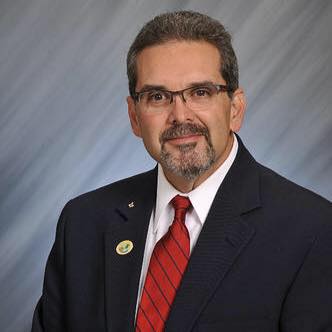
2026 Regular Session Introduced by Jose Alvarez

Expands KinGAP and Guardianship Assistance to allow 10+ year-olds in foster care to exit to relative or guardian permanent care, with support up to age 21 under conditions.

Filed
3
WeVote Research Nonpartisan
Bill Summary · HB 795

HB 795 — Increased Access for Youth in Foster Families (North Carolina)

Status: Passed 2nd Reading (Committee Substitute); introduced 04/07/2025.
Primary sponsors: Rep. Loftis (and others). Key statutory changes amend G.S. 108A-24 and add a new Part 4A (G.S. 108A-50.10 — .50.11).

Purpose / Intent

To expand and clarify eligibility for Guardianship Assistance and Kinship Guardianship Assistance (KinGAP) so younger children in foster care (age 10 and older) can more readily exit to permanent guardianship with relatives or other licensed guardians, and to allow continued support for eligible youth up to age 21 under defined conditions.

Key provisions

  • Adds a new Part 4A — “Guardianship Assistance” and “Kinship Guardianship Assistance (KinGAP)” to Article 2 of Chapter 108A.
  • KinGAP eligibility (G.S. 108A-50.10):

    • A child is eligible while under 18 if all criteria are met, including:
    • Removal from home (voluntary placement or judicial finding of contrary-to-welfare).
    • The child was eligible for foster care maintenance payments and resided at least six consecutive months in the home of a licensed prospective relative guardian.
    • A determination that reunification or adoption is not appropriate.
    • The child has attained age 10 and demonstrates strong attachment to the prospective guardian (and the guardian’s commitment to permanent care).
    • If the child is 14 or older, they must be consulted about the guardianship arrangement.
    • Sibling rule: a child under 10 may be eligible if a sibling meets KinGAP requirements and both the county agency and prospective guardian agree the placement is appropriate.
    • Continuation after age 18: Youth may continue to receive payments up to age 21 if (i) they were at least 16 when the guardianship agreement became effective, (ii) they opt to continue, and (iii) they meet one of: completing secondary education; enrolled in postsecondary/vocational program; participating in employment-support programs; employed at least 80 hours/month; or have a medical/disability condition documented in the case plan.
  • Guardianship Assistance program using State foster-care funds (G.S. 108A-50.11):

    • Similar criteria for children exiting to legal guardianship (state-funded), including the 10-year age threshold, six-month permanent placement prior to agreement, guardian eligibility under G.S. 7B-600(b), and consultation for youth age 14+.
    • Continuation rules up to age 21 mirror KinGAP.
  • Definitions: G.S. 108A-24 updated to define “Division” (Division of Social Services) and to specify “Full‑time employment” as not less than an average of 30 hours/week.

Who is affected

  • Children in foster care (notably those age 10+), their relatives and prospective guardians.
  • County child welfare agencies and the Division of Social Services (administration, placement oversight, case planning).
  • State budget/finance because of potential guardianship assistance payments (state-funded program and federal KinGAP claiming where applicable).

Procedural / timeline notes

  • Bill introduced and assigned to Judiciary/Rules; committee substitute reported favorable (CS) and passed Second Reading. (See bill history for dates/committee actions.)
  • No specific effective date included in the provided text; normal statutory effective-date rules would apply unless the bill sets a date.

Potential impacts and considerations

  • Policy effect: increases earlier access to permanency through guardianship for children age 10+, with supports to continue services through young adulthood when engaged in education/training or employment.
  • Fiscal impact: likely increases demand for guardianship payments and administrative workload for county DSS; specific fiscal effects not provided in the bill text and would require state budget analysis.

Compiled from official sources — confirm details with the bill’s official record.

Sign in to ask a question.