

WeVote

Bill

Bill

HR 9068

To strengthen hiring and screening standards for immigration enforcement officers and to strengthen uniform, identification, and professional conduct standards for such officers.

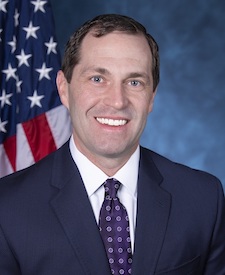
119th Congress Introduced by Jason Crow and 3 co-sponsors

The bill tightens hiring, screening, and conduct standards for immigration enforcement officers to boost accountability, uniformity, and public trust.

Introduced in House
0
WeVote Research Nonpartisan
Bill Summary · HR 9068

Overview

HR 9068 (119th Congress) aims to strengthen hiring, screening, uniform standards, identification, and professional conduct for immigration enforcement officers. The bill intends to tighten eligibility and vetting processes, as well as bolster rules governing appearance, insignia, and behavior to promote accountability and professionalism within immigration enforcement agencies.

Main purpose and intent

  • Improve the recruitment and hiring standards for immigration enforcement officers to ensure candidates meet enhanced qualifications.
  • Strengthen screening procedures to prevent individuals with disqualifying backgrounds or issues from entering the workforce.
  • Establish and reinforce uniform standards, identification requirements, and codes of professional conduct for officers.
  • Promote transparency, accountability, and public trust in immigration enforcement operations.

Key provisions and changes

  • Hiring standards:
    • More stringent eligibility criteria for applicants (background checks, competencies, and fitness standards).
    • Potential updates to educational, experience, or training requirements.
  • Screening processes:
    • Enhanced background investigations, possibly including credit checks, criminal history review, integrity vetting, and risk assessments.
    • Clear pathways for disqualification and appeal if an applicant is found unsuitable.
  • Uniform, identification, and conduct standards:
    • Establishment or clarification of required uniforms and visible identification for officers.
    • Code of professional conduct detailing expected behavior, use of force guidelines, interactions with the public, and reporting procedures for misconduct.
    • Mechanisms for enforcement of uniform/compliance and consequences for violations.
  • Oversight and accountability:
    • Provisions that may involve internal affairs, inspector general, or external oversight to monitor adherence to standards.
    • Reporting requirements or timelines for agencies to implement reforms.

Who would be affected

  • Immigration enforcement officers and the agencies that employ them (e.g., components within federal immigration enforcement).
  • Hiring and human resources units within these agencies responsible for applicant screening and onboarding.
  • Oversight bodies and internal affairs offices charged with enforcing conduct standards.
  • Prospective applicants seeking roles as immigration enforcement officers.

Procedural and timeline aspects

  • Introduced in the House and referred to the Committee on the Judiciary, with parallel referrals to the Committee on Homeland Security and the Committee on Ways and Means for provisions within their jurisdiction.
  • The referral date is May 29, 2026, indicating early-stage legislative consideration.
  • As a proposed bill, passage would require approval by the House, potential reconciliation with the Senate version if one exists, and ultimately signature by the President to become law.
  • The specific implementation timeline (effective dates, phase-in periods, or deadlines) would be determined in the text of the bill or accompanying committee reports.

Notes

  • The bill has bipartisan co-sponsors, including Joe Neguse, Diana DeGette, Brittany Pettersen, and Jason Crow, signaling cross-party support in its introduction.
  • Details such as exact numeric thresholds (e.g., background check standards, training hours, or identification specifications) would be specified in the bill’s text and any manager’s amendment or committee reports.

Compiled from official sources — confirm details with the bill’s official record.

Sign in to ask a question.