

WeVote

Bill

Bill

HR 8633

To specify the standards governing claims of consciously parallel pricing coordination in civil actions under the Sherman Act, and to clarify the meaning of contract, combination in the form of trust or otherwise, or conspiracy under the Sherman Act.

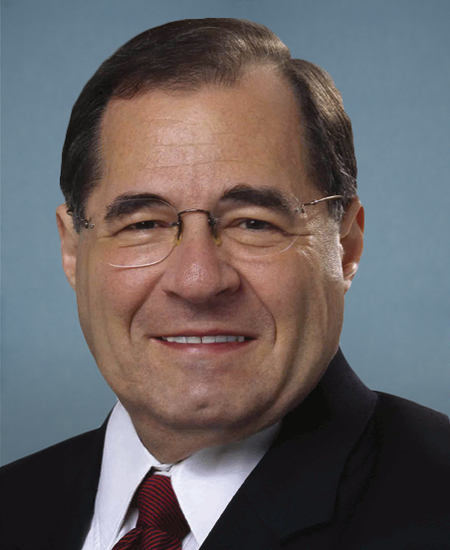
119th Congress Introduced by Jerry Nadler and 1 co-sponsor

The bill tightens and clarifies standards for proving consciously parallel pricing in Sherman Act cases, defining key terms and evidentiary requirements.

Introduced in House
0
WeVote Research Nonpartisan
Bill Summary · HR 8633

Summary of HR 8633 (119th Congress)

Overview

  • Bill title: To specify the standards governing claims of consciously parallel pricing coordination in civil actions under the Sherman Act, and to clarify the meaning of contract, combination in the form of trust or otherwise, or conspiracy under the Sherman Act.
  • Status: Referred to the House Judiciary Committee on 2026-04-30. Introduced the same day.
  • Sponsors:
    • Primary sponsors: None listed in provided data
    • Co-sponsors: Mary Gay Scanlon; Jerry Nadler

Purpose and Intent

The bill aims to tighten and clarify the standards used to assess civil claims alleging consciously parallel pricing coordination under the Sherman Act. Specifically, it seeks to:
- Define and regulate what constitutes consciously parallel pricing behavior by firms.
- Clarify the statutory terms used in Sherman Act analysis, including “contract,” “combination in the form of a trust or otherwise,” and “conspiracy.”

The underlying intent is to reduce ambiguity in antitrust litigation around parallel pricing and to provide clearer guidance on when such conduct can be deemed illegal under the Sherman Act.

Key Provisions (as indicated by title and description)

While the full text is not provided in the description, the bill is expected to include:
1. Standards for Conscious Parallelism Claims:
- Establish criteria or tests for when firms’ parallel pricing actions amount to illegal coordination versus independent parallel behavior.
- Potentially specify evidentiary requirements (e.g., direct or circumstantial proof) to establish conscious parallelism in pricing.
2. Clarification of Sherman Act Terms:
- Define or interpret core Sherman Act concepts:
- “Contract”
- “Combination in the form of a trust or otherwise”
- “Conspiracy”
- Provide guidance on how these terms apply to modern pricing coordination, including digital markets or complex supply chains.
3. Application Scope:
- Clarify how the standards apply to civil actions brought under the Sherman Act.
- Possible alignment with judicial precedent or Congress’s intended interpretation of antitrust liability for price coordination.

Who/What is Affected

  • Antitrust plaintiffs and defendants: The standards used to prove illegal coordination in pricing disputes would be directly affected.
  • Judicial system (courts): Judges would have clearer criteria for determining liability in Sherman Act cases involving parallel pricing.
  • Businesses and market participants: Firms engaging in or scrutinized for pricing coordination may face more precise standards, potentially influencing compliance and enforcement risk.
  • Antitrust enforcement agencies (e.g., DOJ Antitrust Division, FTC): Enforcement guidance might be updated to reflect clarified definitions and standards.

Procedural and Timeline Aspects

  • Referral: House Judiciary Committee (April 30, 2026).
  • Intro: Introduced in the House on April 30, 2026.
  • Next steps: The bill would proceed through committee consideration, potential amendments, and floor debate/vote in the House. If passed, it would move to the Senate for consideration, where similar clarifications would be needed to become law.

Potential Impacts and Considerations

  • Clarity vs. Flexibility: By clarifying standards, the bill could reduce litigation ambiguity but may raise thresholds for proving illegal pricing coordination, or conversely, raise interpretive precision that aids enforcement.
  • Economic Impacts: Could affect industries prone to coordinated pricing discussions or implicit collusion by providing a more explicit framework for liability.
  • Legal Strategy: Plaintiffs may need to gather different types of evidence to establish conscious parallelism under the new standards; defendants may leverage clarified definitions to argue lack of conspiracy.

Note: This summary is based on the bill’s title, description, and introductory action. The full text would provide precise definitions, criteria, and procedural steps.

Compiled from official sources — confirm details with the bill’s official record.

Sign in to ask a question.