

WeVote

Bill

Bill

HR 9069

KIDS Act

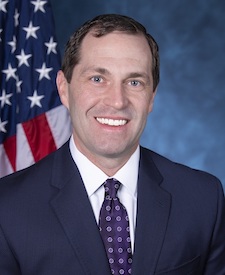
119th Congress Introduced by Jason Crow and 3 co-sponsors

Limits DHS detention of minors and cognitively disabled individuals and requires court-issued warrants for enforcement actions at sensitive locations.

Introduced in House
0
WeVote Research Nonpartisan
Bill Summary · HR 9069

Overview

HR 9069 (119th Congress) aims to modify how the Department of Homeland Security (DHS) handles detention and immigration enforcement, with a focus on two areas: (1) limiting the detention of children and individuals with cognitive disabilities, and (2) restricting immigration enforcement actions at sensitive locations unless a court-issued criminal warrant is obtained.

Main purpose and intent

  • Limit DHS detention practices specifically affecting:
    • Children
    • Individuals with cognitive disabilities
  • Prohibit or restrict immigration enforcement actions at sensitive locations without a court-issued criminal warrant.
  • Seek to create additional safeguards and procedural requirements around detention and enforcement to protect vulnerable populations and reduce enforcement actions at locations considered sensitive.

Key provisions and changes

  • Detention limitations:
    • Establishes criteria or limits on detaining children and individuals with cognitive disabilities.
    • Potentially imposes standards for identifying, screening, or treating detainees in these categories.
    • Could require alternatives to detention for eligible individuals or set time/place constraints on detention.
  • Enforcement at sensitive locations:
    • Prohibits ICE or other DHS enforcement actions at sensitive locations without a court-issued criminal warrant.
    • Sensitive locations typically include places like schools, healthcare facilities, houses of worship, polling places, and certain areas where vulnerable populations are present; the bill would specify relevant locations (exact list to be defined in the text).
    • Requires judicial authorization for enforcement actions at these locations, creating a higher threshold for DHS operations there.
  • Court-issued criminal warrants:
    • Specifies that a criminal warrant issued by a court is required for enforcement actions at sensitive locations.
    • Likely outlines what constitutes a valid warrant and the standards for obtaining one (probable cause, particularity, etc.).
  • Oversight and definitions:
    • Provides definitions of terms such as “children,” “cognitive disability,” and “sensitive locations.”
    • May set forth reporting or oversight mechanisms to monitor compliance with the detention and enforcement provisions.
  • Exclusions and exceptions:
    • The bill may include narrowly defined exceptions (e.g., imminent threats to safety) but would generally constrain enforcement actions without warrants in sensitive locations.

Who and what would be affected

  • U.S. Department of Homeland Security agencies, including Immigration and Customs Enforcement (ICE) and potentially U.S. Customs and Border Protection (CBP), would be subject to the new limitations.
  • Immigrant detainees, particularly:
    • Minors and individuals with cognitive disabilities who are in DHS custody.
    • People who might be affected by changes to detention practices or alternatives to detention.
  • Enforcement operations at sensitive locations:
    • DHS enforcement actions would be constrained at designated locations unless a court-issued criminal warrant is obtained.
  • Legal and judicial systems:
    • Increased interaction with the court system for warrants related to enforcement actions at sensitive sites.
  • Advocates and vulnerable populations:
    • Civil rights, immigrant rights, disability rights groups may be particularly interested in the bill’s protections and procedural safeguards.

Procedural and timeline aspects

  • Introduction and referral:
    • Introduced in the House and referred to the House Judiciary Committee on May 29, 2026.
  • Sponsorship:
    • Co-sponsors include Joe Neguse, Diana DeGette, Brittany Pettersen, and Jason Crow.
  • Legislative path (typical next steps):
    • Committee consideration and potential markup on related DHS or immigration enforcement issues.
    • Floor consideration by the full House, potential passage, and then movement to the Senate for consideration.
  • Effective date:
    • The text provided does not specify an effective date; details would be defined in the bill’s provisions, including any phase-in period or applicable regulatory timelines.

Potential impact

  • Humanitarian and civil rights protections:
    • Strengthened protections for children and individuals with cognitive disabilities in DHS detention settings.
  • Enforcement policy:
    • Reduced likelihood of enforcement actions at sensitive locations without judicial warrants, potentially reducing abrupt or intrusive actions in those settings.
  • Operational changes for DHS:
    • Agencies would need new policies, training, and procedures to comply with detention and warrant requirements.
  • Legal and constitutional considerations:
    • The need to balance enforcement priorities with due process, warrants, and Fourth Amendment considerations could influence future litigation and regulatory practices.

If you’d like, I can compare this bill to existing statutory protections or provide a section-by-section breakdown once the full text is available.

Compiled from official sources — confirm details with the bill’s official record.

Sign in to ask a question.