

WeVote

Bill

Bill

HR 9576

National Fraud Enforcement Division Act of 2026

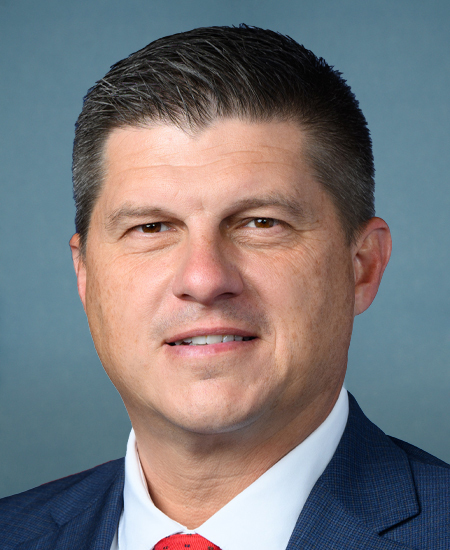
119th Congress Introduced by Brad Finstad and 1 co-sponsor

Creates the National Fraud Enforcement Division within DOJ to lead nationwide investigation, prosecution, and coordination against major fraud schemes across sectors.

Introduced in House
0
WeVote Research Nonpartisan
Bill Summary · HR 9576

Summary of HR 9576 (119th Congress)

Purpose and intent

  • Establishes a new, dedicated division within the Department of Justice (DOJ) called the National Fraud Enforcement Division.
  • The division would focus specifically on investigating, prosecuting, and coordinating federal efforts to combat major fraud schemes across sectors (e.g., financial fraud, government program fraud, corporate fraud, and related offenses).

Key provisions and changes

  • Creation of the National Fraud Enforcement Division (NFED):

    • A standalone division within the DOJ tasked with leading national efforts against fraud.
    • Responsibilities likely include coordination across DOJ components (e.g., U.S. Attorneys’ Offices, FBI) and federal prosecutors, setting nationwide priorities, and consolidating expertise on fraud prosecutions.
  • Priority and focus areas:

    • Emphasizes high-impact fraud schemes affecting federal programs, financial markets, and consumer protections.
    • Aims to improve detection, investigation, and prosecution throughput for complex or cross-jurisdictional fraud cases.
  • Coordination and resources:

    • Potential directions for allocating personnel, funding, and specialized training to the NFED.
    • May authorize collaboration with other federal agencies, inspector generals, and state or local partners to enhance information sharing and seamless enforcement actions.
  • Enforcement tools and authority:

    • Clarifies or expands the NFED’s authority to pursue cases, leverage investigative powers, and pursue statute-specific penalties.
    • May address cooperation with prosecutors, grand jury procedures, and case management standards for fraud cases.
  • Reporting and accountability:

    • Likely requires regular reporting on enforcement activities, case outcomes, and program effectiveness to Congress.
    • Could establish performance metrics or benchmarks for fraud deterrence and recovery of losses.

Who would be affected

  • Federal prosecutors and DOJ components:
    • DOJ components would align under the NFED for fraud-related cases, potentially changing case assignment and prioritization.
  • Financial institutions, businesses, and individuals involved in fraud schemes:
    • Companies and individuals facing heightened federal enforcement related to fraud, including financial fraud, procurement fraud, or misuse of government programs.
  • Other government agencies and oversight bodies:
    • Agencies with related fraud investigations (e.g., SEC, FBI, OIGs) may coordinate more closely with NFED.

Procedural and timeline aspects

  • Status: Introduced in the House and referred to the House Committee on the Judiciary (as of the latest action history).
  • Sponsor and support:
    • Co-sponsors include Derek Schmidt and Brad Finstad, indicating bipartisan attention.
  • Potential future steps:
    • Committee review, potential markup, and floor consideration.
    • If advanced, may require amendments detailing scope, funding, and organizational structure.
  • Effective date:
    • As introduced, the bill would become law upon passage by Congress and signing by the President, with potential regulatory or administrative implementation timelines for establishing NFED.

Notes

  • The bill’s text would specify the exact structure, funding authorization, and statutory authorities for the NFED. The summary above reflects typical features of a desk-established enforcement division and the information available from the bill’s introduction and action history.

Compiled from official sources — confirm details with the bill’s official record.

Sign in to ask a question.