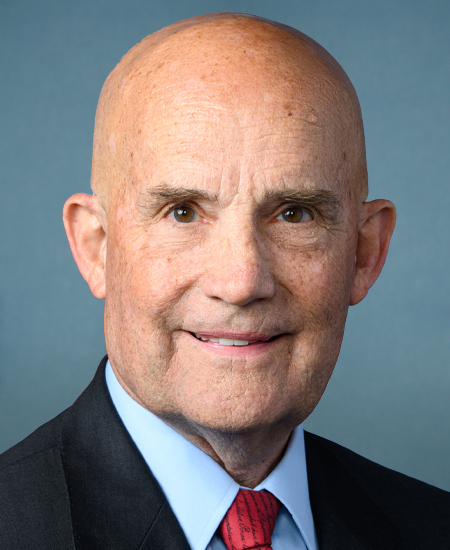
Summary of Bill: HR 8353 (119th Congress)
Title
To establish a prohibition on fees related to religious participation, and for other purposes.
Purpose and Intent
The bill aims to bar certain fees connected to religious participation. In practical terms, it seeks to prohibit charges that would otherwise be imposed for individuals to participate in religious activities, or to access religious services or rites, in specified contexts. The exact scope and definitions (e.g., which participants, what qualifies as “fees,” and which activities are covered) are ordinarily detailed in the text of the bill; the high-level aim is to remove or restrict financial barriers to religious participation.
Key Provisions (Proposed Changes)
While the full text should be consulted for precise language, the bill is described as establishing a prohibition on fees related to religious participation. Potential areas typically addressed in such legislation may include:
- Prohibition on charging individuals fees to attend or participate in religious services, programs, or ceremonies.
- Restrictions or penalties for entities that impose or solicit such fees.
- Clarifications of what constitutes a “fee” versus voluntary or suggested donations, to prevent circumvention.
- Applicability to government, private sector, or a specific set of institutions (e.g., places of worship, religious organizations, or participants in federally funded programs).
Affected Parties and Scope
- Individuals seeking to participate in religious activities that would be subject to the prohibition on fees.
- Religious organizations or institutions that might otherwise impose participation-related charges.
- Potentially, government entities or programs if the bill carves out or extends to public accommodations or funding conditions (exact scope to be determined by the statutory language).
- The presiding sponsor and co-sponsor indicate support within the House; co-sponsor listed: Keith Self.
Procedural and Timeline Aspects
- Action History:
- Introduced in the House and referred to the House Judiciary Committee on April 16, 2026.
- Next steps (typical for a House bill):
- Committee consideration, hearings, and potential markups.
- If approved by the committee, the bill would proceed to the House floor for debate and a vote.
- If passed by the House, it would move to the Senate for consideration, where it would require passage and any reconciliation between chambers.
- Effective date: The bill’s effective date (if enacted) would be specified in the text, including any phase-in period or applicability to existing arrangements.
Potential Implications
- Civil and religious-liberty implications: The core effect would be to reduce or eliminate financial barriers to participation in religious activities, aligning with principles that access to religious practice should not be impeded by fees.
- Compliance and enforcement: Entities subject to the prohibition would need to ensure their practices comply, with penalties or enforcement mechanisms likely described in the bill.
- Administrative considerations: Institutions may need to update policies, disclose fee-related information, or implement monitoring to avoid inadvertent violations.
If you’d like, I can:
- Extract and summarize the exact definitional provisions (e.g., what counts as a “fee” and to which activities it applies).
- Highlight any stated exceptions, penalties, or enforcement mechanisms.
- Provide a comparison to existing law or similar prior measures.