

WeVote

Bill

Bill

HR 8291

Reforming Disaster Recovery Act

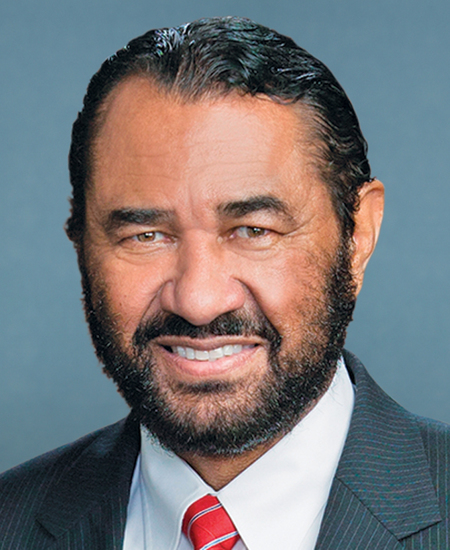
119th Congress Introduced by Al Green and 2 co-sponsors

Creates the Community Disaster Assistance Fund to deliver HUD disaster recovery aid through the CDBG framework for housing, infrastructure, and community development.

Introduced in House
0
WeVote Research Nonpartisan
Bill Summary · HR 8291

Summary of HR 8291 (119th Congress)

Title

To establish a Community Disaster Assistance Fund for housing and community development and to authorize the Secretary of Housing and Urban Development to provide, from the fund, assistance through a community development block grant disaster recovery program, and for other purposes.

Purpose and Intent

  • Establishes a dedicated Community Disaster Assistance Fund to support housing and community development activities in areas hit by disasters.
  • Authorizes HUD to use funds from this new program to deliver disaster recovery assistance through a Community Development Block Grant (CDBG) framework.
  • Aims to streamline and target federal disaster recovery support for housing, infrastructure, and community development needs in impacted communities.

Key Provisions and Changes

  1. Creation of the Community Disaster Assistance Fund (CDAF)

    • Establishes a new federal fund intended specifically for disaster recovery related to housing and community development.
    • The fund is to be used to provide assistance to state, local, tribal, and other eligible entities as they recover and rebuild after disasters.
  2. Authority for HUD Programs

    • Authorizes the Secretary of Housing and Urban Development (HUD) to dispense assistance from the CDAF through a disaster recovery program administered under the Community Development Block Grant (CDBG) framework.
    • The disaster recovery program would operate within the existing CDBG program structure, leveraging its rules and administration to deliver aid.
  3. Scope of Assistance

    • Focused on housing recovery (e.g., repairs, rebuilding, mitigation) and broader community development needs (infrastructure, public facilities, economic development, and related services) affected by disasters.
    • Aims to prioritize efficient targeting of resources to distressed or underserved communities, with emphasis on long-term resilience and mitigation where possible.
  4. Administrative and Oversight Elements

    • Likely to outline coordination between HUD, other federal agencies, and recipients of aid to ensure timely and effective deployment of funds.
    • May include reporting, compliance, and audit requirements typical of HUD and CDBG-funded activities, though specific provisions are not detailed in the summary.
  5. Relationship to Existing Authorities

    • Builds on the CDBG disaster recovery concept by providing a dedicated fund to reduce delays and broaden the scale of available assistance.
    • Uses the established CDBG framework to administer grants, potentially simplifying normalization of procedures for grantees.

Who Would Be Affected

  • Primary Beneficiaries: States, units of local government, tribal governments, and eligible non-entitlement communities eligible for CDBG assistance that have suffered housing and community development losses due to disasters.
  • Direct Federal Role: HUD would administer the CDAF-disaster recovery program and determine allocations and eligibility criteria in coordination with other federal and local partners.
  • Other Stakeholders: Private homeowners and renters, neighborhood organizations, and public infrastructure projects in disaster-impacted areas, through CDBG-funded activities.

Procedural and Timeline Aspects

  • Introduction and Referral: Introduced in the House and referred to the Committee on Financial Services and the Committee on Appropriations for consideration.
  • Sponsors: Primary sponsor with a noted co-sponsor (Al Green).
  • Timing: No specific implementation date provided in the summary; enactment would depend on committee action, passage by both chambers, and presidential signing, subject to the regular legislative timeline.
  • Next Steps: If advanced, the bill would require development of programmatic details (allocation formulas, eligible activities, environmental and civil rights considerations, oversight plans) typically handled in committee markups and associated funding authorization measures.

If you’d like, I can expand this with a point-by-point comparison to existing disaster recovery authorities or draft a plain-language FAQ for community stakeholders.

Compiled from official sources — confirm details with the bill’s official record.

Sign in to ask a question.