

WeVote

Bill

Bill

HB 3029

To create an education internet-based reporting portal for Homeschool parents and Boards of Education.

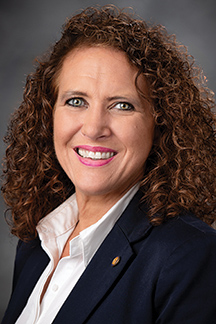
2025 Regular Session Introduced by Kathie Hess Crouse and 2 co-sponsors

HB 3029 limits single‑use foodware to customer requests and expands the Solid Waste Management Fund with new landfill fees to fund climate and pollution programs.

To House Education
0
WeVote Research Nonpartisan
Bill Summary · HB 3029

HB 3029 — Summary (Introduced 2025)

Important note: Although the bill heading in the legislative record is “Relating to workforce development,” the text of HB 3029 (Rep. Janet Yang Rohr) amends the Environmental Protection Act. This summary describes the environmental provisions in the introduced version.

Main purpose and intent

HB 3029 aims to (1) reduce unnecessary distribution of single‑use foodware (disposable plates, cups, utensils, etc.) by food dispensing establishments and (2) clarify and expand the Solid Waste Management Fund — including new revenue sources, fee schedules for sanitary landfills, and the permitted uses of those funds. The bill directs civil penalties from foodware violations into the Solid Waste Management Fund to support climate- and pollution‑related programs.

Key provisions

  • Single‑use foodware restrictions (new Section 22.64)

    • A food dispensing establishment may provide single‑use foodware only when a customer affirmatively requests it or at a self‑service station.
    • Establishments must present an affirmative option for customers to request single‑use foodware across all ordering/point‑of‑sale platforms (internet/digital apps, phone orders, and in‑person).
    • Certain foodware types and certain facilities are exempt (exemptions are referenced but not detailed in the excerpt).
    • Violations subject the owner/operator to civil penalties; penalty revenue is deposited into the Solid Waste Management Fund and used by the Agency for climate‑ and pollution‑related programs.
  • Solid Waste Management Fund and landfill fee structure (amends/adds Section 22.15)

    • Creates/clarifies the Solid Waste Management Fund as a repository for specified fees, loan repayments, registration fees, civil penalties, and transfers.
    • Fee schedule for sanitary landfills (tiered by annual disposed volume):
    • >150,000 cubic yards: 95¢ per cubic yard (or optional weighing: $2.00 per ton), with a cap (fee cannot exceed $1.55/yd³ or $3.27/ton).
    • >100,000–150,000 yd³: $52,630
    • >50,000–100,000 yd³: $23,790
    • >10,000–50,000 yd³: $7,260
    • ≤10,000 yd³: $1,050
    • Directs Agency uses of the Fund, including administration of Paint Stewardship, Consumer Electronics Recycling, Drug Take‑Back, Statewide Recycling Needs Assessment, enforcement support for local governments, and other solid‑waste programs.
    • Contains language on periodic transfers between funds (including historical transfers noted in the text).

Who is affected

  • Food dispensing establishments (restaurants, cafes, food trucks, cafeterias, delivery services) and their owners/operators — new compliance and potential penalty exposure.
  • Consumers — must affirmatively request disposable items when desired.
  • Ordering platforms (online/delivery apps, phone systems) — must implement affirmative request options.
  • Sanitary landfill owners/operators — subject to the specified fee schedule and reporting/collection rules.
  • Illinois Environmental Protection Agency and local governments — receive/administer funds and enforcement responsibilities.

Procedural status and timeline

  • Filed/introduced: First reading 2/6/2025 (filed 2/6/2025 by Rep. Janet Yang Rohr).
  • Committee activity: Assigned to multiple committees, public hearings and work sessions March–April 2025; committee substitute considered and reported favorably as substituted (4/30/2025).
  • Current status: In committee upon adjournment (as of 6/28/2025).
  • Related/companion bills: SB 920 and SB 1174.

Notes and implications

  • The single‑use foodware provisions aim to reduce waste and encourage reduced reliance on disposables; they will require operational changes by establishments and modifications to ordering platforms.
  • Civil penalties are channelled to a fund used for waste management and climate/pollution programs, potentially expanding program funding.
  • The excerpt references exemptions and administrative details that are not fully specified here; final impacts will depend on implementing rules and any amendments adopted in committee or on the floor.

Compiled from official sources — confirm details with the bill’s official record.

Sign in to ask a question.