

WeVote

Bill

Bill

HR 9198

To create a national commission to combat workplace sexual harassment, and for other purposes.

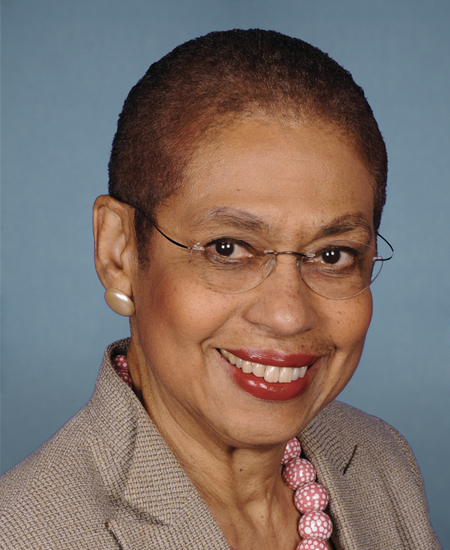
119th Congress Introduced by Eleanor Holmes Norton

Creates a National Commission on Workplace Sexual Harassment to study, report, and recommend prevention and remedies across workplaces nationwide.

Introduced in House
0
WeVote Research Nonpartisan
Bill Summary · HR 9198

Summary of HR 9198 (119th Congress)

Purpose and intent

  • HR 9198 aims to establish a national commission to combat workplace sexual harassment. The bill creates a formal, bipartisan mechanism to study, report on, and provide recommendations to reduce and prevent sexual harassment in workplaces across the United States.
  • The overarching goal is to coordinate federal, state, and local efforts, improve prevention, accountability, and support for victims, and identify best practices for employers and institutions.

Key provisions and changes

  • Creation of the National Commission on Workplace Sexual Harassment
    • Establishes a permanent or semi-permanent federal commission (name: National Commission on Workplace Sexual Harassment) with a defined mandate.
    • The commission would be charged with studying the prevalence, dynamics, and impacts of workplace sexual harassment across industries and sectors.
  • Duties and authorities
    • Conducting national data collection, surveys, and research to assess scope, frequency, and consequences of harassment.
    • Analyzing existing laws, enforcement mechanisms, and workplace policies to identify gaps and best practices.
    • Issuing recommendations to Congress, federal agencies, employers, and non-governmental organizations on prevention, reporting, and remediation.
    • Developing model policies and training resources for employers to mitigate harassment and ensure safe reporting channels.
  • Coordination and collaboration
    • Engage with federal agencies (e.g., EEOC, DOL, DOJ), state and local authorities, employers, labor unions, worker advocacy organizations, and academic institutions.
    • Facilitate information-sharing on effective interventions and compliance strategies.
  • Report timeline and public input
    • Require periodic reports to Congress detailing findings, progress on recommendations, and proposed legislative or regulatory changes.
    • Potentially include opportunities for public comment or stakeholder hearings to inform the commission’s work.
  • Funding and staffing
    • Authorization of appropriation or funding mechanisms to support the commission’s operations, experts, staff, and research activities.
    • Define terms of appointment, tenure, and qualifications for commissioners, including bipartisan balance and representation from diverse communities.

Who would be affected

  • Workplaces and employers
    • Employers across sectors would be encouraged or required to align practices with commission recommendations, enhance harassment prevention training, reporting procedures, and accountability measures.
  • Employees and workers
    • Increased access to trusted reporting channels, enhanced awareness of rights, and potentially improved remedies and protections against harassment.
  • Federal and state agencies
    • Agencies engaged in labor, civil rights, and workplace safety would coordinate with the commission and may adjust policies or enforcement practices in response to findings.
  • Advocacy and research communities
    • Worker advocacy groups, researchers, and employers’ organizations would participate in consultations, provide data, and help disseminate guidance.

Procedural and timeline aspects

  • Introduction and referral
    • Introduced in the House and referred to the House Committee on Education and the Workforce (as of 2026-06-08).
  • Legislative steps
    • The bill would progress through committee consideration, potential markup, and floor action (votes in the House; possible passage to the Senate for consideration).
  • Potential implementation timeline
    • If enacted, the commission would begin operations upon enactment or after establishing initial appointees, with ongoing reporting at regular intervals (e.g., annual or multi-year reports) to Congress.
  • Sponsorship
    • Co-sponsored by Eleanor Holmes Norton, indicating bipartisan or cross-cutting support, depending on chamber dynamics.

If you’d like, I can tailor this summary to highlight specific implications for employers, workers, or for particular sectors, or compare it to similar existing commissions or statutes.

Compiled from official sources — confirm details with the bill’s official record.

Sign in to ask a question.