

WeVote

Bill

Bill

HR 10172

To amend title 38, United States Code, to extend eligibility for survivors' and dependents' educational assistance to the dependent parent of a person who dies of a service-connected disability or has a total and permanent service-connected disability, and for other purposes.

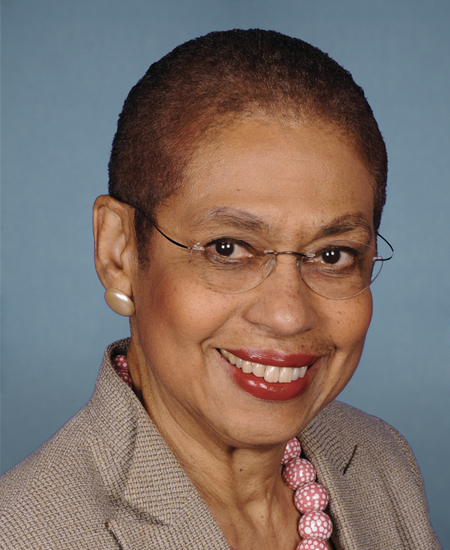
119th Congress Introduced by Eleanor Holmes Norton

Expands DEA eligibility to include dependent parents of veterans who die from, or have, service-connected disabilities.

Sponsor introductory remarks on measure. (CR E808)
0
WeVote Research Nonpartisan
Bill Summary · HR 10172

Overview

HR 10172, introduced in the 119th Congress, would amend title 38 of the United States Code to expand eligibility for the Survivors’ and Dependents’ Educational Assistance (DEA) program. Specifically, the bill seeks to extend DEA eligibility to the dependent parent of a person who dies from a service-connected disability or who has a total and permanent service-connected disability. The measure was introduced and referred to the House Committee on Veterans' Affairs on August 27, 2026. Co-sponsor: Eleanor Holmes Norton.

Purpose and intent

  • To broaden access to educational assistance for dependents of veterans by extending DEA benefits to dependent parents.
  • The bill targets two groups:
    • Dependents of individuals who die due to service-connected disabilities.
    • Dependents of individuals who have a total and permanent service-connected disability.

Key provisions and changes

  • Amends title 38, U.S. Code, to include dependent parents within the eligibility criteria for the DEA program.
  • Maintains existing DEA program structure (under the current framework of benefits available to eligible spouses, children, and certain other dependents) but adds dependent parents as an eligible beneficiary when the veteran’s death or disability meets service-connection criteria.
  • The specific benefit parameters (e.g., duration of eligible periods, payment amounts, enrollment processes) would be governed by current DEA rules, with the eligibility expansion applying to those rules for the newly added dependent-parent category.

Who would be affected

  • Dependent parents of service members or veterans who meet the qualifying conditions:
    • The veteran’s death is service-connected.
    • The veteran has a total and permanent service-connected disability.
  • Potential indirect effects on veterans’ families, educational institutions, and VA education benefit administration, including:
    • Enrollment processes for dependent parents.
    • Budgetary and administration considerations for the DEA program to accommodate the expanded beneficiary base.

Procedural and timeline aspects

  • Status: Referred to the House Committee on Veterans' Affairs (August 27, 2026).
  • Next steps typically include committee review, potential amendments, and consideration on the House floor, followed by potential passage by the House and transmission to the Senate.
  • No explicit effective date is provided in the summary; implementation would follow the bill’s enactment and any specified effective date or gradual phase-in, if included in the final text.

Potential impact and considerations

  • Access: Expanded educational support for dependent parents could reduce financial barriers to higher education for those without other eligible dependents.
  • Fiscal: Would require an incremental increase in DEA program funding and administrative capacity to process new beneficiaries.
  • Equity: Aligns DEA eligibility with broader recognition of family college-career needs arising from service-connected disabilities and veteran deaths.

If you’d like, I can tailor this summary to a particular audience (policy makers, veterans’ organizations, educational institutions) or compare it to current DEA eligibility rules to highlight the exact changes.

Compiled from official sources — confirm details with the bill’s official record.

Sign in to ask a question.