

WeVote

Bill

Bill

HR 9363

AI Security and Innovation Act

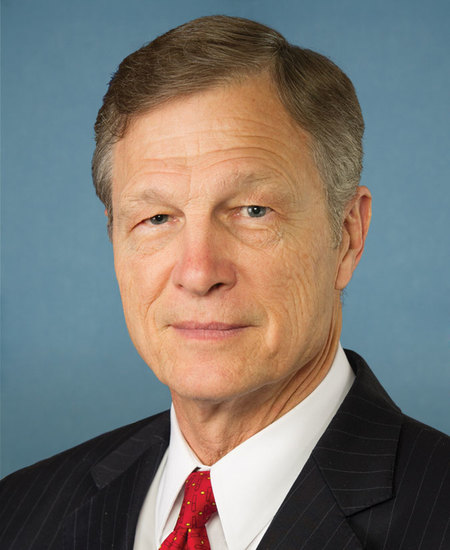
119th Congress Introduced by Brian Babin and 6 co-sponsors

Establish a centralized AI Center to coordinate U.S. AI effort, set standards and governance, and align activities across agencies to boost leadership, safety, and accountability.

Committee Consideration and Mark-up Session Held
0
WeVote Research Nonpartisan
Bill Summary · HR 9363

Overview

HR 9363, introduced in the 119th Congress, seeks to amend the National Artificial Intelligence Initiative Act of 2020 to establish a dedicated center on artificial intelligence. The bill aims to ensure continued United States leadership in AI research, development, and evaluation, and to address related governance, coordination, and national priorities in AI.

Purpose and intent

  • Create an organized, centralized center focused on advancing U.S. leadership in AI.
  • Enhance coordination across federal agencies, research institutions, and industry to promote AI innovation, safety, and responsible deployment.
  • Strengthen evaluation, oversight, and accountability mechanisms for AI research and systems.
  • Align AI activities with national priorities, including economic competitiveness, national security, public trust, and ethical considerations.

Key provisions and changes

  • Establishment of an AI Center: The bill designates or creates a center dedicated to AI research, development, evaluation, and governance.
  • Scope of activities: The center would coordinate federal AI efforts, support basic and applied research, and oversee evaluation and metrics related to AI systems and their impacts.
  • Leadership and governance: Provisions likely address the center’s leadership structure, governance, interagency coordination, and reporting requirements to Congress.
  • Interagency collaboration: Enhanced collaboration among federal agencies responsible for science, technology, commerce, defense, and education to streamline AI initiatives.
  • Evaluation and metrics: Development of standards, benchmarks, and assessment frameworks to measure AI progress, safety, performance, and societal effects.
  • Funding and authorization: The bill would authorize or reallocate funding to support the center’s activities, potentially including multi-year appropriations or mandatory funding mechanisms.
  • Reporting and accountability: Regular reporting to Congress on progress, outcomes, and strategic priorities; performance evaluations to ensure accountability and transparency.
  • Considerations and protections: Provisions likely address ethical, safety, privacy, civil rights, and security considerations in AI research and deployment.

Who would be affected

  • Federal agencies involved in AI research, development, and regulation would coordinate more closely with the new AI Center.
  • Affected entities include universities, national laboratories, think tanks, research consortia, and private sector partners engaged in AI innovation and assessment.
  • Stakeholders concerned with AI safety, ethics, civil rights, privacy, and national security may see enhanced governance and oversight.
  • The broader public could experience benefits related to safer, more transparent AI systems and improved governance of AI technologies.

Procedural and timeline aspects

  • Introduction and referral: HR 9363 was introduced in the House and referred to the Committee on Science, Space, and Technology on June 18, 2026.
  • Next steps: The committee would review, potentially amend, and consider reported bills for floor action. If advanced, the bill would proceed to House votes and, potentially, a Senate path or conference committee.
  • Implementation timeline: Assuming passage, establishment of the AI Center would follow authorized funding and implementation schedules, with phased milestones for setup, programmatic rollout, and ongoing reporting.

Potential impact considerations

  • Strategic alignment: A centralized center could streamline coordination of national AI priorities, potentially accelerating research translation and governance.
  • Accountability and transparency: Formal evaluation metrics and reporting could improve visibility into AI progress and risks.
  • Resource allocation: Funding decisions will influence research portfolios, public-private partnerships, and international competitiveness in AI.
  • Safeguards: Emphasis on ethics, safety, privacy, and civil rights could shape development practices and regulatory compliance.

If you’d like, I can compare HR 9363 to the 2020 National AI Initiative Act provisions or provide a side-by-side summary of expected budgetary implications and governance structures.

Compiled from official sources — confirm details with the bill’s official record.

Sign in to ask a question.