

WeVote

Bill

Bill

HCR 21

Study resolution study the feasibility of providing property tax relief to primary residence when investments increase a county property tax base

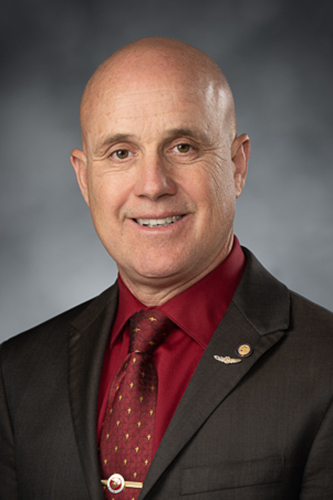
2026 Regular Session Introduced by Jim Butler and 9 co-sponsors

Study feasibility of using new property tax revenue from big investments to reduce or cap taxes on owner-occupied primary residences, prioritizing retirees.

To House Rules
0
WeVote Research Nonpartisan
Bill Summary · HCR 21

Overview

  • Bill: House Concurrent Resolution 21 (HCR 21)
  • Session: 2026, West Virginia
  • Purpose: To study the feasibility of providing property tax relief to owner-occupied primary residences when large-scale investments increase a county’s property tax base. The study would consider how a portion of new property tax revenue generated by such investments could be dedicated to reducing or eliminating property taxes on primary residences, with priority for retired homeowners.

Main purpose and intent

  • Encourage consideration of targeted property tax relief for homeowners in counties experiencing windfall revenue from major investments (e.g., advanced manufacturing, energy projects) that expand the local tax base.
  • Explore policy design options that ensure homeowners benefit directly from growth while preserving funding for essential services.
  • Recognize West Virginia’s high homeownership rate and the potential benefits of reducing burdens on primary residences, particularly for retirees or those on fixed incomes.

Key provisions and changes proposed

  • Scope: A study by the Joint Committee on Government and Finance to assess feasibility, impacts, and implementation of a framework to dedicate a portion of new county property tax revenue to relief for owner-occupied primary residences.
  • Topics the study would cover (non-exhaustive):
    1. Identifying thresholds that define significant property tax base growth or windfall revenue.
    2. Evaluating phased relief models and prioritization for retired homeowners, with consideration for expansion to all primary residences.
    3. Developing formulas to allocate new revenue between homeowner relief and essential county services (public safety, education, infrastructure, debt obligations).
    4. Analyzing constitutional requirements and potential amendment language needed to implement the framework.
    5. Safeguards to maintain funding for essential services and obligations.
    6. Transparency and reporting mechanisms to inform taxpayers about growth and relief.
    7. Review of similar policies or mechanisms in other states, if applicable.
  • Deliverables: The committee would report findings, conclusions, recommendations, and drafts of any proposed legislation or constitutional amendments to the Legislature.
  • Timeline: Report due to the Legislature no later than the first day of the 2027 Regular Session.

Who/what would be affected

  • Local governments and counties experiencing significant increases in property tax base due to large investments.
  • Owner-occupied, primary residences in those counties that would be eligible for tax relief under the studied framework.
  • Potentially, retirees and fixed-income homeowners who would be prioritized for relief.
  • State and local taxpayers who would observe related transparency requirements and reporting outcomes.
  • Constitutional and legislative processes if amendments or enabling legislation are deemed necessary.

Procedural and timeline aspects

  • The measure is a request to study, not an enactment of a specific tax policy.
  • Committee: Joint Committee on Government and Finance is tasked with conducting the study.
  • Status: Introduced February 19, 2026; referred to the Rules Committee.
  • Reporting requirement: Findings and any proposed legislation or constitutional amendments to be presented by the first day of the 2027 Regular Session.

Sponsors

  • Primary sponsors and co-sponsors include: Delegates G. Howell, Masters, Linville, Pinson, Butler, Dittman, Hott, Canterbury, Chiarelli, Jeffries, McCormick, with co-sponsors John Paul Hott, Dave McCormick, Daniel Linville, Lori Dittman, Gary Howell, Geno Chiarelli, Ray Canterbury, Jim Butler, Jonathan Pinson, Ian Masters.

Potential impact (policy considerations)

  • If implemented, could create a framework where booming property tax bases from major investments directly offset homeowner tax burdens, enhancing homeownership stability and retirement security.
  • Requires careful balancing to ensure adequate funding for schools, public safety, infrastructure, and debt service.
  • May necessitate constitutional amendments or enabling legislation to authorize dedicated revenue streams and relief mechanisms.
  • Transparency and measurable thresholds would be critical to prevent unintended fiscal shortfalls and to maintain public trust.

Compiled from official sources — confirm details with the bill’s official record.

Sign in to ask a question.