

WeVote

Bill

Bill

HB 61

State land lease preference amendments.

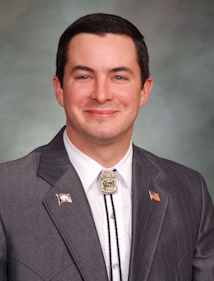
2025 Regular Session Introduced by Dalton Banks and 8 co-sponsors

Expands protection for EMTs, firefighters, and telecommunicators; elevates firearm assaults on them to Class B1 felony, boosting penalties and deterrence starting Dec 1, 2025.

Assigned Chapter Number 36
0
WeVote Research Nonpartisan
Bill Summary · HB 61

Summary — HB 61: Assaults on First Responders

Status: Passed 1st Reading (House)
Introduced: 2025 (Primary sponsor: Rep. Pyrtle)
Subject: Criminal law — enhanced penalties for assaults with a firearm against first responders

Purpose and intent

HB 61 expands the class of protected public-safety personnel covered by North Carolina’s enhanced criminal penalty for assaults with a firearm and increases the felony severity for those offenses. The stated intent is to provide stronger criminal penalties (and therefore greater deterrence and accountability) where offenders assault emergency, medical, and communications personnel while those individuals are performing official duties.

Key provisions

  • Amends G.S. 14‑34.5 to broaden the persons protected by the statute that addresses “assault with a firearm” committed against certain public‑safety workers.
    • Current protected categories (law enforcement, probation/parole officers, National Guard members on duty, and detention‑facility employees) are retained.
    • New categories added: emergency medical technicians and other emergency health care providers, medical responders, firefighters, and telecommunicators employed by law enforcement agencies.
  • Elevates the offense for committing an assault with a firearm against any of the persons listed (while they are performing their duties) to a Class B1 felony (from the previous Class D felony for many covered persons).
  • Amends G.S. 14‑34.6(c) to preserve the separate Class D felony treatment where subsection (a) applies to persons not otherwise added to G.S. 14‑34.5 and a firearm is used (i.e., ensuring existing coverage for other categories remains).
  • Effective date language: the bill becomes effective December 1, 2025, and applies to offenses committed on or after that date.

Who is affected

  • Protected personnel: law enforcement officers, probation/parole officers, members of the NC National Guard on duty, detention‑facility employees, EMTs and emergency health care providers, medical responders, firefighters, and law‑enforcement telecommunicators.
  • Defendants charged with assault with a firearm against these personnel (higher felony exposure and longer potential sentences).
  • Criminal justice system: prosecutors, defense counsel, trial courts, and corrections (possible increases in sentences carried out).
  • Indirectly affects employers and agencies that employ the newly protected categories (police, fire departments, EMS, dispatch centers, detention facilities, and the National Guard).

Potential impacts

  • Sentencing: raising the offense to Class B1 increases maximum and likely typical prison exposure compared with a Class D felony; this may change charging decisions, plea negotiations, and sentence outcomes.
  • Deterrence and public safety: proponents argue stronger penalties deter attacks on first responders; opponents sometimes raise concerns about proportionality or disparate impacts.
  • Fiscal: the bill may increase costs to the criminal justice system (court proceedings, prosecutions, and potentially longer incarceration for some convictions). No official fiscal note was attached in the materials reviewed; fiscal impacts would depend on changes in charging patterns and conviction/sentencing outcomes.
  • Operational: emergency agencies may see changes in how assaults are reported and prosecuted; telecommunicators’ inclusion recognizes risks faced by dispatch personnel.

Procedural / timeline notes

  • Referred to Judiciary (Judiciary 2) upon introduction; passed its first reading in the House. If enacted, the statutory changes and enhanced penalties take effect December 1, 2025, and apply to offenses committed on or after that date.

If you want, I can:
- Pull and display the exact amended statutory language for G.S. 14‑34.5 and 14‑34.6(c);
- Summarize sentencing ranges for Class B1 vs. Class D felonies under North Carolina law; or
- Prepare a short fiscal impact outline estimating possible corrections/court cost impacts.

Compiled from official sources — confirm details with the bill’s official record.

Sign in to ask a question.