

WeVote

Bill

Bill

SB 1148

STATE GOVERNMENT-TECH

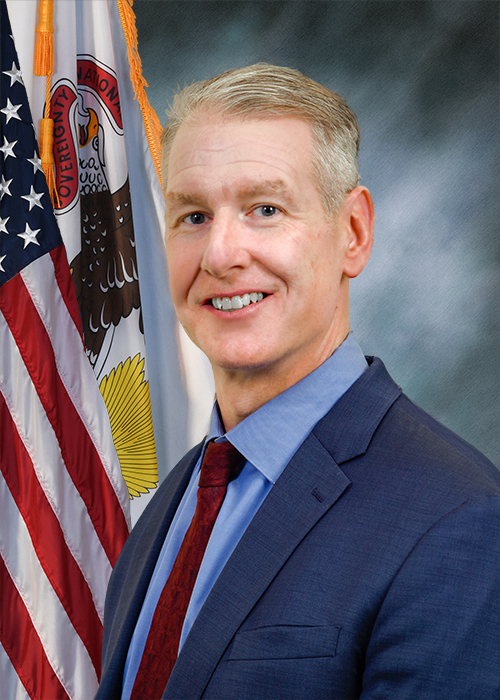
104th Regular Session Introduced by John Curran

Establishes a DEP‑backed Carbon Sequestration Task Force to study and recommend a statewide program, benchmarks, funding, and potential market participation.

Rule 3-9(a) / Re-referred to Assignments
0
WeVote Research Nonpartisan
Bill Summary · SB 1148

SB 1148 — Summary (Carbon Sequestration Task Force — Florida)

Note on bill number ambiguity: Multiple jurisdictions use the bill number “SB 1148.” The materials you provided include several unrelated bills (Arizona public‑employee retirement changes, Hawaii/Illinois excerpts). This summary focuses on the Florida Senate version analyzed by the Committee on Environment and Natural Resources (introduced Feb 6, 2025, sponsor: Sen. Rodriguez), which concerns carbon sequestration and creating a statewide task force.

Purpose and intent

SB 1148 establishes a Carbon Sequestration Task Force attached to the Florida Department of Environmental Protection (DEP) to produce recommendations for developing a statewide carbon sequestration program. The aim is to identify opportunities and create standardized approaches to increasing and accounting for carbon stored in terrestrial and aquatic environments, assess participation in carbon markets, and recommend funding and benchmarks.

Key provisions

  • Creates the Carbon Sequestration Task Force as an adjunct to DEP.
  • Requires the task force to convene by September 1, 2025.
  • Directs the task force to:
    • Identify terrestrial and aquatic environments suitable for carbon sequestration.
    • Consider methods to increase natural carbon sequestration.
    • Develop a standardized methodology to establish baseline carbon levels and to measure accruals over time.
    • Evaluate co‑benefits/ecosystem services (e.g., biodiversity, water quality) that support conservation and restoration success.
    • Recommend short‑ and long‑term benchmarks for increasing sequestration in ecosystems.
    • Identify existing carbon markets and considerations for State participation.
    • Identify potential funding mechanisms to encourage sequestration.
  • Reporting and timeline:
    • By Oct 1, 2026: submit to the DEP Secretary a first‑year summary of activities and findings, including a nonrecurring budget request for FY 2026–2027.
    • By Oct 1, 2027: submit a final report with findings and recommendations to the Governor and Legislature.
    • Task force termination date: April 30, 2028.
  • Appropriation: $350,000 (one‑time) appropriated from DEP’s Administrative Trust Fund for FY 2025–2026 to support the task force.

Who is affected

  • Department of Environmental Protection — hosts/supports the task force and receives reports.
  • State policymakers — will receive recommendations to inform program design and potential statutory/regulatory changes.
  • Landowners, conservation organizations, restoration practitioners, and private sector entities — potentially affected if the State adopts sequestration programs, standards, or participates in carbon markets.
  • State budget/taxpayers — one‑time $350,000 appropriation from DEP trust funds.

Procedural / timeline notes

  • Task force must convene by Sept 1, 2025; delivers interim and final reports (Oct 1, 2026; Oct 1, 2027); sunsets April 30, 2028.
  • The bill specifies required task force membership (details not included in the provided excerpt).
  • Implementation would be advisory: the task force issues recommendations; any subsequent program, regulatory, or market participation actions would require further legislative or executive decisions.

If you want, I can:
- Extract or summarize the specific membership composition if you provide the full bill text;
- Draft a short memo on likely policy implications (e.g., effects on state participation in voluntary vs. compliance carbon markets).

Compiled from official sources — confirm details with the bill’s official record.

Sign in to ask a question.