

WeVote

Bill

Bill

HR 9083

State Emissions Authority Act of 2026

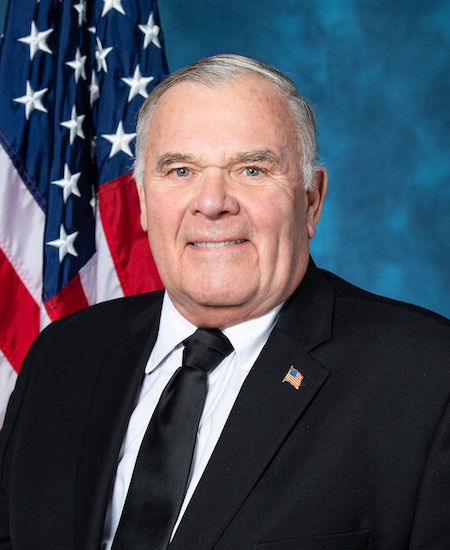
119th Congress Introduced by Jim Baird and 8 co-sponsors

Repeals mandatory federal motor vehicle inspection and maintenance requirements, shifting emissions authority to states without federal I/M mandates.

Introduced in House
0
WeVote Research Nonpartisan
Bill Summary · HR 9083

Overview

  • Bill: H.R. 9083, 119th Congress, 2nd Session
  • Title: State Emissions Authority Act of 2026
  • Primary purpose: Amend the Clean Air Act to repeal mandatory State motor vehicle inspection and maintenance (I/M) requirements.
  • Introduced: June 2, 2026 (referred to the House Committee on Energy and Commerce)
  • Principal sponsors: Rep. Glenn Grothman (family of original sponsors listed), with co-sponsors including Rep. Tom Tiffany, Rep. Russ Fulcher, Rep. Jim Baird, Rep. Scott Fitzgerald, Rep. Barry Moore, Rep. Dave Joyce, and Rep. Mike Bost

What the bill aims to do

  • Eliminate mandatory federal requirements that compel states to operate motor vehicle inspection and maintenance programs as part of the Clean Air Act framework.
  • Repeals and reorganizes several provisions across multiple sections of the Clean Air Act to remove duties, authorities, and reference points related to I/M programs.
  • The bill is framed as creating or preserving “State Emissions Authority” by removing federal mandates for state I/M enforcement rather than imposing a new centralized federal program.

Key provisions and changes

  • Repeal of mandatory I/M requirements:
    • Section 118 (42 U.S.C. 7418): Strike subsections (c) and (d), which historically related to state I/M programs and related administrative rules.
    • Section 182 (42 U.S.C. 7511a): Multiple subparagraph removals and redesignations that affect the framework for I/M program requirements and authorization.
    • Section 184(b)(1) (42 U.S.C. 7511c(b)(1)): Language changes related to I/M implementation criteria.
    • Section 187(a) (42 U.S.C. 7512a(a)): Removal or redesignation of subsections governing I/M program elements.
    • Additional targeted edits across these sections involve removing specific references to mandatory I/M program elements and reworking paragraph labeling to reflect the repeal.
  • Capstone effect: The bill would remove the federal basis for requiring states to implement motor vehicle inspection and maintenance programs, effectively transferring or delegating the decision power to states without federal I/M mandates.

Who or what would be affected

  • States: No longer bound by mandatory federal I/M requirements; changes the federal-state relationship on vehicle inspection regimes.
  • Motorists: Potential changes in how vehicle emissions are regulated at the state level; the presence or absence of state I/M programs would depend on state actions post-repeal.
  • Federal regulatory landscape: Reduction in federal oversight and requirements related to state I/M programs under the Clean Air Act.

Procedural and timeline aspects

  • Legislative path: Introduced in the House on June 2, 2026; referred to the House Committee on Energy and Commerce.
  • Next steps: If advanced, the bill would require committee consideration, potential amendments, and then floor action in the House, followed by potential movement in the Senate and signature by the President.
  • Sunset or transition: The text provided does not specify transitional timelines or sunset provisions; implementation would depend on subsequent legislative action and any accompanying regulatory guidance.

Notable considerations

  • Policy impact: Shifts federal accountability for vehicle emissions inspection to states, potentially increasing state discretion and variability in emissions enforcement.
  • Environmental implications: The repeal could influence emissions control effectiveness nationwide, depending on state-level decisions about I/M programs.
  • Economic and administrative effects: States may incur changes in administrative workload and enforcement priorities; motorists may experience changes in inspection frequency, testing standards, or associated fees depending on future state policies.

If you’d like, I can add a brief comparison to current law text or summarize potential state-by-state scenarios under different regulatory approaches.

Compiled from official sources — confirm details with the bill’s official record.

Sign in to ask a question.