

WeVote

Bill

Bill

AB 2241

School facilities: inclusive school playgrounds.

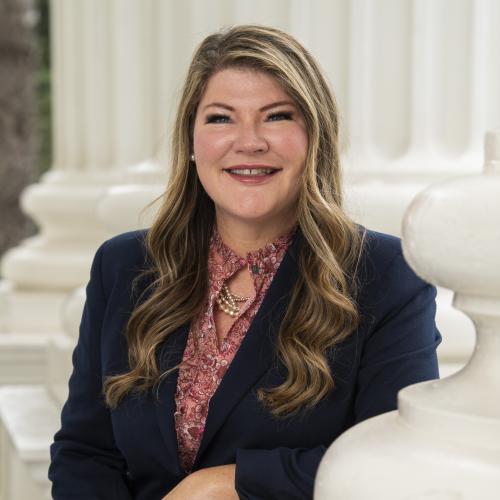
2025-2026 Regular Session Introduced by Tasha Boerner and 1 co-sponsor

Creates inclusive school playground guidelines, funding prioritization, and an advisory committee to ensure California playgrounds accommodate all students.

From committee: Do pass and re-refer to Com. on APPR. with recommendation: To Consent Calendar. (Ayes 7. Noes 0.) (June 17). Re-referred to Com. on APPR.
0
WeVote Research Nonpartisan
Bill Summary · AB 2241

Summary of AB 2241 (2025-2026) – California Inclusive School Playgrounds Act

Purpose and intent

AB 2241 seeks to advance inclusive play in California public schools by establishing a formal framework to design, fund, and evaluate inclusive school playgrounds. The underlying aim is to ensure playgrounds accommodate children with physical, sensory, intellectual, or developmental disabilities so that all students can play together. The bill creates a dedicated advisory mechanism to develop model guidelines, identify funding pathways, and report to the Legislature on progress and resource needs.

Key provisions and changes

  • Creation of the Inclusive Playground Advisory Committee (Chapter 10, Education Code, starting with §17682)

    • A 9-member advisory committee within the Department of Education.
    • Members include disability advocacy/policy experts, a licensed pediatric occupational therapist, a child development expert, universal design/architecture expert, recreation/urban planning expert, two parents/guardians of students with disabilities, and a community-based organization representative.
    • Terms: four-year terms with staggered expiration to ensure continuity; meetings at least twice yearly; possible subcommittees; compensation generally not provided, with reimbursements allowed.
    • The Superintendent designates a chair.
  • Model guidelines for inclusive school playgrounds (§17683)

    • The committee must, by January 1, 2028, develop and publish model guidelines that reflect universal design principles.
    • Guidelines must address equipment selection, surfacing, sensory features, safety, and maintenance, and consider socioeconomic factors (including underserved, rural, and special-needs communities).
    • The committee will review proposed designs seeking state funding and provide technical feedback to ensure alignment with inclusive standards.
  • Funding and incentives (§17684)

    • By July 1, 2027, the Department must identify existing grant programs that fund school playgrounds and amend guidelines to prioritize projects meeting the inclusive design standards.
    • The Department must collaborate with other state agencies to encourage funding mechanisms that incentivize inclusive projects.
  • Reporting and oversight (§17683)

    • The committee must assess and identify communities lacking inclusive playgrounds and, every five years, submit a report to the Legislature with findings and resource allocation recommendations (per Section 9795.17684 compliance).
  • Implementation and funding (§17685–17686)

    • The Department must support implementation with existing funding or grant funds and may pursue partnerships to supplement state funding.
    • Regulations may be adopted to implement the chapter.
  • Definitions (§17681)

    • Defines “inclusive design standards,” “inclusive school playground,” “grant program,” and “committee.”

Who/what would be affected

  • Public school playground projects seeking state funding would be guided by new inclusive design standards.
  • State agencies, districts, and local educational agencies (LEAs) would need to align planning, design, and grant applications with the model guidelines.
  • Families of students with disabilities and disability advocacy groups would have a formal advisory voice through the committee.
  • The Department of Education would lead coordination, guideline development, and reporting.

Procedural and timeline aspects

  • Model guidelines due by January 1, 2028.
  • Prioritization of inclusive-design projects in grant guidelines by July 1, 2027.
  • Biennial to quinquennial (every 5 years) reporting to the Legislature on progress and resource needs starting after establishment.
  • Implementation support and potential partnerships to fund activities; regulations may be adopted to implement the chapter.

Financial notes

  • No automatic new appropriation is attached; the department is to use existing funding or grant opportunities and pursue partnerships as needed to implement the act. The bill states the intent to enact further legislation to increase access to inclusive playgrounds.

Overall, AB 2241 ideates a structured, expert-driven approach to mainstream inclusive playgrounds in California schools, with guidance, funding prioritization, stakeholder engagement, and regular reporting to inform policy decisions.

Compiled from official sources — confirm details with the bill’s official record.

Sign in to ask a question.