

WeVote

Bill

Bill

SB 903

School aid: other; requirements for districts to receive weighted funding; provide for. Amends 1976 PA 451 (MCL 380.1 - 380.1852) by adding sec. 1280h. TIE BAR WITH: SB 0860'26

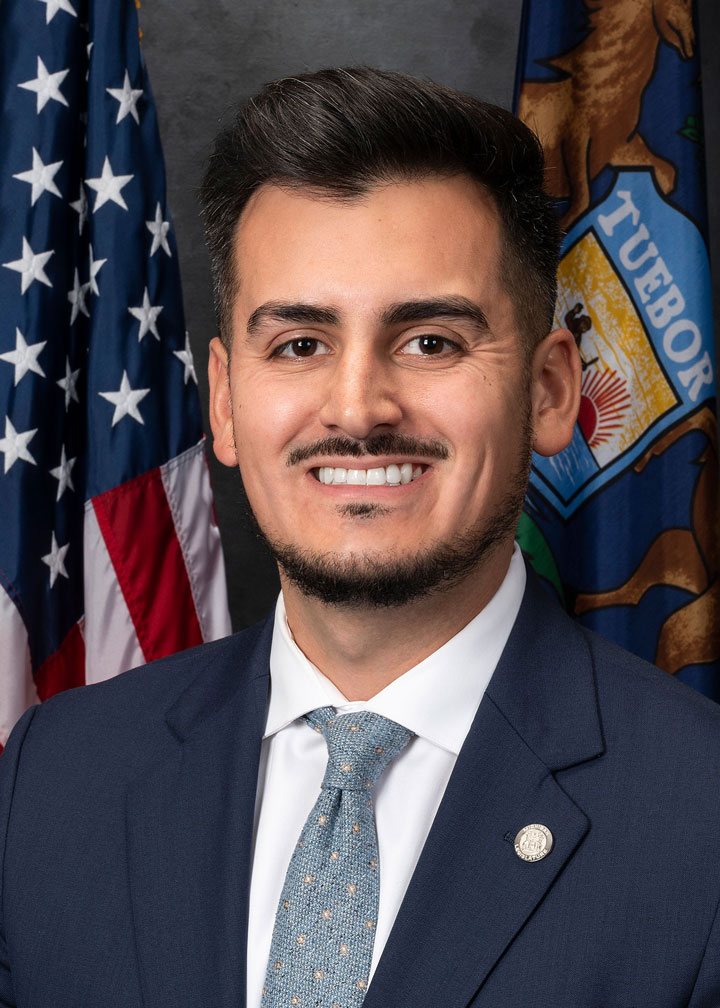
2025-2026 Regular Session Introduced by Darrin Camilleri

SB 903 requires districts receiving 22b(3) funds to implement MTSS and robust ELL programs with documented oversight, reporting, and parent communication.

ORDERED ENROLLED
0
WeVote Research Nonpartisan
Bill Summary · SB 903

Summary of SB 903 (2025-2026) – Michigan

Overview

  • Bill: Senate Bill 903
  • Session: 2025-2026
  • Jurisdiction: Michigan
  • Topic: School aid; requirements for districts to receive weighted funding
  • Relation: Tie-bar with SB 858 of 2026
  • Introduced: April 21, 2026 by Senator Camilleri
  • Status: As of action history, discharged from Appropriations and placed on General Orders; Rules suspended for immediate consideration (April 29, 2026)

Purpose and Intent

SB 903 proposes additional requirements and administrative expectations for school districts and public school academies that receive funds under section 22b(3) of the State School Aid Act (the “weighted pupil membership” funding). The core aim is to ensure that districts implement robust English language learner (ELL) programs and a multi-tiered system of supports (MTSS), with funding and oversight conditions designed to improve literacy, math achievement, and ELL services.

Key Provisions

Section 1280h (New requirements for districts receiving 22b(3) funds)

  1. Use of Funds for Student Achievement and ELL Support (Subsection 1(a)-(d))

    • Direct funds toward improving student achievement (focus on literacy, mathematics) and provide direct English language development instruction.
    • Administer the ELL proficiency assessments (WIDA ACCESS for ELLs or WIDA Alternate ACCESS).
    • Meet or exceed a minimum weekly duration of direct ELD per district model established by the Department (minimums described in Subsection 2).
    • Implement a comprehensive MTSS that is data-driven, integrates academic and behavioral supports, and provides interventions in varying intensities for K-12 (or for operated grades if not full K-12).
  2. MTSS Essential Components (Subsection 1(d)(i)-(v))

    • Team-based leadership
    • Tiered delivery system
    • Selection and implementation of instruction, interventions, and supports
    • Comprehensive screening and assessment system
    • Continuous data-based decision making
  3. Support for Weighted Pupil Membership (Subsection 1(e))

    • A portion of 22b(3) funds, not exceeding 2% of the 22b(3) amount, may be used to support administrative costs related to compliance (e.g., central office, business/fiscal services). Direct instructional staff costs are excluded from this administrative cost cap.
  4. Reporting and Monitoring (Subsection 1(f)-(h))

    • Provide information to the Department in a form the Department determines to monitor compliance and fidelity of MTSS and ELL programs.
    • Allow audits by the Department or its designee; districts must reimburse the state for any disallowances found.
  5. Communication with Parents (Subsection 1(h))

    • Annually communicate to parents/guardians:
      • Literacy results and multiyear trends (M-STEP, SAT for economically disadvantaged or ELL students).
      • How 22b(3) funds are distributed and what interventions were implemented, with a method and contact for feedback.

Section 1280h (2-4) – Department Roles and Definitions

  1. ELL Program Models (Subsection 2)

    • The Department will establish ELL program models that set a minimum number of minutes per week for direct ELD, aligned with pupil proficiency levels.
    • Models must comply with federal ELL requirements.
  2. Department Monitoring (Subsection 3)

    • The Department may require districts to provide information necessary to ensure compliance.
  3. Definitions (Subsection 4)

    • “English language learner” and “weighted pupil membership” have the same definitions as in section 6 of the State School Aid Act (MCL 388.1606).

Enacting Clause

  • The act’s effective date is contingent on the enactment of SB 858 (103rd Legislature).

Who is Affected

  • School districts and public school academies that receive weighted funding under section 22b(3) of the State School Aid Act.
  • Administrative staff and central offices (potentially up to 2% of 22b(3) funds for admin costs).
  • Parents and guardians (receiving annual communications about literacy results and funding usage).
  • Department of Education (state-level monitoring, model development, and audits).

Timeline and Procedural Notes

  • Requires the Department to establish minimum ELD minutes and ELL program models (Subsection 2).
  • Department monitoring, reporting, and audit requirements (Subsections 3 and 1(f)-(g)).
  • Final effectiveness date linked to SB 858’s enactment (enacting clause states the measure takes effect only if SB 858 is enacted).

Potential Impacts

  • Increased administrative and reporting demands on districts receiving 22b(3) funds.
  • Potentially higher instructional time and resources directed to ELL students and MTSS implementation.
  • Fiscal impact considerations: up to 2% of 22b(3) funds may be used for admin costs related to compliance.
  • Greater transparency with families regarding funding use and student outcomes.

Note: This summary reflects the bill text as introduced and the stated tie-bar condition; the actual effect will depend on any amendments, the status of SB 858, and enacted language.

Compiled from official sources — confirm details with the bill’s official record.

Sign in to ask a question.