

WeVote

Bill

Bill

SB 3112

SCH CD-SPECIAL ED-SPEECH-LANG

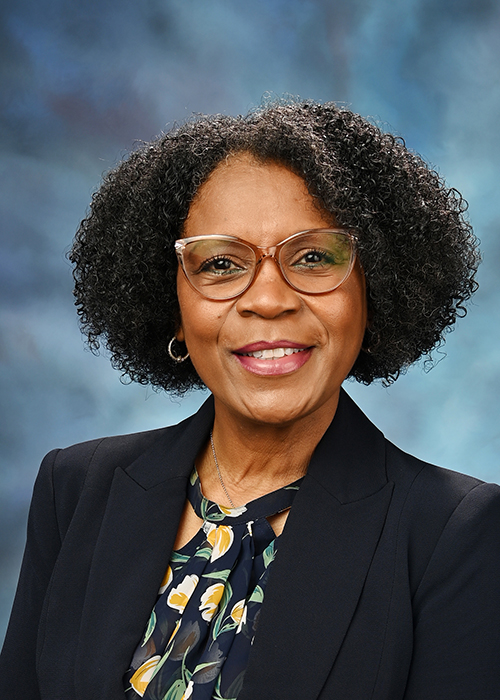
104th Regular Session Introduced by Adriane Johnson

SB3112 clarifies that students with mild speech disorders counted as general ed only if in-class instruction requires no modifications; those with moderate/severe must be counted.

Rule 3-9(a) / Re-referred to Assignments
0
WeVote Research Nonpartisan
Bill Summary · SB 3112

Summary of SB3112 (104th General Assembly, Illinois)

Title

SCH CD-SPECIAL ED-SPEECH-LANG

Purpose and Intent

SB3112 amends the Children with Disabilities Article of the Illinois School Code to adjust how general education classrooms are defined for purposes of counting students with IEPs (individualized education programs) in relation to the presence of speech-language pathology services. The bill clarifies when students receiving speech-language pathology (SLP) services count toward the percentage thresholds used to define a “general education classroom” composition, specifically distinguishing between mild versus moderate to severe speech disorders.

Key Provisions

  1. Definition of General Education Classroom for IEP Students with Speech-Language Services (Speech Disorders)

    • The bill applies to state statutes or administrative rules that define a general education classroom by a percentage of students with IEPs.
    • It provides that:
      • For students with mild speech disorders who receive only speech-language pathology services outside the general education classroom, their exclusion from the general education classroom percentage is allowed if the instruction in the general education classroom does not require modification or accommodation.
      • For students with moderate to severe speech disorders who receive only speech-language pathology services outside the general education classroom, those students must be included in the general education classroom percentage.
    • Importantly, the exclusion or inclusion hinges on whether the in-class instruction requires modification or accommodation.
  2. Definitions Related to Speech Disorders (for this context)

    • Mild: Speech disorder does not interfere with academic or social functioning.
    • Moderate: Speech disorder may interfere with academic or social functioning and requires instructional modification or accommodation.
    • Severe: Speech disorder interferes with academic or social functioning and requires instructional modification or accommodation.
  3. Instruction and Education Quality Assurance

    • In all cases, a school district must ensure that the composition of the general education classroom does not interfere with providing a free and appropriate public education (FAPE) to any student.

Affected Entities

  • General Education Classrooms: The percentage thresholds that determine classroom composition will be interpreted with respect to students with IEPs who receive SLP services, with different treatment for mild versus moderate/severe speech disorders.
  • Students with IEPs who receive SLP services, depending on the severity of their speech disorder.
  • School Districts: Responsible for applying the revised rule when determining classroom composition and ensuring FAPE.

Procedural and Timeline Details

  • Effective Date: Not specified in the text provided. The bill cites a past statutory baseline (P.A. 97-284, eff. 8-9-11) for the underlying provision and amends Section 14-2 of the School Code.
  • Status and Action Timeline:
    • Introduced: February 2, 2026.
    • Referred to Education Committee and subsequent rule/assignment actions through March–April 2026.
    • Most recent action: Re-referred to Assignments (as of April 24, 2026).

Practical Implications

  • The policy aims to refine how generally used classroom composition percentages account for students who only receive SLP services, with a nuanced approach based on the severity of the speech disorder.
  • Schools must balance the adjusted counting rules with the obligation to provide FAPE, ensuring that classroom makeup does not hinder educational access or supports.
  • If adopted, districts could see changes in the calculated number of students in a general education setting, potentially affecting resource allocation, inclusion practices, and compliance monitoring.

Sponsor

  • Primary Sponsor: Sen. Adriane Johnson
  • Co-sponsor: Adriane Johnson

If you’d like, I can provide a side-by-side comparison of current law versus SB3112 language, or a plain-language impact worksheet for districts calculating general education classroom percentages under different speech-disorder scenarios.

Compiled from official sources — confirm details with the bill’s official record.

Sign in to ask a question.