

WeVote

Bill

Bill

SB 1406

Sales and Use Tax Law: vehicles: shell companies.

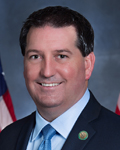
2025-2026 Regular Session Introduced by Tim Grayson and 1 co-sponsor

SB 1406 tightens use tax for vehicles by deeming shell-company owners Calif. residents and personally liable for unpaid taxes tied to California use.

June 15 set for first hearing. Placed on suspense file.
0
WeVote Research Nonpartisan
Bill Summary · SB 1406

Summary of SB 1406 (2025-2026) — California: Sales and Use Tax Law: vehicles: shell companies

Purpose and intent

SB 1406 aims to tighten the application of California’s use tax on vehicles, vessels, and aircraft by addressing the use of shell companies to evade tax payments. The bill expands the definition of California residency for purposes of the use-tax presumption, imposes personal liability on officers and owners of shell entities, and enhances enforcement and collection mechanisms. It is positioned as a tax levy that takes immediate effect and requires a two-thirds vote to pass due to a fiscal impact exceeding the normal threshold.

Key provisions and changes

  1. Residency presumption expansion (Sections 6247, 6248)

    • Maintains the existing presumption that a vehicle bought outside California and brought into the state within 12 months is subject to use tax if the purchaser is a California resident.
    • Expands residency determinations:
      • Closely held entities (corporations, partnerships, LLCs, LLPs) are residents if 50% or more of their interests are held by California residents.
      • Crucially, a shell company is deemed a California resident if any shareholder, partner, member, or beneficial owner is a California resident.
    • Defines “shell company” as an entity used to evade tax payments, with indicators such as: lack of legitimate business activity, no physical outside-California location, no W-2 employees, failure to file federal/state returns outside California, etc.
  2. Use-tax presumptions and exceptions (6248)

    • Reaffirms that a vehicle, vessel, or aircraft bought outside California and brought in within 12 months is presumed taxable if:
      • The purchaser is a California resident, or
      • The entity qualifies as a resident under the broadened definitions (including shell companies).
    • The presumption can be rebutted with documented evidence that the property was purchased for outside-state use, or other evidence satisfactory to the California Department of Tax and Fee Administration (CDTFA).
    • Specific exemptions and conditions apply, including:
      • Exemption for interstate/foreign commerce operations per CDTFA regulations.
      • Certain exceptions for repair, retrofit, or warranty service, including permitted repair facilities and timespans (e.g., 30-day repair/service window).
  3. Personal liability for shell-company owners (Section 6829.5)

    • Any officer, manager, partner, beneficial owner, or member of a shell company can be personally liable for unpaid taxes, interest, and penalties related to the purchase of a vehicle, vessel, or aircraft.
    • Personal liability applies only if the department can show the shell company stored/used/consumed the asset in California within 12 months and did not pay the tax.
    • Collection may proceed via standard tax-collection procedures, with a three-year window for deficiency determinations after knowledge of the violation.

Who is affected

  • Vehicle, vessel, and aircraft purchasers, particularly those using shell companies to route ownership or storage activities.
  • Officers, managers, partners, beneficial owners, and members of shell companies become personally liable for unpaid taxes tied to such purchases.
  • California residents who own or invest in entities that meet the shell-company criteria.
  • CDTFA and DMV as enforcement and administration bodies.

Procedural and timeline aspects

  • The bill is introduced February 2026 and includes a requirement for a 2/3 vote due to tax levy implications.
  • Immediate effect upon enactment (goes into immediate effect as a tax levy).
  • Administrative and enforcement provisions align with existing tax collection frameworks, with added timelines for notices of deficiency (within three years after knowledge of shell-related activity).

Notes

  • The bill contains non-substantive and conforming changes and includes provisions about reimbursement (or lack thereof) for local agencies.
  • Co-authors: Tim Grayson and Jerry McNerney.

Compiled from official sources — confirm details with the bill’s official record.

Sign in to ask a question.