

WeVote

Bill

Bill

HR 7263

Safe Intersections for Buses and Pedestrians Act

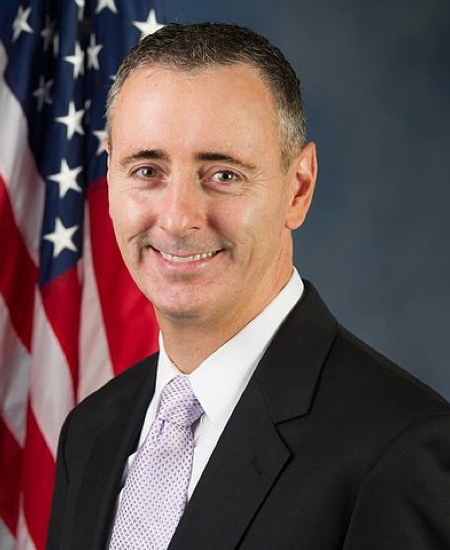
119th Congress Introduced by Brian Fitzpatrick and 4 co-sponsors

New motorcoaches must have a minimally obstructed forward-facing driver view, potentially via cameras or approved tech, to improve safety at intersections.

Referred to the Subcommittee on Highways and Transit.
0
WeVote Research Nonpartisan
Bill Summary · HR 7263

Summary of HR 7263 — Safe Intersections for Buses and Pedestrians Act

Purpose

  • To amend federal law to require that all new covered motorcoaches have a minimally obstructed forward-facing view from the driver’s seat.
  • The bill aims to improve safety at intersections for bus passengers, other road users, and pedestrians by ensuring better driver visibility.

Key Provisions

  • New Section Added: The bill would add a new section, proposed as §30130, to subchapter II of chapter 301 of title 49, United States Code.
    • General Requirement (a): Within one year after enactment, the Secretary (acting through the Administrator of the National Highway Traffic Safety Administration, NHTSA) must prescribe motor vehicle safety standards requiring that all new covered motorcoaches manufactured for sale in the United States have a minimally obstructed forward-facing view from the driver’s seat.
    • Exception (b): The forward-facing view may be achieved using a camera or other technological means that:
    • Expands the range of the driver’s forward-facing view, or provides visibility to an obstructed area.
    • Must comply with Federal Motor Vehicle Safety Standard 101 (Standard 101).
    • Definitions (c):
    • Covered motorcoach is defined with reference to the meaning of “bus” in 49 C.F.R. § 571.3(b).
    • Standard 101 refers to FMVSS No. 101 (visibility and instrument cluster standards) as codified in 49 C.F.R. § 571.101.
  • Conforming Amendment: The federal statute table of sections would be updated to insert the new §30130 after §30129, establishing the new requirement in the statutory structure.

Who Would Be Affected

  • Manufacturers of new covered motorcoaches (buses): Obligated to ensure their new models meet the minimally obstructed forward-facing view standard, potentially via camera-based systems or other approved technologies.
  • Drivers and passengers of motorcoaches: Expected safety benefit from improved driver visibility, especially at intersections and in complex traffic environments.
  • Regulatory agency: NHTSA, through the Secretary, would prescribe the required safety standards and oversee compliance.

Procedural and Timeline Details

  • Enactment Timeline: The standard must be prescribed not later than one year after the date of enactment.
  • Authority: The bill relies on NHTSA and FMVSS authority to define and enforce the standard, including the use of approved camera-based or alternative visibility technologies.
  • Legislative Path So Far: Introduced in the House on January 27, 2026; referred to the Committee on Transportation and Infrastructure, with the Subcommittee on Highways and Transit later listed as a referral.

Potential Impact and Considerations

  • Safety Improvements: By ensuring a minimally obstructed view, drivers may have better obstacle and pedestrian detection at intersections, potentially reducing blind-spot incidents.
  • Technology Use: The bill explicitly allows cameras or other technologies to achieve the required visibility, aligning with contemporary advancements in vehicle safety systems.
  • Industry Implications: Manufacturers may incur costs to redesign or equip motorcoaches with compliant visibility systems; however, the standard could standardize and potentially reduce liability and accident risk.
  • Implementation Complexity: Determination of what constitutes a “minimally obstructed forward-facing view” and the specific performance criteria under Standard 101 will be defined by the forthcoming NHTSA standards.

Plain-Language Takeaway

HR 7263 would require new buses to have a clear forward view for drivers, potentially using cameras or other tech to ensure visibility. The goal is to make bus operations safer for both riders and pedestrians by improving how well drivers can see ahead at intersections. The rule would be set by NHTSA within a year of enactment.

Compiled from official sources — confirm details with the bill’s official record.

Sign in to ask a question.