

WeVote

Bill

Bill

HCR 19

Resolution for Convention of States on Federal Fiscal Responsibility Amendment

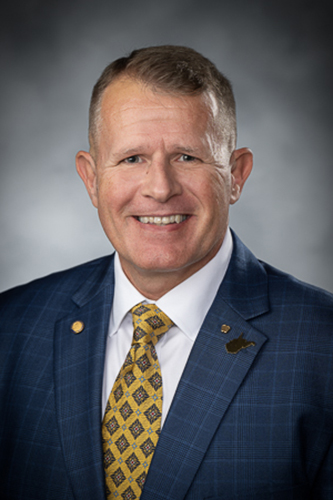
2026 Regular Session Introduced by Eric Brooks and 2 co-sponsors

WV urges Congress to call an Article V Amending Convention limited to a balanced budget and fiscal restraints, or WV may host the convention itself.

To House Judiciary
0
WeVote Research Nonpartisan
Bill Summary · HCR 19

Overview

  • Bill: House Concurrent Resolution 19 (HCR 19)
  • Session: 2026
  • Jurisdiction: West Virginia
  • Purpose: Urge Congress to call a Convention of States under Article V of the U.S. Constitution, limited to proposing amendments to create fiscal responsibility in the federal government (notably a balanced budget or related fiscal constraints). If Congress refuses or delays, WV contemplates hosting and proceeding with a Convention of States for this purpose.

Main purpose and intent

  • The resolution asserts that Article V authorizes states to convene a Convention of States to propose amendments to the U.S. Constitution, independent of Congressional interference.
  • It seeks to activate or accelerate an Amending Convention focused on fiscal responsibility, including a balanced budget amendment and related constraints.
  • It argues that a sufficient number of states have applied for such a convention (two-thirds of states) and that Congress has a constitutional duty to call the convention; if Congress does not, the hosting state (West Virginia) should proceed to announce time and location and begin delegations.

Key provisions and changes ( substantive provisions)

  • Formal request to Congress to call an Article V Amending Convention limited to a balanced budget amendment and related fiscal restraints.
  • If Congress does not promptly call the convention, the hosting state may ceremoniously announce the time and location for the convention itself.
  • West Virginia would determine initial time and location with Congress authorized to issue a ministerial pronouncement to state legislative leaders; West Virginia would prepare to send a delegation once a specific time/venue is publicly announced.
  • The resolution designates West Virginia as a potential host state and outlines steps to expedite notice to other states.
  • The Convention scope is strictly limited to the subject of the approved call (balanced budget and related fiscal constraints); no other topics may be discussed unless added to the call by majority vote of attending states.
  • Governance and procedural framework for the Amending Convention:
    • Convention to be composed of commissioners chosen by each state, one vote per state; states determine their internal voting/quorum rules.
    • Convention to be chaired by a permanent presiding officer elected by the states; initial rules follow traditional conventions of states.
    • Quorum: majority of states attending for both full sessions and committee meetings; majority vote of states present governs decisions.
    • Adoption of Mason’s Manual of Legislative Procedure (2010 edition) as procedural guide where not otherwise specified.
    • Three standing committees (Rules and Procedures; Convention Management; Defining Article V Terms and Procedures) with representation from each participating state.
  • West Virginia Article V Advisory Committee:
    • Three members (appointed by the House Speaker, Senate President, and jointly by both), approved by the Legislature.
    • Duties include monitoring WV delegation, advising on positions, disciplining delegates for misconduct, notifying changes, and managing replacement/reinstatement of delegates.
  • Support and compensation:
    • WV Legislature to establish compensation and support for delegates and advisory committee members.
  • Legal action provision:
    • If necessary, WV Attorney General could file a Declaratory Judgment with the U.S. Supreme Court to compel Congress to call the convention.
  • Procedural instruction to Congress:
    • The resolution urges Congress to call the convention and acknowledges WV as a potential host; if desired, WV can expedite notice to other state legislatures.
  • Outreach and communications:
    • The Clerk of the WV House to transmit copies of the resolution to federal and state leaders, inviting cooperation from other states.

Who/what is affected

  • West Virginia lawmakers and government officials (Legislature, House Speaker, Senate President, WV Attorney General).
  • West Virginia’s prospective delegation to an Article V Amending Convention (commissioners from WV and advisory committee members).
  • Other states’ legislatures and leaders, as the resolution calls for interstate cooperation and a national convention process.
  • Federal-level actors (Congress) who would be asked to call or facilitate the convention.

Procedural and timeline considerations

  • Status: Introduced February 17, 2026; referred to the Judiciary Committee, then Rules.
  • The resolution frames a sense of urgency, referencing a long-standing delay by Congress in calling such a convention and outlining the WV-hosting pathway if Congress does not act promptly.
  • It establishes a formal process for a convention limited to a balanced budget amendment and related fiscal rules, including governance, rules, and committee structures.
  • Timeline details are not fixed; the resolution authorizes WV to proceed with preparation and potential invocation of a convention upon a public announcement of time and location by Congress or WV as host.

Notes

  • The resolution emphasizes states’ rights under Article V and asserts Congress has no authority to interfere with Article V applications, convention procedures, or the ratification process for amendments proposed by the convention.
  • The bill does not itself define the exact text of a balanced budget amendment; rather, it focuses on procedural steps to facilitate a convention to consider such amendments.

Compiled from official sources — confirm details with the bill’s official record.

Sign in to ask a question.