

WeVote

Bill

Bill

S 2379

Requires that driver's licenses indicate the blood type of the licensee upon the licensee's request

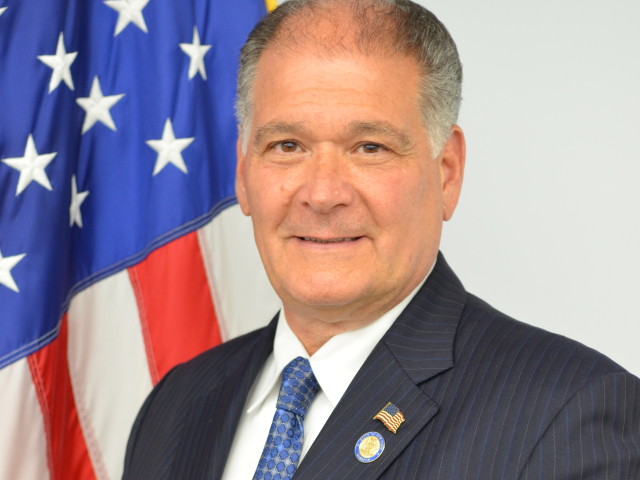
2025 Regular Session Introduced by Mario Mattera

Allows operation of fully autonomous vehicles (SAE Level 4/5) on public roads in Massachusetts under a new licensing and oversight framework.

REFERRED TO TRANSPORTATION
0
WeVote Research Nonpartisan
Bill Summary · S 2379

Summary — S.2379 (Commonwealth of Massachusetts)

Title (text): "An Act relative to providing multimodal transportation technologies"
Note: the bill text provided concerns fully autonomous vehicles. Metadata at the top (a different title about blood types on driver’s licenses) appears to be incorrect or mismatched; the summary below is based on the bill text for S.2379 (Sen. William J. Driscoll, Jr.), filed 1/17/2025.

Purpose / Intent

The bill creates a statutory framework in Chapter 90 of the Massachusetts General Laws to allow and regulate operation of fully autonomous vehicles (AVs) and motor vehicles equipped with automated driving systems (ADS) capable of performing the entire dynamic driving task (SAE Level 4/5) on public highways. It establishes definitions, safety and operational conditions, and a licensing/oversight role for the Massachusetts Department of Transportation (the Department).

Key definitions added (Chapter 90, new section 19L)

  • Automated driving system (ADS): hardware + software capable of performing the entire dynamic driving task on a sustained basis.
  • Dynamic Driving Task (DDT): real‑time operational/tactical driving functions (steering, accelerating/braking, environment monitoring, maneuver planning, lighting/signaling).
  • Fully autonomous vehicle: vehicle with ADS designed to function without a human driver (SAE Level 4 or 5).
  • Operational Design Domain (ODD): the conditions under which an ADS is designed to operate.
  • Minimal risk condition: a condition to which a vehicle may be brought after a DDT fallback to reduce crash risk.
  • Request to intervene / DDT fallback: notifications and responses when human or system must resume/cease control.
  • On‑Demand Autonomous Vehicle Network: dispatch/ride network using fully autonomous vehicles.

Main provisions and requirements

  • Operation without a human driver is permitted only if the vehicle:
    • Holds an autonomous operation license issued by the Department;
    • Can achieve a minimal risk condition upon ADS failure or ODD exit and, where a human is present, issue a request to intervene;
    • Is capable of operating in compliance with state traffic and safety laws (unless exempted by the Department);
    • Bears required federal certification labels where federal law requires them.
  • Vehicles (and any towed unit) with declared gross weight ≥ 10,000 pounds must have a human driver with appropriate credentials physically present to monitor and intervene.
  • Before operating AVs without a human driver in the Commonwealth, the owner/operator must submit a law‑enforcement interaction plan to:
    • Massachusetts Department of Transportation;
    • Department of Public Safety;
    • The police department of the municipality where the vehicle will operate.
      The plan must describe: how to contact fleet support specialists; procedures to safely remove/tow the vehicle; how to identify whether the ADS is engaged; and any additional hazard/public safety information.
  • In event of a crash, the vehicle must remain on-scene and crashes must be reported per state law.
  • The Department is directed to develop and issue autonomous operation licenses (full criteria in bill text truncated in the provided copy).

Who would be affected

  • Vehicle manufacturers and ADS system developers (must meet certification/ODD/safety requirements).
  • Fleet operators and on‑demand AV services (licensing, law‑enforcement plans, operational oversight).
  • Drivers/operators of heavy vehicles (≥10,000 lb) — still required to be present.
  • State agencies (MassDOT, Department of Public Safety) and municipal police (will receive interaction plans, handle incidents).
  • General road users and the public (safety oversight, possible changes to transit and for‑hire services).

Procedural / timeline notes

  • Filed: Senate docket No. 2465, filed 1/17/2025; introduced by Sen. William J. Driscoll, Jr.
  • Legislative actions in provided record show referral to Transportation, committee hearings scheduled, and further actions; Section 3 and later text were truncated in the copy provided.
  • Because the provided legislative metadata contains inconsistencies (mismatched title and sponsors), consult the official Massachusetts Legislature website or the full enrolled bill text for the current status and complete provisions.

Potential impacts (illustrative)

  • Enables deployment of Level 4/5 AVs under state licensing—may expand on‑demand autonomous services, reduce labor needs for certain trips, and encourage manufacturer testing/operation in Massachusetts.
  • Raises public‑safety and enforcement considerations (crash reporting, law‑enforcement interactions, heavy‑vehicle exemptions).
  • Liability, cybersecurity, privacy, and local/regional operational issues are likely to be addressed in implementing regulations and license criteria (some of which are not visible in the truncated text).

For a complete understanding, review the full bill text and any implementing regulations the Department issues once licensing criteria are published.

Compiled from official sources — confirm details with the bill’s official record.

Sign in to ask a question.