

WeVote

Bill

Bill

S 2266

Requires annual reports of legal settlement payments related to law enforcement activity

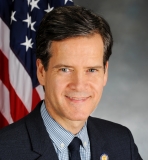
2025 Regular Session Introduced by Brad Hoylman-Sigal

Require electrification for new and substantial renovations of most buildings, with phased CO2e limits and net-zero by 2050 for biolabs/hospitals, plus a just-transition plan for g

REFERRED TO FINANCE
0
WeVote Research Nonpartisan
Bill Summary · S 2266

Below is a concise, objective summary of the bill text provided. Note: some of the bill metadata you supplied (title, sponsors, and certain legislative actions) appear inconsistent with the Massachusetts bill text (the text below is a Massachusetts bill presented by Senator Lydia Edwards on building electrification). This summary focuses on the substantive text of S.2266 as filed in the Massachusetts Senate (Senate Docket No. 365).

Short title

The bill may be cited as the Consumer Online Payment Transparency and Integrity Act — (text conflict noted). The substantive text filed January 12, 2025 is titled: "An Act relative to the electrification of new and substantially remodeled or rehabilitated building." (Sponsor: Lydia Edwards, Third Suffolk).

Purpose / intent

Require electrification (and greenhouse-gas emissions limits for certain facility types) for new construction and major renovations in order to reduce on-site fossil fuel use and associated CO2e emissions, and to guide a just transition for gas utility workers.

Key provisions

  • Applicability: Adds new Section 96A to Chapter 143 (Mass. General Laws). Defines terms including "newly constructed building," "substantially remodeled or rehabilitated" (renovations affecting ≥50% of gross building floor area), "biolab," "hospital," "CO2e," "Department" (Dept. of Energy Resources), and "gross building floor area."
  • Electrification requirement: Except as provided, all newly constructed commercial buildings and substantially remodeled/rehabilitated commercial or residential buildings must use electricity (not on-site fossil fuels) for space heating/cooling, cooking, and clothes drying. Hot water (including pools/spas) must use electricity or thermal solar.
  • Biolabs & hospitals: Additional emissions rules and timelines:
    • Biolabs and hospitals must meet emissions standards unless granted a waiver.
    • By 2050: biolabs and hospitals must achieve net-zero CO2e.
    • Biolabs: required HVAC first-stage heating must not use on-site fossil fuel combustion and must provide a minimum first-stage heating capacity of 5 Btu/hour per gross sq. ft. (or building design heating load, whichever is lower). Any supplemental combustion stage may be used only after first-stage electric/non-combustion system.
    • Hospitals: staged CO2e emission caps (kg CO2e per sq. ft. per year): 2025–2029 ≤15.4; 2030–2034 ≤10.0; 2035–2039 ≤7.4; 2040–2044 ≤4.9; 2045–2049 ≤2.4.
  • Rulemaking: Department of Energy Resources must promulgate regulations for implementation and compliance, including use of renewable energy credits (RECs) and periodic updates (e.g., the 5 Btu standard).
  • Waivers: Dept. may grant waivers where compliance is impractical or poses extraordinary challenges; waivers should be targeted to portions of projects when possible and may be conditioned.
  • Local authority: Municipalities may adopt bylaws/ordinances for reporting and CO2e reductions for existing hospitals/biolabs; may also impose reasonable penalties for violations.
  • Exemptions: Does not apply to (examples):
    • Freestanding cooking appliances not tied to building gas/propane infrastructure.
    • Freestanding outdoor heating appliances not tied to building gas/propane.
    • Emergency generators, backup/standby power.
    • Centralized hot water appliances in buildings ≥10,000 sq. ft. if an architect/engineer/GC certifies no commercially available electric hot water heater can meet demand for less than 150% of installation cost vs. a fossil fuel system.
  • Gas utility worker transition: Department of Public Utilities (DPU) must require state gas utilities to submit a plan for a just transition for gas utility workers (includes protections for environmental justice communities and displaced workers, training/employment opportunities, and recommendations for a workforce development fund).

Who is affected

  • Developers, owners and designers of newly constructed and substantially remodeled commercial buildings, mixed-use buildings with residential units, hospitals, and biolabs in Massachusetts.
  • Gas utilities and their workforce (through DPU-required just-transition planning).
  • Municipal governments (authority to adopt related bylaws and penalties for local enforcement).

Compliance, enforcement & timeline

  • Hospitals face explicit phased CO2e caps from 2025 through 2049 and net-zero by 2050 for hospitals/biolabs.
  • Department of Energy Resources must adopt regulations to implement the statute (timing unspecified in text).
  • Waiver and exemption processes allow for project-specific flexibility.
  • Municipalities may enforce penalties by local bylaw/ordinance.

Notes / caveats

  • The provided metadata includes conflicting titles, sponsors, and actions (some referencing federal senators and differing subject matter). This summary is limited to the Massachusetts Senate bill text (Senate Docket No. 365, filed Jan. 12, 2025) concerning building electrification as presented by Senator Lydia Edwards. Section 2 of the provided text is truncated; final bill may include additional provisions not covered here.

Compiled from official sources — confirm details with the bill’s official record.

Sign in to ask a question.