

WeVote

Bill

Bill

AB 337

Relating to: training to address student mental health and making an appropriation. (FE)

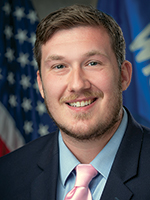
2025-2026 Regular Session Introduced by Clint Anderson and 31 co-sponsors

Creates a statewide Dementia Care Specialist Program and a Nevada Memory Network to improve early detection, care planning, and caregiver support, contingent on funding.

Senator Pfaff added as a cosponsor
0
WeVote Research Nonpartisan
Bill Summary · AB 337

AB 337 (BDR 38-456) — Summary (Creates programs related to dementia)

Status: Introduced Jan. 28, 2025. Last action: Held under submission (committee), May 23, 2025. No further action taken as of June 3, 2025.

Sponsor: Assembly Committee on Health and Human Services (on behalf of the Legislative Committee on Senior Citizens, Veterans and Adults with Special Needs). Fiscal note: Effect on Local Government — No; Effect on the State — Yes.

Purpose / Intent

AB 337 is intended to strengthen Nevada’s dementia care infrastructure by (1) establishing a statewide Dementia Care Specialist Program within the Aging and Disability Services Division (ADSD) of DHHS and (2) authorizing the creation of a Nevada Memory Network (NMN) — a coordinated clinical and training system led by UNLV and UNR Schools of Medicine in collaboration with DHHS — to improve early detection, diagnosis, care planning and ongoing management for people with dementia.

Key provisions

  • Dementia Care Specialist Program (ADSD)
    • Requires ADSD to establish and administer a program of dementia care specialists.
    • Program goals include: crisis intervention (initial response, stabilization, long‑term care for behavioral issues); proactive support to help persons with dementia remain at home (information, assistance, training, community supports); and access for persons/families with limited English proficiency through translation/interpretation.
    • Within available appropriations, ADSD must issue RFPs to contract with local governments or nonprofits to provide dementia care specialists and must partner/contract with an educational organization to provide training and program evaluation.
    • ADSD may adopt implementing regulations.
  • Nevada Memory Network (UNLV/UNR and DHHS)
    • Authorizes (but does not compel) UNLV and UNR Schools of Medicine, with DHHS, to establish the NMN.
    • If established, the NMN must: set up or contract with clinics that (a) train primary care providers in screening/treatment, (b) diagnose referred patients, (c) create care plans, and (d) use telehealth where appropriate.
    • NMN must employ/contract community health workers specializing in dementia to coordinate care and support caregivers.
    • Amendment (April 2025) requires NMN to contract with community‑based organizations and community health programs to provide crisis intervention and support services and recognizes community health programs as network partners.

Who is affected

  • Primary: Nevadans living with Alzheimer’s disease and other dementias and their family/caregivers (state reports estimate ~54,900 people with dementia in 2020, projected ~64,000 by 2025).
  • Providers: ADSD/DHHS, UNLV and UNR Schools of Medicine, contracted clinics, community health workers, local governments, nonprofits, and community‑based organizations.
  • State budget: the program actions are to proceed “within the limits of legislative appropriations” — state fiscal impact anticipated.

Implementation & timeline

  • The program components take effect only as funded by the Legislature; ADSD must issue RFPs and may adopt regulations to implement the specialist program.
  • The NMN is permissive — UNLV/UNR may establish it in collaboration with DHHS if resources and decisions permit.

Legislative progress & advocacy

  • Heard in Assembly Health & Human Services (March 17, 2025); Do pass to Appropriations (March 25, 2025). Amended (Amendment No. 186) and reprinted (April 15–16, 2025). Referred to Appropriations suspense file; held under submission May 23, 2025.
  • Support testified by AARP Nevada and Native Voters Alliance Nevada, citing caregiver burden, access gaps (especially rural and Tribal communities), workforce/training needs, and the value of telehealth and community‑based supports.

Overall, AB 337 would create statutory authority and program structure to expand dementia crisis response, community‑based supports, workforce training, and a statewide clinical network — contingent on legislative funding and later administrative implementation.

Compiled from official sources — confirm details with the bill’s official record.

Sign in to ask a question.