

WeVote

Bill

Bill

HB 3121

Relating to the orphan roads and bridges program

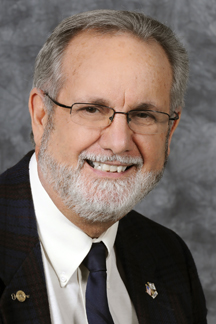
2025 Regular Session Introduced by Larry Kump

HB 3121 tightens ethics rules by banning legislators and covered public employees from representing or giving expert testimony against State or local government interests, and requ

To House Energy and Public Works
0
WeVote Research Nonpartisan
Bill Summary · HB 3121

HB 3121 — Summary (Illinois, 104th General Assembly)

Status: In committee upon adjournment (last action: 2025-06-28)
Introduced: February 18–20, 2025 by Rep. Blaine Wilhour
Primary subject (as text amends): Illinois Governmental Ethics Act (5 ILCS 420)
Note on title: The bill title references "community water systems; declaring an emergency," but the bill text provided amends the Illinois Governmental Ethics Act. This summary addresses the ethics provisions contained in the bill text.

Purpose / Intent

HB 3121 strengthens conflict-of-interest and outside‑employment restrictions for Illinois legislators and state/local government employees by:
- Expanding the definition of prohibited "representation cases" to explicitly include matters before units of local government;
- Prohibiting legislators and covered employees from accepting or participating in representation cases that are adverse to the State or a unit of local government (or that may adversely affect public revenue, finances, health, safety, welfare, or relative tax burden);
- Banning legislators and covered employees from providing paid expert opinion testimony against State or local government interests; and
- Requiring legislators to recuse (with a written explanation) from legislative matters in which they, their spouse, or an immediate family member has a financial interest.

Key provisions / changes

  • Amends multiple sections of the Illinois Governmental Ethics Act: modifies Sections 1-113 (definition of "representation case"), 2-104 (prohibition on participation in representation cases), and 3A-35 (conflicts for appointees and employees); adds new Sections 3-108 and 3-109; repeals Sections 3-202 and 3-203.
  • Definition change (5 ILCS 420/1‑113): "Representation case" now explicitly covers matters before any unit of local government where the body exercises substantial discretion.
  • Prohibition (5 ILCS 420/2‑104 & 3A‑35):
    • No legislator may accept or participate in a representation case if the State or a unit of local government is an adverse party or if the outcome would adversely affect State/local revenue, finances, health, safety, welfare, or relative tax burden.
    • No employee of a governmental entity may represent or derive income/benefit in proceedings where State/local government is an adverse party or where the outcome may cause the adverse effects listed above.
  • Expert testimony ban (new 5 ILCS 420/3‑108 and subsection in 3A‑35): Prohibits legislators and covered employees from deriving income, compensation, or other tangible benefit for providing opinion evidence as an expert against State or local government interests in judicial or quasi‑judicial proceedings.
  • Recusal requirement (new 5 ILCS 420/3‑109): Legislators must officially recuse themselves from legislative matters where they, a spouse, or an immediate family member has a financial interest and provide a written explanation for the recusal.
  • Enforcement: Violations of the representation-case prohibition are designated a Class A misdemeanor (retaining or clarifying existing penalty language).

Who is affected

  • State legislators.
  • Employees of State and units of local government covered by the Illinois Governmental Ethics Act (including appointed board/commission members subject to Section 3A‑35).
  • Private parties who would hire legislators or covered employees for representation or expert testimony (e.g., lawyers, consultants, expert witnesses).
  • Units of local government, which are newly included in the “representation case” definition.

Potential impacts

  • Narrows permissible outside employment and private practice for legislators and certain public employees, limiting paid representation or expert work adverse to government interests.
  • Increases transparency by requiring written recusal explanations when financial interests exist.
  • Could reduce conflicts but may limit qualified experts' availability if they are current public officials or close associates.
  • Raises compliance and enforcement matters (criminal penalty for violations).

Legislative timeline / procedural history (selected)

  • Filed: Feb 18–20, 2025 (Rep. Blaine Wilhour).
  • Referred to Rules, Ethics & Elections, and other committees; hearings and work sessions held (Feb–Mar 2025).
  • Recommendation: "Do pass with amendments" and referred to Ways & Means (Mar 11, 2025).
  • Co-sponsors added in March–April 2025 (Reps. Dan Ugaste, Jason R. Bunting, Charles Meier, Kevin Schmidt, Travis Weaver, David Friess, Dave Severin).
  • Status as of 2025-06-28: In committee upon adjournment.

If you want, I can produce a side‑by‑side comparison of current law vs. changes in HB 3121 (section-by-section), or draft a short memo on likely compliance steps for affected officials.

Compiled from official sources — confirm details with the bill’s official record.

Sign in to ask a question.