

WeVote

Bill

Bill

AB 193

Relating to: ratification of the Respiratory Care Interstate Compact. (FE)

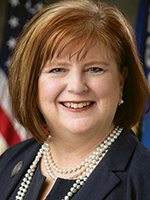
2025-2026 Regular Session Introduced by Barbara Dittrich and 9 co-sponsors

Ratify the Respiratory Care Interstate Compact to allow licensed practitioners to practice in other member states under a compact privilege, once seven states enact it.

Failed to pass pursuant to Senate Joint Resolution 1
0
WeVote Research Nonpartisan
Bill Summary · AB 193

AB 193 — Ratification of the Respiratory Care Interstate Compact (summary)

Status: Introduced Jan 8, 2025. Primary sponsors listed; Assembly Amendment 1 adopted in committee (11/2025) removed a separate provision that would have eliminated the statutes-and-rules exam requirement for respiratory care practitioners. Bill would ratify and enter the state into the Respiratory Care Interstate Compact once the compact is enacted by seven states.

Main purpose / intent

To join the multi‑state Respiratory Care Interstate Compact so that licensed respiratory care practitioners in the state may obtain a compact privilege to practice in other member states without obtaining separate full licensure in each state, while establishing a compact commission and interstate systems for licensure coordination and discipline.

Key provisions

  • Creates (ratifies entry into) the Respiratory Care Interstate Compact and establishes a Respiratory Care Interstate Compact Commission composed of member‑state licensing authority representatives.
  • Compact privilege: Allows a practitioner whose primary state of residence is a member state to practice in other member (remote) states under a compact privilege, subject to the remote state’s scope‑of‑practice rules.
  • Discipline and enforcement:
    • Remote states may take action against a practitioner’s compact privilege within that remote state.
    • If a practitioner’s home‑state license becomes encumbered, the practitioner loses compact privileges in all remote states until the home license is unencumbered and two years have passed.
    • Member states must report adverse/disciplined actions to a coordinated database.
  • Information sharing and subpoenas: Authorizes interstate subpoenas and the creation of a coordinated database/uniform data set containing licensure and disciplinary information; member states must report specified data to the system.
  • Commission powers: Adopt bylaws, promulgate binding rules, hire staff, establish an executive committee, and levy assessments or impose fees on member states or licensees to fund commission operations.
  • Withdrawal and amendment: A state may withdraw by repealing its authorizing statute, with withdrawal taking effect 180 days after repeal; amendments require enactment by all member states to be effective.
  • Compact effective in this state only after at least seven states enact equivalent legislation.

Who is affected

  • Respiratory care practitioners (licensees) — gains potential multi‑state practice mobility and faces compact‑related discipline/reporting rules.
  • State licensing board/Medical Examining Board — appoints a commissioner, implements reporting duties, monitors compact data, and enforces discipline.
  • Employers and health facilities that hire respiratory care practitioners — may see easier cross‑state staffing but must comply with discipline notifications and scope rules.
  • State budget/administration — potential administrative and IT responsibilities; the commission may impose assessments or fees.

Fiscal and procedural notes

  • The compact creates new administrative duties (board representation, reporting to the compact data system) and potential costs; the commission may levy assessments or require licensee fees to fund operations.
  • The bill’s effective operation for the state is conditioned on at least seven states enacting the compact.
  • Assembly Amendment 1 removed an unrelated provision that would have eliminated the statutes‑and‑rules exam requirement for initial certification/renewal; that exam requirement remains in law unless separately amended.

Compiled from official sources — confirm details with the bill’s official record.

Sign in to ask a question.