

WeVote

Bill

Bill

AB 339

Relating to: aid for comprehensive school mental health services and making an appropriation. (FE)

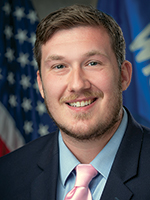
2025-2026 Regular Session Introduced by Clint Anderson and 28 co-sponsors

Creates a permanent state Office of Children’s Mental and Behavioral Health to coordinate planning, funding, and services for Nevada’s children.

Failed to pass pursuant to Senate Joint Resolution 1
0
WeVote Research Nonpartisan
Bill Summary · AB 339

AB 339 — Office of Children’s Mental and Behavioral Health (BDR 39‑358)

Sponsor: Assembly Committee on Health and Human Services (on behalf of the Joint Interim Standing Committee on Health and Human Services)
Introduced: January 28, 2025

Purpose / Intent

Create a permanent, centralized state office to coordinate, plan, and improve mental and behavioral health services for children across Nevada. The bill responds to fragmented systems, workforce and access gaps, and prior findings (including DOJ settlement issues) by establishing an accountable authority to align policy, funding, data, and program implementation statewide.

Key provisions

  • Establishes the Office of Children’s Mental and Behavioral Health (the Office) within the Office of the Director of the Department of Health and Human Services (DHHS).
  • Requires the DHHS Director to appoint a Director of the Office and defines duties and qualifications for that position (see below).
  • Transfers responsibility for developing a statewide plan for children’s mental and behavioral health from an existing subcommittee to the new Office and eliminates the Commission on Behavioral Health’s subcommittee on children.
  • Requires mental health consortia, regional behavioral health policy boards, and state entities to coordinate with the Office and submit strategic plans, reports and other documents as requested to avoid duplication and align efforts.
  • Directs the Office to: develop and publish a statewide plan; act as a central resource and technical authority; review consortia plans and budgets; analyze programs/policies; build community partnerships; and pursue workforce, quality assurance, data and evidence‑based practice improvements.
  • Directs the Office to begin steps to establish a Children’s Behavioral Health Center of Excellence, including preparing reports and presenting findings to the Joint Interim Standing Committee and submitting a final proposal (reprint requires submission of a final proposal by June 1, 2026).
  • Authorizes the Office to apply for and accept gifts, grants, and donations and to seek assistance/cooperation from public and private entities.
  • Provides appropriations for personnel, operating costs, equipment and supplies for the Office (state fiscal impact language notes an appropriation not included in the Executive Budget).

Director qualifications and staffing (as amended)

  • Director must hold a valid Nevada license to practice child & adolescent mental/behavioral health, have at least 5 years of clinical experience in children’s mental health, avoid conflicts of interest during appointment and tenure, and the bill expresses a preference for a doctoral (Ph.D.) or medical (M.D.) degree in a child/adolescent mental health specialty.
  • The Office may employ (explicitly authorized in amendments): a data analyst, administrative assistant, community engagement/outreach professional, research & grants professional, and a clinical implementation & quality assurance professional.

Who is affected

  • State DHHS and its divisions (e.g., Division of Public and Behavioral Health, Division of Child and Family Services).
  • Regional mental health consortia, regional behavioral health policy boards, the Commission on Behavioral Health (policy/coordination role), counties and providers who receive state funds or participate in consortia.
  • Children, families and providers statewide through intended improvements to access, coordination, workforce, and quality of services.

Procedural history & status

  • Introduced Jan 28, 2025; heard and amended in multiple committees (Health & Human Services; Appropriations; Labor, Public Employment & Retirement).
  • Amendments added director qualifications, staffing authorizations, specific reporting deadlines and Center of Excellence steps.
  • Legislative actions listed in the bill record show final enactment activity: enrolled and presented to the Governor (Sept. 15, 2025) and approved/chaptered as Chapter 687, Statutes of 2025 (Oct. 13, 2025). (Committee and reprint dates: March–August 2025; first reprint April 16, 2025.)
  • Fiscal notes: states “Effect on Local Government: No.” and “Effect on the State: Contains Appropriation not included in Executive Budget.”

Practical impacts / considerations

  • Centralizes accountability and planning for children’s behavioral health and aims to reduce systemic fragmentation.
  • Requires startup funding and dedicated staff; authorizes pursuit of grants and donations to support operations and initiatives (including a Center of Excellence).
  • May change reporting and planning workflows for regional consortia and state agencies that must now coordinate with the Office.

Compiled from official sources — confirm details with the bill’s official record.

Sign in to ask a question.