

WeVote

Bill

Bill

S 800

Relates to recommendations of the traumatic brain injury services coordinating council

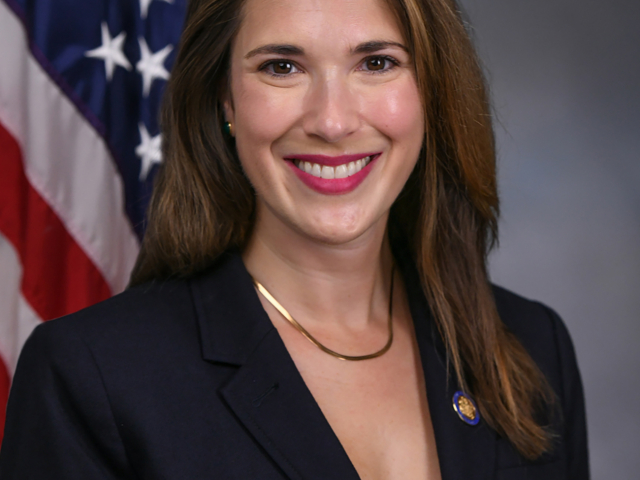
2025 Regular Session Introduced by Michelle Hinchey

The bill expands VA's Precision Medicine for Veterans Initiative to prioritize brain and mental health research, data sharing with DoD, and large-scale implementation studies focus

SUBSTITUTED BY A1016
0
WeVote Research Nonpartisan
Bill Summary · S 800

Summary — S.800: “Precision Brain Health Research Act of 2025” (as introduced Feb 27, 2025)

Note: the materials provided appear to combine two different measures that share the number “800” — a federal Senate bill (below) introduced by Senators Jerry Moran and Angus King to amend a VA precision medicine initiative, and a separate Massachusetts state bill titled “pharmacists as healthcare providers.” This summary focuses on the federal S.800 (Precision Brain Health Research Act of 2025) and highlights the apparent conflation at the end.

Purpose / Intent

To expand and refocus the Department of Veterans Affairs (VA) “Precision Medicine for Veterans Initiative” to prioritize research, data-sharing, assessment, and implementation related to brain and mental health—explicitly including repetitive low‑level blast exposure and dementia—and to accelerate translation of findings into improved diagnosis and care for veterans.

Key provisions

  • Amendment to Section 305 of the Commander John Scott Hannon Veterans Mental Health Care Improvement Act of 2019 to:

    • Explicitly add “repetitive low‑level blast exposure, dementia, and such other brain and mental health conditions” to the initiative’s scope.
    • Require a VA–Department of Defense (DoD) data‑sharing partnership. DoD-supplied data must include Department‑wide records from:
    • The United States Armed Forces,
    • U.S. Special Operations Command, and
    • The Long‑Term Impact of Military‑Relevant Brain Injury Consortium (Neurotrauma Consortium) maintained by the Defense Health Agency.
    • Require the partnership data to be stored on the initiative’s open platform.
  • New research mandates (subsection (f)) focused on repetitive low‑level blast exposure:

    1. A “big‑data” assessment of clinical and non‑clinical interventions in VA patients likely exposed to repetitive low‑level blasts, with categorization by military occupational specialty and units.
    2. At least two large‑scale implementation studies of proven interventions for those patients.
    3. A translational study on growth hormone replacement therapy and its effects on cognition, quality of life, brain structure, and other symptoms.
    4. At least four large‑scale quality improvement studies to improve diagnosis and care.
  • National Academies contract (subsection (g)):

    • VA must seek to contract with the National Academies of Sciences, Engineering, and Medicine within 60 days of enactment to validate brain and mental health biomarkers among veterans and to submit reports to the Senate and House Veterans’ Affairs Committees at least biennially.
  • Assessments & reporting:

    • VA must assess translational research studies in progress and planned (including subsection (f) work) and report to Congressional Veterans’ Affairs Committees; the assessment must be followed by a report to those committees within 60 days of its completion.
    • VA must provide biennial reports on the initiative that include recommendations for immediate administrative and legislative action.
  • Funding:

    • Authorization of appropriations: $5,000,000 per year to the VA for each of fiscal years 2025 through 2034 to carry out the initiative.

Who is affected

  • Primary: Veterans (especially those with likely exposure to repetitive low‑level blasts), VA researchers and clinicians, VA health system operations.
  • Secondary: Department of Defense (data providers), researchers/contractors (e.g., National Academies), Congress (Veterans’ Affairs Committees), and entities involved in implementing interventions and quality improvement across the VA.

Procedure / timeline (as documented)

  • Introduced in the U.S. Senate (Feb 27, 2025) by Sen. Jerry Moran (cosponsor Sen. Angus King).
  • Read twice and referred to the Senate Committee on Veterans’ Affairs (Feb 27, 2025).
  • Committee hearing(s) recorded (e.g., May 21, 2025); ordered to be reported with an amendment in the nature of a substitute favorably (July 30, 2025).
  • The bill text directs VA to begin certain actions within 60 days after enactment (National Academies contract) and sets recurring biennial reporting obligations.

Notes / Conflicting materials

  • The packet also contains a Massachusetts state Senate bill numbered 800 about authorizing pharmacists to order/tests/screen/treat certain conditions under a statewide protocol and insurance reimbursement provisions. That state bill is a separate matter and appears to have been processed in Massachusetts legislative committees (references to “A1016” and state procedural steps). The federal S.800 summarized here is distinct and concerns VA research on brain health and blast exposure.

If you’d like, I can:
- Produce a separate, focused summary of the Massachusetts S.800 (pharmacists) document, or
- Produce a clean one‑page comparison showing the two different S.800 measures and their current procedural statuses.

Compiled from official sources — confirm details with the bill’s official record.

Sign in to ask a question.