

WeVote

Bill

Bill

A 1492

Relates to low or moderate income housing projects

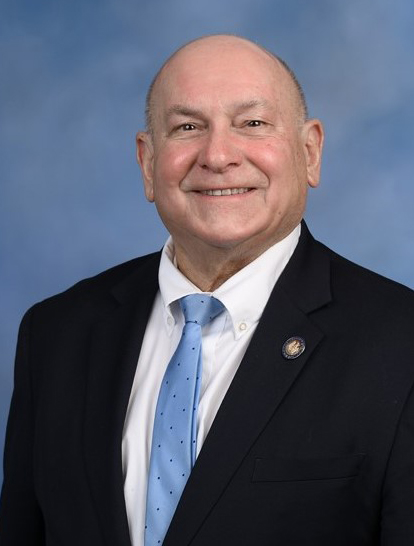
2025 Regular Session Introduced by Chris Burdick and 3 co-sponsors

NJDOT must study how heavier EVs affect highway capacity, publish a ranking of roads by EV-weight adaptability, and prioritize projects accordingly for funding.

REFERRED TO HOUSING
0
WeVote Research Nonpartisan
Bill Summary · A 1492

Summary of NJ Bill A 1492 (Introduced Version)

Note on title vs. content: The bill’s official title references “low or moderate income housing projects,” but the introduced text provided focuses on the impact of electric vehicles on public highways and the Department of Transportation’s study and actions related to accommodating EV weight. This summary reflects the introduced text as written.

Purpose and intent

  • The bill aims to evaluate and address how New Jersey’s public highways can accommodate the greater weight associated with electric vehicles (EVs), including plug-in hybrid vehicles.
  • It would require the New Jersey Department of Transportation (NJDOT) to study highway capacity for heavier EVs, develop improvement recommendations, and prioritize highway projects accordingly.

Key provisions

  • Definitions (Section 1)

    • “Department” = New Jersey Department of Transportation.
    • “Electric vehicle” = vehicle powered wholly or partly by electricity, with a battery or energy storage device that can be charged externally; includes plug-in hybrids.
    • “Plug-in hybrid vehicle” = can be charged from an external electricity source but is not exclusively electric.
    • “Public highways” = all public roadways and related routes across the state (including bridges).
  • Study requirement (Section 2a–2b)

    • Within six months after the act’s effective date, NJDOT must conduct a study on each public highway’s ability to accommodate the additional weight of EVs.
    • Minimum study components: 1) Determine whether and for how long each highway can handle the increased weight. 2) Provide recommendations to improve each highway’s capacity. 3) Develop and publish a ranking list from least-to-most able to accommodate EV weight.
    • Within six months after completing the study, NJDOT must submit a report to the Governor and to the Legislature (via the established statutory process) including findings, recommendations, and the ranking list.
  • Funding prioritization (Section 2c)

    • When selecting projects for the Annual Transportation Capital Program, NJDOT must prioritize projects that address highways unable to accommodate EV weight based on the ranking list.
  • Funding condition (Section 3)

    • As a condition of receiving funding for a public highway project, the project sponsor must certify that the completed project will enable the highway to accommodate EV weight.
  • Rules and regulations (Section 4)

    • NJDOT may adopt rules under the Administrative Procedure Act to implement the act’s provisions.
  • Effective date (Section 5)

    • The act takes effect immediately.
    • Section 3 (the funding-certification requirement) remains inoperable until the study is completed.

Timeline and procedural aspects

  • Introduced: January 9, 2024.
  • Status shown as “REFERRED TO HOUSING” on 2025-01-10 (two entries), indicating committee-level consideration in a later session.
  • Requires compliance with a six-month study window after enactment, followed by a six-month reporting window after study completion.
  • Immediate effect for most provisions, with the Section 3 funding-certification provision delayed until the study is finished.

Who is affected

  • State agencies: New Jersey Department of Transportation (primary implementer).
  • Highway project sponsors seeking funding through the Annual Transportation Capital Program.
  • State policymakers (Governor and Legislature) receiving reports and rankings.
  • General public and EV owners (indirectly, via potential highway improvements).

Related context

  • Related/companion bills exist (S 4437, S 4058, etc.), indicating broader legislative interest in EV infrastructure and related transportation priorities.

If you want, I can tailor this summary to focus more on implications for infrastructure planning, budget planning, or EV policy debates.

Compiled from official sources — confirm details with the bill’s official record.

Sign in to ask a question.