

WeVote

Bill

Bill

A 9215

Relates to limiting rate increases that entail a return on equity for capital projects

2025 Regular Session Introduced by Jonathan Jacobson

Limits rate increases tied to return on equity for capital projects, aiming to curb utility charges and push for cost efficiency, affecting ratepayers and utility financing.

REFERRED TO CORPORATIONS, AUTHORITIES AND COMMISSIONS
0
WeVote Research Nonpartisan
Bill Summary · A 9215

Legislative Summary — Bill A 9215

Quick Facts

  • Bill Number: A 9215
  • Title: Relates to limiting rate increases that entail a return on equity for capital projects
  • Status: Referred to the Committee on Corporations, Authorities and Commissions
  • Introduced: November 3, 2025
  • Sponsors: Jonathan Jacobson (primary)

Note: The information available here includes only the metadata and the bill’s title. The full text of provisions is not provided in the material you shared.

Purpose and Intent

  • The bill appears to aim at restricting or limiting rate increases that incorporate a return on equity (ROE) for capital-project-related costs. In practical terms, it suggests imposing constraints on how much utilities can raise customer rates to recover ROE tied to capital investments.

Key Provisions (Available Information vs. Likely Provisions)

  • What is stated: The bill’s core aim is to limit rate increases associated with ROE for capital projects.
  • What’s not specified in the provided material:
    • The exact cap or formula (e.g., percentage limits, glide paths, or thresholds) governing ROE-based rate increases.
    • Definitions of ROE, capital project scope, and eligible/ineligible costs.
    • Procedures for approval, exemptions, or oversight (e.g., required hearings, filing requirements, or enforcement mechanisms).
    • Any transition rules, effective dates, or applicability to different types of utilities (e.g., electricity, water, telecommunications).
    • Penalties or remedies for noncompliance.

Who/What Would Be Affected

  • Regulated utilities and their capital projects that seek to fund infrastructure improvements through rate increases tied to ROE.
  • Ratepayers/consumers who would be affected by changes in permissible rate adjustments for capital investments.
  • Regulatory agencies and the committee named in the bill (Corporations, Authorities and Commissions) responsible for oversight, approval, and enforcement.

Procedural and Timeline Aspects

  • Current Stage: Referred to the Committee on Corporations, Authorities and Commissions.
  • Timeline: No further actions (e.g., hearings, amendments, or votes) are listed in the provided material. As common for such bills, subsequent steps would include committee consideration, potential amendments, floor votes, and, if approved, passage to the other chamber (if applicable) with timelines depending on legislative calendars.

sponsor

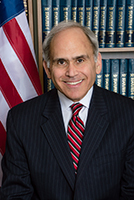
  • Primary Sponsor: Jonathan Jacobson

Potential Impact and Considerations

  • If enacted, the bill could curb the magnitude of ROE-based rate increases, potentially reducing future charges to ratepayers for capital projects.
  • It could affect utility financing strategies and project approval processes, possibly increasing the emphasis on cost efficiency and alternative funding mechanisms.
  • Stakeholders may seek clarifications on ROE definitions, measurement methods, and safeguarding mechanisms to ensure both consumer protection and reasonable utility investment incentives.

How to Track or Learn More

  • Monitor the bill’s text and updates on the legislative website for A 9215 (New York Assembly conventions are commonly denoted with “A” for Assembly bills).
  • Watch for committee hearings and proposed amendments in the Corporations, Authorities and Commissions committee.
  • Check for fiscal notes, impact analyses, and sponsor statements as they become available.

Compiled from official sources — confirm details with the bill’s official record.

Sign in to ask a question.