

WeVote

Bill

Bill

A 10391

Relates to adjudications and owner liability for a violation of traffic-control signal indications in the city of Poughkeepsie

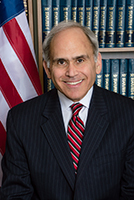
2025 Regular Session Introduced by Jonathan Jacobson

Poughkeepsie may run a pilot traffic-camera program that holds vehicle owners liable for certain red-light violations captured by photo/video at up to nine intersections.

REFERENCE CHANGED TO WAYS AND MEANS
0
WeVote Research Nonpartisan
Bill Summary · A 10391

Overview

This New York Assembly bill would authorize the city of Poughkeepsie to operate a limited traffic camera program that holds vehicle owners liable for certain red-light or traffic-control signal violations detected by photo or video systems. The bill creates a defined demonstration program, outlines owner liability, notice/notice features, adjudication, and reporting requirements, and sets procedural rules and caps on penalties. It would apply only if the city enacts local legislation implementing the program and would sunset after a specified period.

Main purpose and intent

  • Empower the City of Poughkeepsie to adopt a local law establishing a demonstration program using traffic-control signal photo violation-monitoring systems.
  • Impose monetary liability on vehicle owners for violations evidenced by the photo/video system when an operator violates traffic-control indications.
  • Provide a framework for adjudication, notices, penalties, and exemptions related to these violations.
  • require annual reporting by the city on program results and operations.

Key provisions and changes

  • Program scope and technology

    • City of Poughkeepsie may install and operate traffic-control signal photo violation-monitoring devices at up to nine intersections at any one time.
    • Devices must use technologies that minimize identification of drivers, passengers, or contents of vehicles, to the extent practicable.
  • Owner liability and scope

    • Vehicle owners can be penalized for violations evidenced by the photo system when the operator violated traffic-control signals, provided the owner permitted operation of the vehicle (express or implied).
    • If the operator is convicted of the underlying traffic violation, the owner is not liable for the penalty.
    • “Owner” is defined per NY law; the system uses recorded images (photos, microphotographs, videotapes, etc.) as evidence.
  • Evidence and process

    • A technician’s certified affidavit (or a facsimile) based on photos/video constitutes prima facie evidence.
    • Photographs or footage must be available for adjudication; records must be accessible in proceedings.
  • Penalties and notices

    • Penalties are limited to a schedule set by local law or ordinance; base liability cap is $50 per violation.
    • An additional penalty of up to $25 may be imposed for failure to respond to a notice of liability within the required time.
    • A notice of liability is mailed to the alleged owner (no requirement for personal service); standard mailing records serve as evidence of sent notices.
    • Notices must include details: owner name/address, vehicle registration, location, date/time, camera ID, and guidance on how to contest.
  • Adjudication

    • Adjudication occurs via a local traffic violations bureau or, if none, the court with jurisdiction over traffic infractions; the city may authorize an administrative tribunal for adjudicating parking/standing violations where applicable.
    • Special provisions for lessors (auto owners who lease vehicles) to mitigate liability if they provide lessee information within 37 days of liability notice; the lessee may then be treated as the owner for purposes of liability.
  • Special defenses and defenses related to operation

    • If the vehicle was reported stolen at the time of the violation, the owner may have a defense; a certified police report suffices to establish the defense.
  • Annual reporting (section 1111-j(m))

    • If enacted, the city must report to the Governor, Senate Temporary President, and Assembly Speaker each June on:
    • Locations and usage of the systems
    • Pre-installation and ongoing accident data at intersection sites
    • Counts of events, notices issued, and fines collected
    • Adjudication outcomes and revenue
    • Program expenses and overall adjudication quality
  • Sunset and effectiveness

    • The act authorizes the program for a fixed period, with expiration: the provisions expire December 1, 2031 (local laws enacted under this act may remain in force until December 1, 2030).
    • The bill also clarifies that rulemaking and regulatory actions necessary to implement the act may be taken immediately upon effective date.

Who would be affected

  • Vehicle owners in the City of Poughkeepsie (potential liability for violations detected by the traffic-control signal system).
  • Lessors of vehicles (landlords/companies leasing vehicles) under specific notice-and-respondent procedures.
  • Operators (drivers) of vehicles whose violations are captured by photo/video systems.
  • City agencies in Poughkeepsie responsible for notification, adjudication (traffic violations bureau or equivalent), and enforcement.
  • Potential vendors supplying or maintaining photo violation-monitoring equipment (subject to procurement rules).

Procedural and timeline aspects

  • Effective date: The act would take effect 30 days after enactment.
  • Sunset: Provisions expire December 1, 2031; local laws adopted under this act would terminate December 1, 2030 (if applicable).
  • Annual reporting: If the program operates, annual reports are due each June 1.
  • Implementation readiness: The act allows immediate rulemaking and regulatory actions necessary to implement the program on or before the effective date.

Notes

  • The bill explicitly states protections to minimize driver identification in photographs, while preserving the ability to issue liability notices.
  • It does not create a statewide program; it authorizes a localized pilot in Poughkeepsie, with procedural mechanisms mirroring other traffic-camera programs but with owner-liability structure and specific oversight provisions.

Compiled from official sources — confirm details with the bill’s official record.

Sign in to ask a question.