

WeVote

Bill

Bill

HB 2614

RECOGNITION OF LICENSES ACT

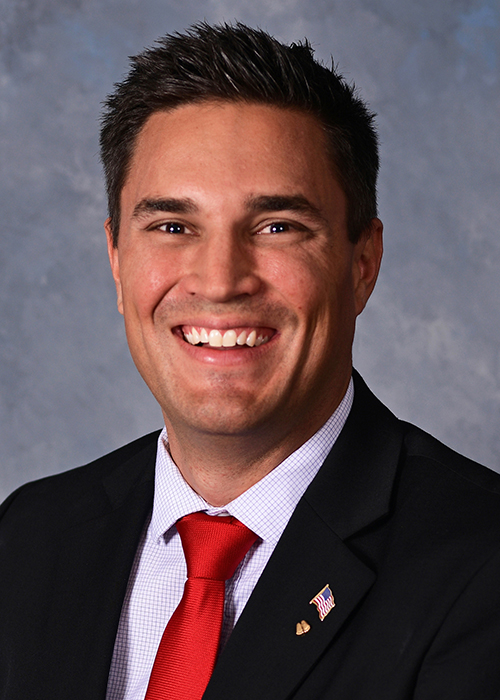
104th Regular Session Introduced by Adam Niemerg

Allows state boards to recognize out-of-state licenses or qualifying work experience, issuing a local license to boost mobility for workers, including military members.

Referred to Rules Committee
0
WeVote Research Nonpartisan
Bill Summary · HB 2614

Summary — HB 2614 — Universal Recognition of Occupational Licenses Act (Recognition of Licenses Act)

Status: Referred to Rules Committee
Introduced: February 10, 2025
Note: text provided is the introduced version (some sections truncated). An unrelated Arizona bill text also appears in the provided document and should be disregarded for this summary.

Purpose / Intent

The bill creates the "Universal Recognition of Occupational Licenses Act" to make it easier for individuals who already hold occupational licenses, government certifications, or relevant out‑of‑state work experience to obtain equivalent authorization to practice in this State. The intent is to promote interstate portability of professional licenses and recognize qualified workers who move into the State (including military applicants).

Key provisions

  • Definitions: defines terms such as “board” (state agency that licenses an occupation), “occupational license,” “government certification” (with certain exclusions), “lawful occupation,” “scope of practice,” “other state,” and “military/military occupational specialty.”
  • Recognition of out‑of‑state licenses (Section 10): A State board must issue an occupational license or government certification to an applicant who holds a current, valid license/certification from another state if all of the following are met:
    • License in another state in a similar scope of practice (as determined by the State board);
    • Held the other license for at least 1 year;
    • The other state required an exam or education/training/experience;
    • The applicant is in good standing with the other board;
    • No disqualifying criminal record under State law;
    • No revocation or surrender of the other license for negligence/intentionally misconduct;
    • No pending complaint/investigation relating to unprofessional conduct (boards may withhold action until resolved);
    • Applicant pays applicable State fees.
  • Recognition based on work experience (Section 15): If an applicant worked for at least 3 years in an occupation in a jurisdiction that did not require licensure, and the State uses a license for that occupation with a similar scope, a board must issue a license if the applicant also meets the above disqualifier-related conditions.
  • State‑law examination (Section 20): Boards may require applicants to pass a State jurisprudence exam covering State statutes and administrative rules governing the occupation.
  • Timelines and review:
    • Boards must provide a written decision within 30 days after receiving a complete application (Section 25).
    • Applicants may appeal adverse board decisions to a court of general jurisdiction (Section 30). Appeals may challenge denial, occupation determination, scope‑similarity determinations, and other Act-related determinations.
  • Other provisions referenced: applicability of State laws and jurisdiction over licensees, exceptions and limits, permitted application fees, and emergency powers. (Full text of some of these provisions was truncated in the provided version.)
  • Effective date: The synopsis states the Act is effective immediately if enacted.

Who is affected

  • Primary: Individuals licensed or certified in other U.S. jurisdictions (including military service members and veterans) and applicants with qualifying out‑of‑state work experience seeking to practice in this State.
  • Secondary: State licensing boards (must evaluate out‑of‑state credentials and issue licenses under the Act), employers, and consumers who will be served by newly recognized practitioners.

Potential impacts and considerations

  • Increases portability of licenses, potentially easing workforce mobility and filling local labor shortages.
  • May reduce administrative barriers for military spouses and relocating professionals.
  • Could increase workload for licensing boards (credential reviews, determinations of “similarity of scope,” and processing appeals).
  • Boards retain authority to require a State jurisprudence exam and to deny applicants for good‑cause reasons; legal disputes over scope similarity or exclusions may arise.
  • Some professional credentials already treated differently (e.g., certain board certifications) are explicitly excluded from “government certification” in the definitions.

If you want, I can:
- Produce a clean one‑page bill comparison showing the procedural steps required of boards, or
- Draft a short plain‑language FAQ for licensees (e.g., military spouses, out‑of‑state professionals) describing how to apply under this bill.

Compiled from official sources — confirm details with the bill’s official record.

Sign in to ask a question.