

WeVote

Bill

Bill

S 4495

Reactors at Risk Act of 2026

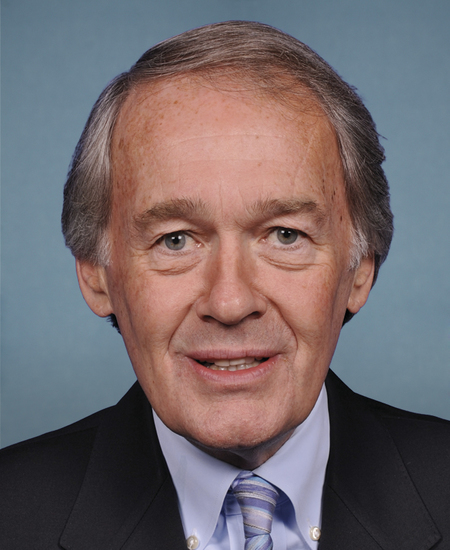
119th Congress Introduced by Ed Markey and 1 co-sponsor

The act requires a joint report within 120 days assessing dangers and risk-reduction measures for civilian nuclear reactors in regions likely to experience armed conflict.

Introduced in Senate
0
WeVote Research Nonpartisan
Bill Summary · S 4495

Reactors at Risk Act of 2026 (S. 4495)

Purpose and intent

  • Establishes a requirement for a joint government report evaluating the dangers posed by civilian nuclear reactors located in areas that could experience armed conflict.
  • Aims to inform national security, allied interests, and civilian safety by assessing risks and identifying measures to prevent, prepare for, and mitigate those risks.

Key provisions and changes

  • Section 2 – Report on Dangers Posed by Nuclear Reactors in Areas that Might Experience Armed Conflict
    • Timing: Requires the report to be submitted within 120 days after enactment.
    • Responsible agencies: Secretary of Defense and the Under Secretary of Energy for Nuclear Security must jointly prepare and submit the report.
    • Scope of assessment (subsection a):
    • Identify dangers to:
      • U.S. national security and interests of allies/partners.
      • Safety and security of civilian populations.
    • Focus areas include nuclear reactors that exist as of enactment or are scheduled for completion over the next 10 years.
    • Geographic and conflict-related criteria:
      • Regions with armed conflict in the past 25 years, including:
      • Attacks by Russia on Ukraine.
      • Middle East conflicts (e.g., Israel-Iran tensions).
      • Areas that are contested or likely to experience armed conflict during the reactors’ lifespans.
      • Areas involved in potential conflicts such as:
      • Russia–Estonia, Latvia, Belarus, Lithuania, Poland scenario.
      • India–Pakistan conflict.
      • Taiwan-related conflict.
      • North Korea–South Korea conflict.
      • The bill presents a non-exhaustive list of specific scenarios to consider.
    • Scope also includes risk reduction steps that the U.S. or allies/partners can take to prevent, prepare for, and mitigate risks arising from these reactors.
    • Form of the report (subsection b):
    • Unclassified report required.
    • May include a classified annex for sensitive details.
    • Congressional oversight (subsection c):
    • Defines “appropriate committees of Congress” as:
      • Senate: Armed Services, Foreign Relations, and Environment and Public Works.
      • House: Armed Services, Foreign Affairs (Foreign Affairs Committee), and Energy and Commerce.

Who is affected

  • Federal government agencies: Department of Defense and the Department of Energy (Under Secretary for Nuclear Security) will be responsible for preparing the report.
  • Policymakers and Congress: Receives the report, including the specified committees.
  • General public: The unclassified contents of the report will inform public understanding of nuclear reactor security risks tied to potential armed conflict.

Procedural and timeline aspects

  • Introduction and referral:
    • Introduced May 12, 2026, and referred to the Senate Committee on Armed Services.
  • Reporting deadline:
    • Entire joint report due within 120 days of enactment.
  • Form and accessibility:
    • Primarily unclassified; may include a classified annex for sensitive information.
  • Sponsorship:
    • Co-sponsors include Sen. Jeff Merkley and Sen. Edward J. Markey.

Potential impact and considerations

  • The bill would produce a formal risk assessment of reactors in potentially volatile regions, potentially influencing:
    • U.S. defense and energy security planning.
    • Allied coordination and contingency planning.
    • Nuclear safety and emergency preparedness measures in regions with existing or planned reactors.
  • By mandating analysis of specific geopolitical scenarios, the bill may inform future policy decisions, mitigation investments, and diplomatic engagement with partner nations.
  • The emphasis on an unclassified, publicly releasable report (with a possible classified annex) seeks to balance transparency with national security concerns.

Compiled from official sources — confirm details with the bill’s official record.

Sign in to ask a question.