

WeVote

Bill

Bill

A 4664

Provides for the adjustment of the minimum amount of tax delinquency for which the driver's license of a taxpayer may be suspended

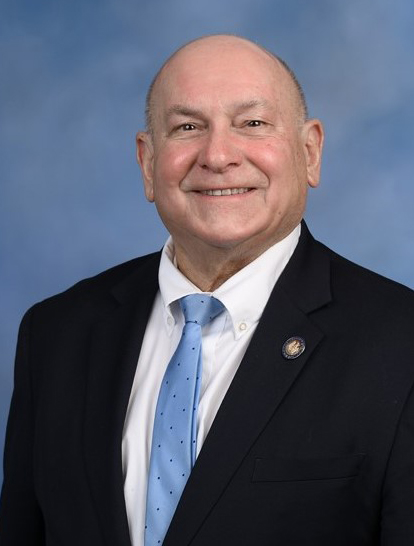
2025 Regular Session Introduced by Chris Burdick and 3 co-sponsors

Prohibits social platforms from using features or algorithms that could cause minors to develop eating disorders; requires audits and penalties for violations.

SUBSTITUTED BY S700
0
WeVote Research Nonpartisan
Bill Summary · A 4664

Summary — A4664 (Reprint AAP / 12/16/24)

Prohibiting social media platforms from promoting certain eating behaviors to child users; supplements Title 56 of the Revised Statutes

Purpose

To reduce the risk that social media designs, algorithms, features, or practices contribute to the development of eating disorders among child users (persons under 18) by prohibiting platforms from using functions they know, or reasonably should know, could cause such harm.

Key definitions

  • Child user: a person under 18 using a social media platform.
  • Eating disorder: a behavioral condition with severe, persistent disturbance in eating behaviors (examples listed: anorexia nervosa, bulimia nervosa, binge eating disorder, avoidant restrictive food intake disorder).
  • Social media platform: a public or semi‑public internet service or app that (a) primarily connects users to interact socially and (b) allows profile creation, a public list of social connections, and posting/viewing of content. Services that primarily provide news, sports, entertainment, e‑commerce, or preselected provider content are not treated as platforms on that basis alone.

Major provisions

  • Prohibition: Platforms may not use any design, algorithm, practice, affordance, or feature that the platform knows, or reasonably should have known, could cause child users to develop an eating disorder (including promoting diet products).
  • Compliance safe harbors: A platform is not deemed in violation if it either:
    1. Implements and documents an internal audit program that includes quarterly internal audits and an annual independent third‑party audit of practices, algorithms, designs, features, and affordances to determine risk to child users — and, upon audit identification and notification, corrects the identified practice/algorithm/feature within 30 calendar days of audit completion/notification; or
    2. Is majority‑controlled by a business entity that generated less than $100 million in gross revenue in the preceding calendar year.
  • Liability exemptions: The bill does not impose liability on platforms for (a) user‑generated content unless paid/promoted by the platform, (b) third‑party content passively displayed, (c) content the platform did not create or develop, or (d) content protected under 47 U.S.C. §230 or constitutional free speech protections.
  • Penalties: Civil penalty up to $250,000 per violation, enforceable via summary proceedings under the Penalty Enforcement Law of 1999. Superior and municipal courts have jurisdiction.
  • Effective date: Six months after enactment.

Committee amendments (notable)

  • Expanded the platform definition criteria and clarified exclusions for services that mainly provide non‑interactive content.
  • Required audits to include algorithms explicitly.
  • Removed an earlier exception for platforms whose primary function is gaming.

Sponsors and status

  • Primary sponsor: Assemblyman Harvey Epstein; cosponsors include Chris Burdick, Al Taylor, Stefani Zinerman.
  • Passed Assembly 12/19/2024 (46–24–2). Reported with amendments by Assembly Appropriations Committee 12/16/2024. Referred to Senate Commerce Committee (received 1/14/2025). On 6/9/2025, A4664 was substituted by S700. No fiscal note required per committee.

Potential impacts (practical effects)

  • Large platforms may need to institute recurring internal and independent audits (including algorithm review) and change design/moderation practices to avoid liability, with associated operational and compliance costs.
  • Small platforms under the $100M threshold are exempt from the safe‑harbor requirement.
  • The bill explicitly preserves core speech protections and statutory immunities (e.g., §230) for ordinary user content, while targeting platform design and algorithmic practices that materially risk causing eating disorders among minors.

Compiled from official sources — confirm details with the bill’s official record.

Sign in to ask a question.