

WeVote

Bill

Bill

A 5605

Provides for reimbursement for certain insurance premiums for certain members of the naval militia

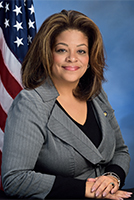
2025 Regular Session Introduced by Pamela Hunter

Establishes a two-year pilot and statewide training to better support neurodiverse students at New Jersey county colleges through accessibility coordinators and inclusive STEM faci

REFERRED TO GOVERNMENTAL OPERATIONS
0
WeVote Research Nonpartisan
Bill Summary · A 5605

Summary — A5605 (2025)

Note: The bill file header includes an inconsistent title (referring to naval militia insurance reimbursement). The text of A5605 as introduced focuses on programs to support neurodiverse students at New Jersey county colleges. This summary follows the bill text.

Main purpose

Establishes several initiatives to improve access, supports, training, and physical infrastructure for neurodiverse students at New Jersey county colleges. The bill creates a two‑year pilot to fund accessibility coordinators, requires statewide professional development for faculty/staff, establishes a competitive grant program for inclusive STEM/AI facilities, and appropriates funding (see appropriation below).

Key provisions

  • Accessibility Coordinator Pilot Program (two years)

    • Administered by the Office of the Secretary of Higher Education in coordination with the New Jersey Council of County Colleges.
    • Funds three county colleges (one each in northern, central, and southern regions) to hire an accessibility coordinator qualified to counsel neurodiverse students.
    • Coordinator duties (minimum): intentional academic advising; help students navigate campus and community resources; connect students to employers and job opportunities.
    • Participating colleges selected via competitive application. Applications must describe coordinator responsibilities, hiring qualifications, professional development plans, and relevant partnerships.
    • Reporting: Secretary must submit a progress report after year one and an effectiveness report after the two‑year pilot to the Governor and Legislature. Participating colleges must provide data.
  • Professional development and training

    • The New Jersey Council of County Colleges shall offer professional development/training for county college faculty and staff on teaching and supporting neurodiverse students.
    • Sessions should promote inclusivity, provide transition/workforce support resources, and cover identifying student needs, curriculum modification, and individualized supports.
    • Delivery may include statewide sessions and half‑day workshops (in‑person or virtual).
  • County College Inclusive STEM Infrastructure Grant Program

    • Secretary of Higher Education to establish a competitive grant program for capital projects that extend or improve instructional, laboratory, communication, or research facilities used wholly or partly for STEM or artificial intelligence instruction/research to better accommodate neurodiverse students.
    • Eligible project costs include lighting modifications, soft/flexible seating, sensory‑friendly rooms, interactive learning platforms, and assistive technology.
    • Applications must include a governing board resolution, project description, other revenue sources, and partnerships. The secretary reviews and approves grants.
    • Individual grants are set to be no less than $25,000 and no more than $50,000 (per text).
  • Appropriation

    • The bill synopsis indicates an appropriation of $1,475,000 to implement the programs (the text references making an appropriation; the synopsis specifies $1.475 million).

Who is affected

  • Primary beneficiaries: neurodiverse students attending New Jersey county colleges (students with autism spectrum conditions, ADHD, learning differences, and other neurodivergent profiles).
  • Institutions: New Jersey county colleges (three pilot participants plus statewide training access), New Jersey Council of County Colleges, and the Office of the Secretary of Higher Education.
  • Faculty and staff: required/encouraged to participate in training and professional development.
  • Employers and community partners: potential increased connections and employment pathways for neurodiverse students.
  • State budget/taxpayers: appropriation and ongoing administrative costs.

Timeline and procedure

  • Effective beginning the first full academic year following enactment.
  • Pilot duration: two academic years, with interim (after year one) and final (after two years) reports to the Governor and Legislature.
  • Grants and pilot slots awarded via competitive application processes established by the Secretary of Higher Education.

Legislative status and sponsors

  • Introduced: May 5, 2025 (Assembly). Referred to Assembly Higher Education Committee; legislative record also shows referral to Governmental Operations.
  • Primary sponsors: Assemblymen Chris Tully and Carmen Theresa Morales; cosponsors include Mitchelle Drulis and Pamela J. Hunter.
  • Companion/related bills: S4119 (companion) and A10587 (prior session).

Potential impact

  • Short term: funds for coordinators at three county colleges; professional development available statewide; modest capital grants to improve STEM/AI spaces for neurodiverse learners.
  • Medium/long term: improved advising, transition support, and employment pipelines for neurodiverse students; enhanced inclusive learning environments; data from pilot to inform broader policy/scale‑up decisions.

Compiled from official sources — confirm details with the bill’s official record.

Sign in to ask a question.