

WeVote

Bill

Bill

HR 8831

Protecting Our Democracy Act

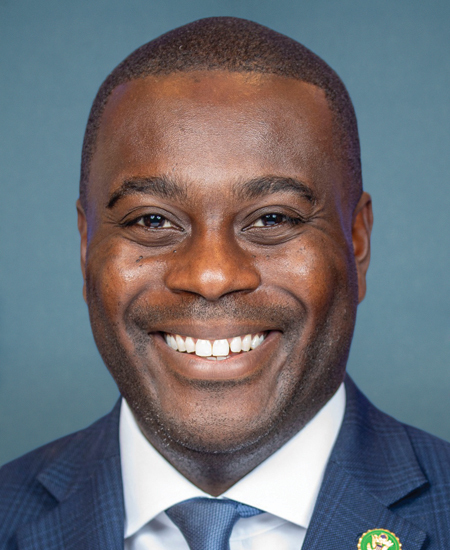
119th Congress Introduced by Gabe Amo and 103 co-sponsors

Protecting Our Democracy Act aims to curb presidential overreach, enforce accountability, and strengthen Congress’s oversight to defend elections and government integrity.

Introduced in House
0
WeVote Research Nonpartisan
Bill Summary · HR 8831

Summary of HR 8831 (Protecting Our Democracy Act)

  • Purpose and aim
    • A comprehensive package designed to protect democracy by:
    • Preventing abuses of presidential power
    • Restoring checks and balances, accountability, and government transparency
    • Defending elections against foreign interference
    • Organized into four divisions: A (Abuses of Presidential Power), B (Checks, Balances, Accountability, Transparency), C (Miscellaneous), and D (Severability).

Key Provisions by Division

Division A — Preventing Abuses of Presidential Power

  • Title XI — Abuse of the Pardon's Power Prevention

    • Requires the Attorney General to provide to congressional committees within 30 days of a pardon:
    • All materials from prosecutions and agencies related to the offense
    • All materials from the DOJ related to the pardon
    • Expands disclosure rules and clarifies that Rule 6(e) secrecy does not bar such disclosures
    • Bribery in connection with pardons and commutations is strengthened to cover the President, Vice President, and presidential candidates
    • Prohibits the President from self-pardoning
  • Title XII — Ensuring No President is Above the Law

    • Tolling of statute of limitations for offenses committed by a President or Vice President during or before tenure (so their time in office does not pause limitations)
    • Applies retroactively to offenses whose limitations had not run as of enactment
    • Clarifies contracts involving the President, Vice President, or Cabinet members (expands subject to Section 431 of 18 U.S.C.)
    • Forfeiture provisions for former Presidents convicted of a felony, including
    • No monetary allowance after felony conviction
    • No funds for certain benefits except security
    • Repayment of amounts received during the conviction period
    • Definition of “finally convicted”
  • Title XIII — Enforcement of the Emoluments Clauses

    • Establishes a broad emoluments framework:
    • Prohibition on accepting foreign emoluments by persons holding office (without Congress’s consent)
    • Civil actions by Congress (Senate or House) in DC federal court, with expedited three-judge panel and direct Supreme Court review for appeals
    • Remedies include disgorgement, surrender of emoluments, termination of office, or other relief
    • Prohibits using government funds to pay disgorgements
    • Expanded definitions of emoluments, foreign government, presidentially-owned entities, and “senior Federal official”
    • Adds penalties for violations and a safe harbor if payment was not solicited and promptly returned
    • Requires congressional review and consent for foreign payments to senior officials
  • Title XIV — Investigative Integrity Protection

    • Provides presidential oversight of the Attorney General (details not fully shown in excerpt)

Division B — Restoring Checks and Balances, Accountability, and Transparency

  • Title XXI — Enforcement of Congressional Subpoenas

    • Strengthens enforcement, compliance, and rulemaking related to subpoenas and information requests
  • Title XXII — Reasserting Congressional Power of the Purse

    • Subtitle A: Impoundment control improvements
    • Subtitle B: Transparency and reporting improvements
    • Expands reporting around budget decisions, Antideficiency Act violations, and DOJ opinions
    • Encourages nonpartisan agencies to assist Congress in budget and appropriations reviews
    • Subtitle C: Emergency declarations and designations
    • Improves checks on National Emergencies Act designations
    • Requires spending reporting and better disclosure to Congress
  • Title XXIII–XXIV etc. (Security from Political Interference in Justice; Whistleblower protections)

    • Strengthens protections for whistleblowers
    • Sets tighter governance around justice and investigations perceived as politically influenced
  • Title XXV–XXVII (Accountability, Hatch Act, Presidential Tax Transparency)

    • Enhances Hatch Act enforcement for political appointees and executive branch reform
    • Adds presidential and vice-presidential tax transparency provisions
    • Expands ethics enforcement and penalties for federal executives

Division C — Miscellaneous

  • Title XXXI–XXXVI and related sections address reporting interference in elections, prohibitions on foreign money, honest ads, use of federal property, and limits on patronage
  • Provisions target foreign influence in elections, online political advertising disclosures, and corporate/crook provisions to curb conflicts of interest

Division D — Severability

  • Standard severability clause; if any provision is invalid, the rest remains in effect

Who is Affected

  • Presidents, Vice Presidents, and senior federal officials
  • Members of Congress and congressional committees
  • Heads of executive departments and high-level White House staff
  • Inaugural committees and presidential campaigns
  • Federal agencies, including the Office of Government Ethics, DOJ, OGE, and the Office of the Special Counsel
  • Federal courts (including potential three-judge panels and expedited Supreme Court review)
  • Private individuals and entities involved in foreign payments, emoluments, or lobbying activities

Procedural and Timeline Aspects

  • Introduced May 14, 2026, in the House of Representatives
  • Referred to multiple committees (Oversight and Government Reform, Judiciary, House Administration, Budget, Transportation and Infrastructure, Rules, Foreign Affairs, Ways and Means, and Intelligence)
  • The bill outlines reporting timelines (e.g., 30 days for information after pardons; 60-day returns of prohibited payments; notification requirements within specified days)
  • Several sections require concurrent resolutions or committee reporting processes for congressional consent (e.g., foreign payments to senior officials require Congress’s consent via concurrent resolution)
  • Provisions establish enforcement mechanisms, fines, and potential criminal penalties for violations

Note: The bill text is extensive and covers a broad reform agenda. This summary highlights core objectives, major provisions, and potential effects based on the available excerpt.

Compiled from official sources — confirm details with the bill’s official record.

Sign in to ask a question.