

WeVote

Bill

Bill

HR 6718

Professional Student Degree Act

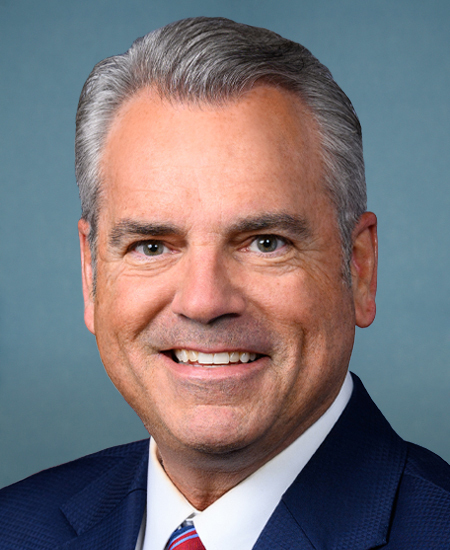
119th Congress Introduced by Mark Alford and 19 co-sponsors

H.R. 6718 defines “professional degree” as degrees enabling start of practice and beyond-bachelor’s skill, listing specific types like MD, JD, MBA, and others.

Introduced in House
0
WeVote Research Nonpartisan
Bill Summary · HR 6718

Summary of H.R. 6718 — Professional Student Degree Act (119th Congress)

Date introduced: December 15, 2025
Sponsor(s): Reps. Lawler, Bacon, Bresnahan, Kiggans; with several co-sponsors listed

Jurisdiction: United States; Committee: Education and Workforce

Purpose (as stated in bill): To amend the definition of “professional degree” in the Higher Education Act of 1965, clarifying which degrees qualify as professional degrees for federal purposes.

Key provisions

  • Section amended: Section 455(a)(4)(C) of the Higher Education Act of 1965 (20 U.S.C. 1087e(a)(4)(C)).

  • Change to existing definition:

    • The bill removes a prior reference linked to the definition of professional degree under 34 C.F.R. Part 668.2 (as in effect on enactment date) for the relevant clause.
    • It adds a new, explicit definition of “Professional Degree” with two components: 1) A professional degree is a degree that:
      • Signifies completion of the academic requirements for beginning practice in a given profession, and
      • Indicates a level of professional skill beyond that normally required for a bachelor’s degree, as determined by the Secretary of Education. 2) The bill enumerates specific degree types that qualify as professional degrees, including but not limited to:
      • Pharmacy (Pharm.D.)
      • Dentistry (D.D.S. or D.M.D.)
      • Veterinary Medicine (D.V.M.)
      • Chiropractic (D.C. or D.C.M.)
      • Law (L.L.B. or J.D.)
      • Medicine (M.D.)
      • Optometry (O.D.)
      • Osteopathic Medicine/Osteopathy (D.O.)
      • Podiatric Medicine (D.P.M., D.P., or Pod.D.)
      • Theology/Theological Studies (M.Div., or M.H.L.)
      • Clinical Psychology (Psy.D. or Ph.D.)
      • Ministry (D.Min.)
      • Social Work (M.S.W. or D.S.W.)
      • Audiology (Au.D.)
      • Physician Assistant/Associate (M.P.A.S., M.S.P.A.S., M.M.S., or M.S.)
      • Occupational Therapy (M.O.T. or O.T.D.)
      • Physical Therapy (D.P.T.)
      • Nursing (M.S.N., D.N.P., or Ph.D.)
      • Public Health (M.P.H.)
      • Business Administration and Management, General (M.B.A. or D.B.A.)
      • Accounting (M.Acc. or M.S.A.)
      • Architecture (M.Arch.)
      • Education (M.A., M.S., M.A.T., M.Ed.)
      • Special Education (M.Ed. or M.S.Ed.)
      • Any other degree that meets the requirements of the two-part definition (I and II) as determined by the Secretary.
  • Threshold for inclusion:

    • A degree must (a) prepare the holder to begin practice in a given profession, and (b) confer a level of professional skill beyond a typical bachelor’s degree, with determination by the Secretary of Education.

Potential impact and who is affected

  • Postsecondary institutions:
    • Colleges and universities offering the listed professional degree programs may be impacted by how their degrees are categorized for federal purposes (e.g., eligibility for programs, reporting, and compliance under the Higher Education Act).
  • Students:
    • Students pursuing listed professional degrees could see how their degrees are defined for federal policy purposes, including any potential implications for federal student aid, accreditation, or program data that hinge on the classification of “professional degree.”
  • Federal policy and guidance:
    • The Secretary of Education would determine interpretation and potential future adjustments within the scope of the listed degrees and the two-part definition.

Procedural and timeline notes

  • Status: Introduced in the House on December 15, 2025; referred to the Committee on Education and Workforce.
  • Next steps (typical): Committee consideration, potential markup, and floor consideration. Any impact would depend on future amendments and passage by both chambers and signature by the President.

Observations

  • The bill narrows/clarifies the concept of “professional degree” by providing a concrete, enumerated list of degree types and a specific two-prong test (clinical/professional readiness plus beyond-bachelor’s-level proficiency) for Secretary-level determination.
  • The explicit listing of degrees helps create a uniform standard for federal definitions, which could influence funding, reporting, and policy design related to professional education programs.

Compiled from official sources — confirm details with the bill’s official record.

Sign in to ask a question.