

WeVote

Bill

Bill

SB 910

Parking on Public Property

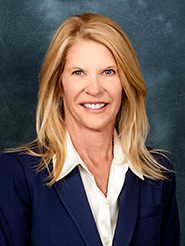
2026 Regular Session Introduced by Debbie Mayfield

SB 910 broadens the Central Registry to include more serious abuse (including child death and sexual abuse) and tightens who can get confirmations, with new DHHS noticerequirements

Introduced
0
WeVote Research Nonpartisan
Bill Summary · SB 910

Bill Summary — SB 910 (Amends 1975 PA 238, MCL 722.622 et seq.)

Status: Placed on second reading
Introduced: January 24, 2025
Subject: Child protection — child abuse/neglect; modifications to the Central Registry (amends secs. 2, 7j & 8 of 1975 PA 238, MCL 722.622, 722.627j, 722.628)

Main purpose

SB 910 updates Michigan’s Child Protection Law to (1) broaden the types of conduct classified as “confirmed serious abuse or neglect” for Central Registry purposes, (2) narrow when Central Registry confirmation may be shared to employers/organizations (to roles involving unsupervised contact with children), and (3) change DHHS notice requirements to persons named as perpetrators in reports.

Key provisions

  • Expands the statutory definition of “confirmed serious abuse or neglect” to expressly include:
    • manslaughter,
    • the death of a child, and
    • sexual abuse. (Amends MCL 722.622 — definitions section.)
  • Revises the definition of “confirmed sexual abuse” to include sexual penetration, sexual contact, attempted sexual penetration, assault with intent to penetrate, and other sexual abuse as defined by the Penal Code (MCL references updated in the bill).
  • Limits sharing of Central Registry confirmation documents to situations where a prospective employee/volunteer would have unsupervised contact with children (tightens who may request/receive confirmation).
  • Changes DHHS notice obligations: requires DHHS to notify in writing each person named as a perpetrator in a report or record of child abuse or neglect — formerly the duty applied only to those named as perpetrators of confirmed abuse or neglect.
  • Other conforming edits to statutory sections governing Central Registry and investigation procedures (secs. 7j & 8).

Who is affected

  • Individuals identified in child abuse/neglect reports (earlier notice requirement may mean more persons receive written notice).
  • Employers, licensing bodies, and volunteer organizations that screen applicants for roles involving children (access to confirmation will be explicitly tied to unsupervised contact).
  • The Department of Health and Human Services (DHHS) — operational changes in notification and classification practices.
  • Prospective employees/volunteers for child-facing positions and entities performing background checks.

Procedural and fiscal notes

  • The bill amends sections 2, 7j, and 8 of the Child Protection Law (MCL 722.622, 722.627j, 722.628).
  • Committee analyses accompanying the bill reported no fiscal impact on state or local government.
  • Rationale offered in committee reports: broaden registry categories to better reflect types of serious abuse DHHS encounters and to strengthen protections for children.

Potential impacts to consider

  • Expansion of conduct that qualifies for Central Registry listing could increase the number of persons recorded, affecting employment/licensing for child-related positions.
  • Requiring DHHS to notify persons named as perpetrators (even before a “confirmed” finding) raises administrative and due-process considerations for individuals named in reports.
  • Tightening confirmation-sharing to unsupervised roles may better target screening to higher-risk placements while limiting broader disclosure.

For statutory context, the bill revises the Child Protection Law (1975 PA 238) definitions and Central Registry procedures at MCL 722.622 et seq.

Compiled from official sources — confirm details with the bill’s official record.

Sign in to ask a question.