

WeVote

Bill

Bill

HR 9539

Online Accessibility Act

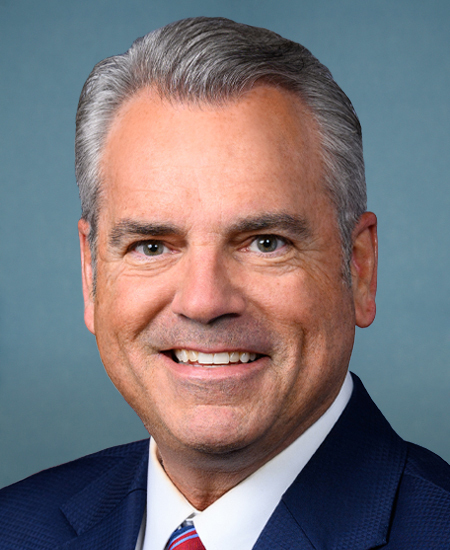
119th Congress Introduced by Mark Alford and 1 co-sponsor

Extends ADA protections to private, consumer-facing websites and mobile apps by establishing WCAG-based accessibility standards and enforcement mechanisms.

Introduced in House
0
WeVote Research Nonpartisan
Bill Summary · HR 9539

Overview

  • Bill: HR 9539, Online Accessibility Act
  • Session: 119th Congress
  • Introduced: June 30, 2026 by Rep. Alford (with Rep. Correa)
  • Purpose: amend the Americans with Disabilities Act (ADA) to cover consumer-facing websites and mobile applications owned or operated by private entities, and establish web accessibility standards and enforcement mechanisms.

Main purpose and intent

  • Extend ADA protections to private-sector, consumer-facing websites and mobile apps.
  • Establish formal web accessibility standards and a regulatory framework to ensure equal access for individuals with disabilities.
  • Create a process for regulation, enforcement, and private rights of action to address non-compliance.

Key provisions and changes

  • Title VI added to ADA: “Consumer Facing Websites and Mobile Applications Owned or Operated by a Private Entity.”
  • Section 601 – Requirements for private consumer-facing websites and apps:
    • General rule: no discrimination or exclusion of individuals with disabilities from participation or benefits when using private websites/apps.
    • Compliance standard: websites/apps must be substantially compliant with WCAG 2.0 Level A and Level AA (or successor WCAG standard published by W3C or successor body).
    • Alternative access: if not substantially compliant, the private entity must provide an equivalent alternative means of access.
  • Section 601 – Regulation:
    • Access Board (Architectural and Transportation Barriers Compliance Board) to:
    • Define terms (e.g., “substantial compliance,” “alternative means of access,” “consumer facing website or mobile application”).
    • Issue and publish implementing regulations.
    • Timeline for rulemaking:
      • Within 180 days: notice of proposed rulemaking.
      • 90-day public comment period.
      • 90-day regulatory assessment by OMB after considering comments.
      • Final regulations within 365 days after the regulatory assessment.
    • Periodically review and update standards to reflect tech advances.
    • Department of Justice (DOJ) to establish a complaint intake procedure within 365 days after the comment period ends.
    • Small business flexibility to comply with standards.
  • Section 602 – Administrative remedies:
    • Exhaust administrative remedies before pursuing court action.
    • Pre-filing notice to the owner/operator when a website/app is not in compliance (60-day notice window).
    • If non-compliance persists after notice, individuals may file a complaint with the DOJ.
    • DOJ investigation rolling: up to 180 days to determine violation; final determination within that period or after.
    • DOJ civil actions may seek equitable relief, monetary damages (upon request), and civil penalties:
    • Penalties up to $20,000 for the first violation.
    • Penalties up to $50,000 for subsequent violations.
    • Punitive damages not available; multiple discriminatory acts in one action count as a single violation.
    • Courts may consider good faith compliance efforts in determining penalties.
  • Section 603 – Private right of action:
    • After exhausting administrative remedies, individuals may sue the private owner/operator in federal court for violations.
    • Private action is the sole and exclusive remedy for non-compliance under Section 601, provided DOJ enforcement has not been instituted.
    • Complaints must plead specific barriers to access.
    • Tolling: statute of limitations pauses from enactment date to 180 days after final regulations are issued by the Access Board.
  • Section 604 – Definitions:
    • Consumer facing website: publicly accessible for commercial purposes.
    • Mobile application: consumer-facing app on mobile platforms or mobile-tailored web apps on a server.
    • Small business: as defined by the Small Business Act.
  • Section 3 – Clerical amendment:
    • Adds Title VI to the ADA’s table of contents with sections 601–604.

Who is affected

  • Private entities that own or operate consumer-facing websites and mobile applications (e.g., e-commerce sites, service platforms, apps with consumer access).
  • Consumers with disabilities who rely on digital accessibility to access online services.
  • Small businesses, which receive regulatory flexibility to aid compliance.
  • Federal agencies: Access Board and DOJ will implement standards, oversee enforcement, and handle complaints.
  • Potentially affected state and local enforcement through coordination with DOJ, especially in cases of discrimination.

Procedural and timeline aspects

  • Regulatory process:
    • Access Board to publish proposed regulations within 180 days of enactment; public comment for 90 days; OMB regulatory assessment up to 90 days; final rules within 365 days after assessment.
    • Standards to be updated periodically for technological advances.
  • DOJ role:
    • Establish complaint procedures within 365 days after the comment period ends.
    • Option to pursue civil actions in federal court for violations, with defined remedies.
  • Private right of action:
    • Available after administrative remedies are exhausted; exclusive remedy if DOJ enforcement not initiated.
  • Tolling:
    • Statutes of limitations pause from enactment until 180 days after final regulations are issued.

Potential impact considerations

  • Increased accessibility standards for private-sector digital platforms, aligning with WCAG guidelines.
  • Enhanced recourse for individuals with disabilities through both administrative and private actions.
  • Significant compliance considerations for platforms serving the public, especially for smaller businesses seeking flexibility.
  • Regulatory oversight and gradual implementation through rulemaking and DOJ processes.

Compiled from official sources — confirm details with the bill’s official record.

Sign in to ask a question.