

WeVote

Bill

Bill

HB 2465

OMA-SERVICE MEMBER ATTENDANCE

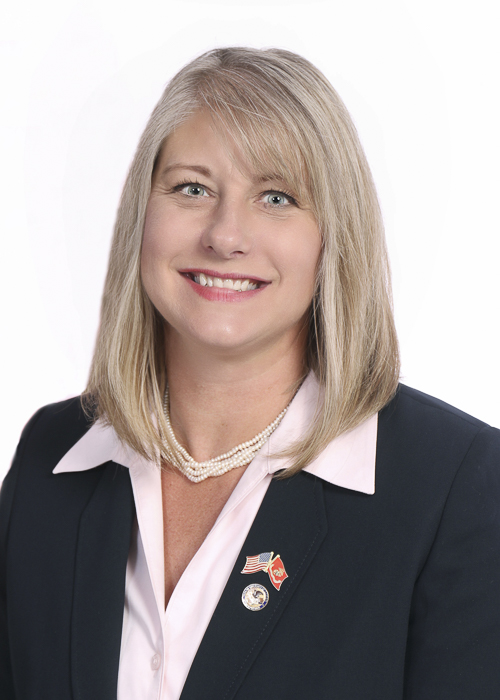
104th Regular Session Introduced by Stephanie Kifowit and 1 co-sponsor

Allows public officials on active military duty to attend meetings remotely with quorum present and majority approval.

Rule 19(a) / Re-referred to Rules Committee
0
WeVote Research Nonpartisan
Bill Summary · HB 2465

Summary — HB 2465 (Open Meetings Act — Service Member Remote Attendance)

Note on source materials: The materials provided include text from two different bills both labeled HB 2465 (an Illinois bill amending the Open Meetings Act and an unrelated Arizona repeal). This summary covers the Illinois measure that amends the Open Meetings Act to permit remote attendance for members on active military duty.

Purpose

Allow an elected or appointed member of a public body to attend meetings remotely (by audio or video) when they are prevented from physically attending because they are performing active military duty as a service member, provided a physical quorum is present.

Key provisions

  • Amends Section 7 of the Illinois Open Meetings Act (5 ILCS 120/7).
  • Remote attendance allowed when:
    • A quorum of the public body is physically present (as required by Section 2.01), and
    • A majority of the public body approves allowing a particular member to attend by other means because the member is prevented from attending due to performance of active military duty.
  • Defines terms:
    • "Active military duty" borrows the meaning of "active service" from the Service Member Employment and Reemployment Rights Act (SMERRA).
    • "Service member" means an Illinois resident who is a member of any component of the U.S. Armed Forces or any state's National Guard (or D.C., commonwealth, or territory).
  • Notice and procedure:
    • A member seeking to attend remotely must notify the clerk/recording secretary before the meeting unless advance notice is impractical.
    • A majority may permit remote attendance only under the public body's own rules; those rules must conform to the statute and may further limit remote attendance and provide for additional public notice or access.
  • Preserves and references existing provisions (subsection (e)) that allow full remote meetings without a physically present quorum under strict conditions related to declared disasters or public health emergencies (requirements include verified identity of participants, public access, at least one official physically present where feasible, roll-call votes, verbatim audio/video recordings, notice requirements, and cost responsibility).
  • Exemptions and special limits:
    • Certain statewide bodies and very large jurisdictions (e.g., bodies with >4,500 square miles jurisdiction) have additional procedural constraints and may adopt specific rules to permit remote attendance.

Who is affected

  • Illinois public bodies and their members (city councils, county boards, school boards, commissions, advisory boards, etc.).
  • Service members serving in Illinois who hold elected or appointed public office.
  • Clerks/administrative staff who manage meeting logistics and public access.
  • Members of the public who attend or monitor public-body meetings (access and notice provisions apply).

Practical impacts

  • Facilitates participation by public officials who are on active military duty, improving continuity and representation.
  • Public bodies may need to update bylaws or procedural rules, and ensure appropriate technology and notice mechanisms are in place.
  • Preserves public-access safeguards (notice, recording, roll-call voting) and allows bodies discretion to limit remote participation by rule.

Legislative status and sponsor (Illinois bill)

  • Introduced Feb. 4–5, 2025; First reading recorded Feb. 4/5, 2025 (materials show Feb. 4 for Illinois text).
  • Primary sponsor (Illinois text): Rep. Stephanie A. Kifowit.
  • Referred to relevant committees; subsequent committee assignments and re-referrals recorded in the legislative history provided.
  • Current status in materials: Read first time / assigned to committee / re-referred (see official legislative record for up-to-date status).

If you want, I can:
- Produce a one-paragraph plain-language explainer for voters or journalists.
- Draft suggested rule-language that a city council could adopt to implement the bill.

Compiled from official sources — confirm details with the bill’s official record.

Sign in to ask a question.