

WeVote

Bill

Bill

HB 3801

OFFICE OF FIREARM VIOLENCE

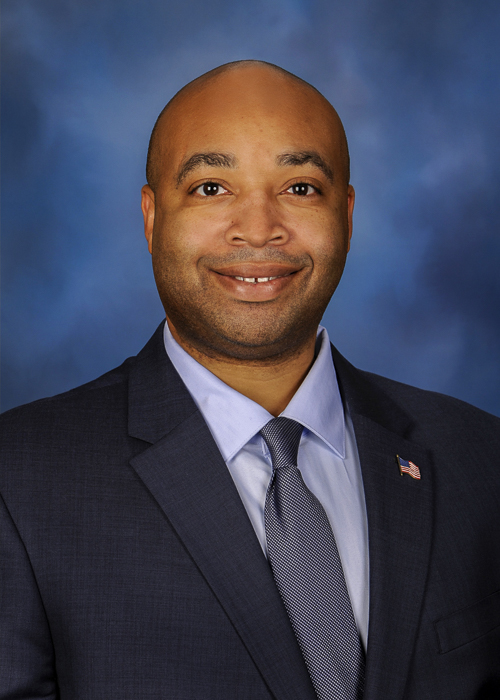
104th Regular Session Introduced by Justin Slaughter

HB 3801 requires the Office of Firearm Violence Prevention to publish annual reports on concentrated firearm violence and consolidate funding recommendations from all Lead Violence

Rule 19(a) / Re-referred to Rules Committee
0
WeVote Research Nonpartisan
Bill Summary · HB 3801

Summary — HB 3801 (Office of Firearm Violence Prevention)

Status: Enacted (Signed by Governor 2025-06-20; effective 2025-09-01)
Primary sponsor: Rep. Justin Slaughter
Related/companion: SB 2891
Statutory changes: Amends the Reimagine Public Safety Act (430 ILCS 69/35-20 and 35-25)

Purpose

HB 3801 makes targeted amendments to the Reimagine Public Safety Act to (1) clarify and change reporting frequency requirements for the Office of Firearm Violence Prevention and (2) consolidate reporting of funding recommendations from Lead Violence Prevention Conveners. The bill refines how the Office identifies communities with concentrated firearm violence and adjusts certain administrative/reporting processes.

Key provisions

  • Reporting frequency

    • Requires the Office of Firearm Violence Prevention to issue an annual report to the General Assembly identifying communities experiencing concentrated firearm violence. (Changes prior language that set reporting “no later than January 1 of each year” to a plain annual reporting requirement.)
    • Requires the Office to compile recommendations from all Lead Violence Prevention Conveners and report to the General Assembly on funding recommendations annually (changed from bi‑annual reporting).
  • Community identification and grant eligibility (existing statutory framework retained and clarified)

    • For Illinois municipalities with population ≥1,000,000: the Office must determine the 10 most violent neighborhoods based on per‑capita fatal and nonfatal firearm‑shot incidents (excluding self‑inflicted), using data from January 1, 2016 through December 31, 2020 where possible; then identify 7 additional eligible neighborhoods by total victims; subject to appropriation, may add up to 5 more neighborhoods or contiguous clusters.
    • For municipalities <1,000,000: the Office must identify the 10 municipalities or contiguous areas with the greatest concentrated firearm‑violence victims (similar measures), and may identify up to 5 additional municipalities/areas. The Office may also identify up to 5 additional neighborhoods/areas or government-identified boundary areas for funding.
    • Data updates: eligibility analysis based on the most recent 5 full years of data and may be updated no more than once every 3 years.
  • Administrative details (retained language)

    • Continues to vest operational, procurement, grant‑making, technical assistance, and coordination authority with the Department of Human Services and the Office of Firearm Violence Prevention.
    • References the Assistant Secretary of Firearm Violence Prevention position (appointment, salary provision included in current statute).

Who is affected

  • Office of Firearm Violence Prevention and Department of Human Services (administration, reporting, grantmaking)
  • Municipalities and neighborhoods identified as high-concentration firearm‑violence areas (eligibility for targeted grants and coordination of state services)
  • Community‑based organizations and service providers (grant applicants/recipients and technical assistance beneficiaries)
  • Lead Violence Prevention Conveners (required to have recommendations compiled annually)

Procedural/timeline notes

  • Introduced: 2025-02-18 (Rep. Justin Slaughter)
  • Passed both chambers in May 2025; enrolled and sent to Governor 2025-05-28
  • Signed by Governor: 2025-06-20
  • Effective date: 2025-09-01

Impact

HB 3801 is a relatively narrow, technical amendment focused on reporting cadence and consolidating recommendation timelines. It does not fundamentally change the Office’s grant or neighborhood‑identification authority but requires more frequent (annual) aggregation of funding recommendations and clarifies the Office’s annual reporting obligations—potentially accelerating how often legislators receive consolidated funding recommendations and community designations for targeted interventions.

Compiled from official sources — confirm details with the bill’s official record.

Sign in to ask a question.