

WeVote

Bill

Bill

HB 6059

Occupations: individual licensing and registration; licensing reciprocity under the skilled trades regulation act for certain individuals who hold an out-of-state license; provide for. Amends 2016 PA 407 (MCL 339.5101 - 339.6133) by adding sec. 222.

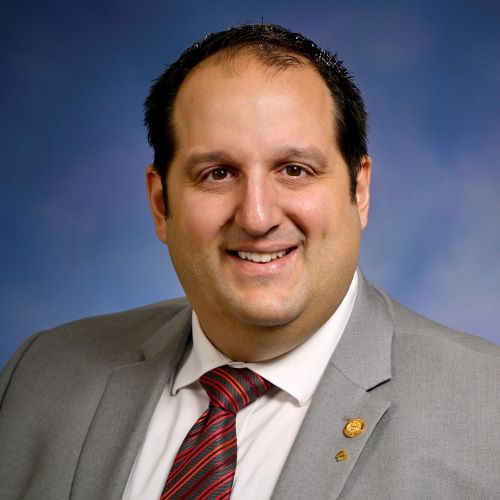
2025-2026 Regular Session Introduced by Joe Aragona and 1 co-sponsor

Allows Michigan to issue a license without its own exam to people with valid, in-good-standing out-of-state licenses, under criteria, within 90 days.

bill electronically reproduced 06/09/2026
0
WeVote Research Nonpartisan
Bill Summary · HB 6059

Summary of HB 6059 (2025-2026) – Michigan

Purpose and intent

  • Expands licensing procedures under the Michigan Skilled Trades Regulation Act (PA 407 of 2016) by adding a new Sec. 222 that allows Michigan to grant an occupation license without an exam to individuals who hold valid licenses in other states, subject to specific criteria.
  • Aims to streamline licensure for skilled trades professionals who are already licensed in other jurisdictions, potentially reducing barriers for mobility and workforce entry while maintaining minimum standards.

Key provisions and changes

  • Non-exam licensing for out-of-state licensees (Sec. 222(1))
    • The department may issue a Michigan license for an occupation under this act without Michigan-specific examination if the applicant demonstrates:
    • (a) possession of a valid, in-good-standing license in at least one other state for the same occupation, with all of the following for each license:
      • (i) License is in good standing.
      • (ii) License has been held for at least 1 year.
      • (iii) The other state had minimum education, work experience, and clinical supervision requirements; the applicant met and the other state verifies these requirements.
      • (iv) If the other state required an examination, the applicant passed it.
    • (b) No license revoked, voluntarily surrendered, or disciplinary action while under investigation in any other state or foreign country.
    • (c) No disciplinary action by an equivalent licensing department in another state; if disciplinary action exists, the department must determine if it was corrected/resolved and may suspend action if not resolved.
    • (d) No pending complaint, allegation, or investigation related to unprofessional conduct in another state or foreign country; if pending, the department must suspend actions until resolution.
    • (e) All applicable fees are paid.
  • Exceptions and limitations (Sec. 222(2)-(5))
    • The bill does not prevent temporary licenses (Sec. 219) or other licenses issued under specific sections (223, 731(5), 907(3), 1019(1)).
    • If Michigan administers a state-law exam for the occupation, the department may require passing a Michigan-law-specific exam before issuing the license under this section.
    • The department must issue or deny a completed license application within 90 days (unless otherwise provided).
    • This provision does not apply to licenses under interstate licensing compacts or to criteria established by such compacts, and does not make an individual licensed under this section automatically eligible for inclusion in an interstate compact for the occupation.

Who would be affected

  • Applicants: Individuals currently licensed in other states (and/or foreign countries) seeking Michigan licensure in a covered occupation under the Skilled Trades Regulation Act, who meet the criteria outlined.
  • Regulated occupations: Occupations governed by the Skilled Trades Regulation Act (as amended by this bill) that permit licensing by equivalency with out-of-state licenses.
  • Michigan licensing authority: Department responsible for administering the Skilled Trades Regulation Act, including evaluating out-of-state licenses, conducting any state-law exams if required, and issuing licenses or denying applications within the 90-day timeline.

Procedural and timeline aspects

  • Application timeline: The department must issue or deny a license within 90 days after receiving a completed application (Sec. 222(4)).
  • Examination considerations: If Michigan administers a separate state-law exam for the occupation, applicants may be required to pass that law-specific exam (Sec. 222(3)).
  • Interstate compact note: The new provision explicitly does not apply to licenses under interstate licensing compacts, nor does it confer eligibility to join such compacts (Sec. 222(5)).

Practical implications and considerations

  • Potentially reduces entry barriers for skilled trades professionals licensed in other states, promoting mobility and addressing workforce shortages.
  • Maintains safeguards against unprofessional conduct and disciplinary history, requiring verification of past licensure status and ongoing eligibility.
  • Introduces a clear 90-day processing deadline to provide timely decisions on license-by-license basis.
  • Requires attention to any Michigan-specific laws or examinations that may still apply if the occupation is subject to a state-law exam.

Note: This summary reflects the bill text as introduced and current sponsor/committee information. If enacted, further regulatory guidance and implementing rules would shape practical application.

Compiled from official sources — confirm details with the bill’s official record.

Sign in to ask a question.