

WeVote

Bill

Bill

HB 5425

NATURAL ORG REDUCE REG-ACT

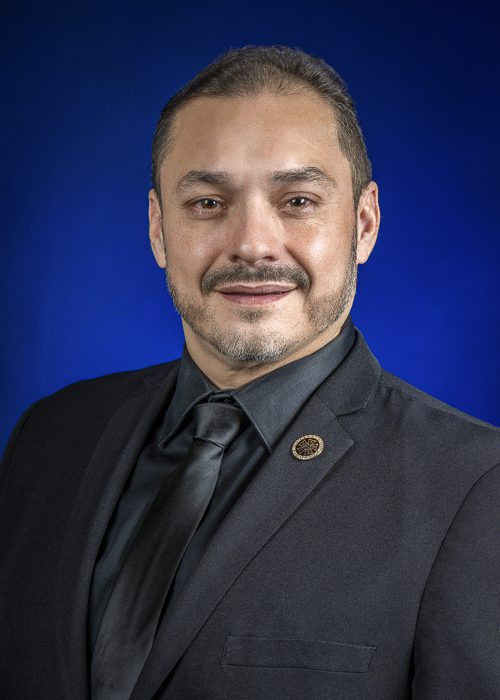
104th Regular Session Introduced by Jaime Andrade and 31 co-sponsors

HB 5425 sets standardized facilities and procedures for handling, preparing, and disposing of human remains, including limits, testing, and updated regulatory responsibilities.

Added as Alternate Co-Sponsor Sen. David Koehler
0
WeVote Research Nonpartisan
Bill Summary · HB 5425

Summary of Bill: HB 5425 (104th Illinois General Assembly)

The following summary highlights the main purpose, key provisions, affected parties, and notable procedural/timeline aspects of House Bill 5425 as amended and advanced in the Illinois 104th session.

1) Purpose and intent

  • The bill appears to address the regulation and procedures surrounding the handling, processing, and disposition of human remains, with a focus on creation, transformation, or reduction of remains and associated facilities.
  • The amendment package suggests a shift toward establishing specific standards and procedures for facilities that handle the shelter, care, custody, preparation, and disposition of deceased human bodies, including allowances for funeral services within certain facility types.

2) Key provisions and changes (as reflected by the amendment)

Note: The text provided is an amendment with numerous line-item changes; the following captures the substantive areas implied by the amendment, rather than a line-by-line reading of the entire bill.

  • Facility scope and operations

    • Allows or clarifies the use of locations devoted to the shelter, care, custody, and preparation of deceased human bodies.
    • Funeral establishments may contain facilities for funeral or wake services, indicating integrated service capability at certain locations.
  • Destruction and reduction of remains

    • Revisions to the standards for reducing remains, including specific temperature/holding requirements and scientific testing provisions (e.g., references to maintaining a minimum temperature/time exposure and third-party laboratory analysis).
    • The amendment includes a shift to describe processes in terms of “reduced human remains” and aligns terminology accordingly.
  • Exposure, contamination, and testing standards

    • Establishes numeric limits for certain contaminants and pathogens in testing contexts (e.g., metals such as arsenic, cadmium, lead, mercury, selenium; microbial indicators like fecal coliform and Salmonella).
    • Specifies testing and certification requirements via accredited third-party laboratories.
  • Regulatory and reporting framework

    • Removes or consolidates references to multiple departments (e.g., dropping some references to the Department of Public Health and related regulatory bodies in favor of a streamlined regulatory framework under the Comptroller or related state agencies as indicated by amendments).
    • Adjusts labeling, inspection, and compliance language to reflect updated administrative responsibilities.
  • Financial and procedural adjustments

    • Adjusts various numeric limits and thresholds (e.g., tightening or recalibrating limits for contaminants, processing temperatures, durations, and mass/weight measurements in certain sections).
    • Reworks certain definitions and cross-references (changing terms like “volume” to “weight” in specific contexts).
  • Terminology refinements

    • Updates terminology related to “reduced remains,” “reduction,” and related disposal language to mirror current best practices in remains processing.
  • Effective dates and implementation

    • The amendment process indicates the bill is in committee and floor consideration stages and would proceed through standard Illinois legislative timelines (amendments filed April 2026; referenced committee approvals and readings noted in the action history).

3) Who or what would be affected

  • Funeral establishments and other facilities involved in handling, storing, preparing, and disposing of human remains.
  • Regulatory agencies and oversight bodies (as revised in the amendment), including potential reallocation of some regulatory responsibilities and reporting requirements.
  • Third-party laboratories performing accredited testing for contaminants and pathogens as part of compliance.
  • Funeral directors, embalmers, and staff working in mortuary services who must adhere to updated temperature, duration, testing, labeling, and facility standards.

4) Procedural and timeline aspects

  • The bill has undergone House Floor Amendment No. 1, recommending adoption by the Energy & Environment Committee, with multiple co-sponsors added over time.
  • Action history shows:
    • First Reading: February 2026
    • Referred to Rules Committee (February 2026)
    • Assigned to Energy & Environment Committee (March 2026)
    • Do Pass / Short Debate in committee (March 24, 2026)
    • Floor amendment filed and referred (April 14–16, 2026)
    • Co-sponsors added during April 2026
  • As an amendment-heavy bill, final provisions may differ from the base HB 5425; the current amendment package represents substantial revisions to terminology, standards, and regulatory structure.

5) Notes for readers

  • The amendment text provided is part of the legislative process and may change again as the bill moves through additional committee stages or floor votes.
  • Specific numerical limits (e.g., contaminant thresholds, temperature and time requirements) are defined in the amendment and would become operative if the bill is enacted in its final form.
  • The bill interacts with existing Illinois statutes governing body disposition, mortuary science practice, environmental health, and regulatory oversight; readers should look for final enacted language to confirm the exact regulatory framework and agency responsibilities.

If you’d like, I can produce a side-by-side comparison with the current Illinois statutes governing funeral establishments and human remains to highlight exact statutory changes once the final bill text is available.

Compiled from official sources — confirm details with the bill’s official record.

Sign in to ask a question.